Santa Fe to Charlotte
Charlotte → Santa FeFTL freight transportation service between Santa Fe and Charlotte. Reliable logistics solutions for your business.
Route Description
Everything you need to know about the corridor Santa Fe - Charlotte
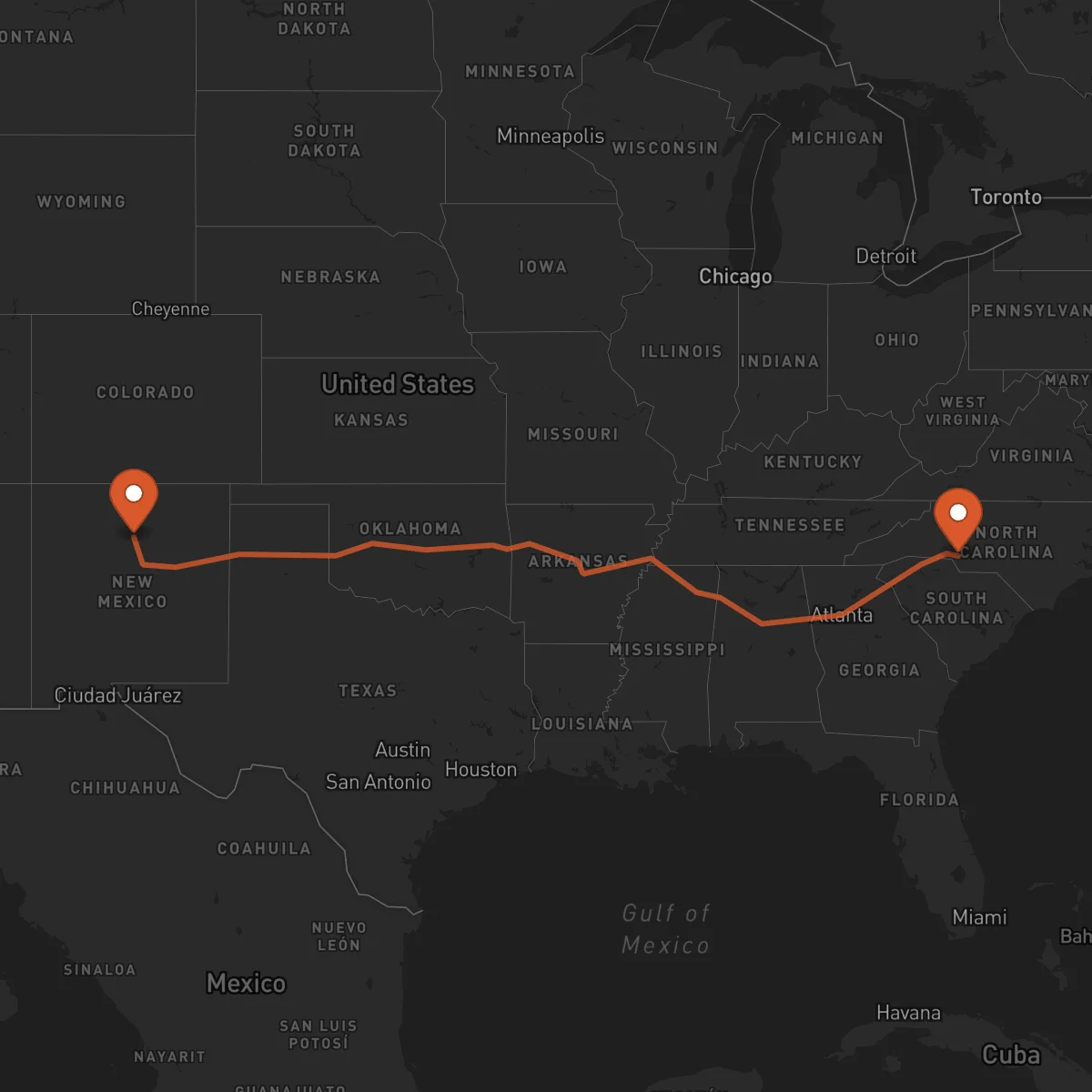
The Santa Fe to Charlotte corridor represents a vital logistics connection across the United States, spanning approximately 2,268 kilometers from New Mexico to North Carolina. This route traverses diverse terrain and connects two distinct economic regions, making it a strategic pathway for freight transportation. The corridor links the Southwest's industrial base with the Southeast's manufacturing and distribution hubs, facilitating the movement of goods across multiple state lines and economic zones.
The economic significance of this corridor extends beyond simple point-to-point transportation. Santa Fe serves as a gateway to the Southwest's aerospace, technology, and energy sectors, while Charlotte anchors one of the fastest-growing metropolitan areas in the Southeast, with strong presences in banking, healthcare, and advanced manufacturing. The route passes through key industrial centers including Amarillo, Oklahoma City, Memphis, and Greensboro, each contributing to the corridor's importance in national supply chains.
Major transportation infrastructure along this corridor includes Interstate 25, Interstate 40, Interstate 81, and Interstate 85, providing reliable and efficient freight movement. These highways offer multiple routing options to optimize transit times and accommodate various freight types. The route's infrastructure supports diverse cargo types, from specialized equipment and hazardous materials to temperature-controlled goods and oversized shipments.
Control Terrestre leverages this comprehensive infrastructure to provide full truckload (FTL) services between Santa Fe and Charlotte. Our network of certified carriers ensures reliable transportation with options for dedicated services, expedited freight, and specialized handling when needed. We coordinate seamless cross-country moves that maintain cargo integrity while meeting delivery schedules across this extensive domestic corridor.
Services for this Route
Available services for the corridor Santa Fe - Charlotte
 Origin
Santa Fe
Santa Fe, New Mexico serves as a strategic logistics hub in the Southwest, positioned at the intersection of major transportation routes connecting the Mountain West with the broader United States. The city's elevation and location provide access to key industrial centers in New Mexico, Colorado, and Arizona. Santa Fe's infrastructure includes multiple highway connections, rail access, and proximity to Albuquerque International Sunport for multimodal freight solutions. The region's logistics network supports the movement of goods to and from the Southwest's energy, aerospace, and technology sectors.
The local economy in Santa Fe and surrounding areas is anchored by government services, tourism, and a growing technology sector. The region hosts significant federal installations and research facilities that generate specialized freight requirements. Additionally, Santa Fe's proximity to major energy production areas creates demand for transportation of equipment, materials, and products related to the oil, gas, and renewable energy industries. The area's manufacturing base, though smaller than other regions, focuses on high-value, specialized products requiring reliable transportation solutions.
 Destination
Charlotte
Charlotte, North Carolina stands as a major logistics and distribution center in the Southeast, strategically positioned to serve the Atlantic coast and inland markets. The city's location provides excellent access to major East Coast ports, including Charleston and Wilmington, while maintaining strong connections to the Southeast's manufacturing base. Charlotte Douglas International Airport enhances the region's multimodal capabilities, supporting air cargo operations that complement ground transportation services. The area's extensive highway network, including I-85 and I-77, facilitates efficient freight movement throughout the region.
The Charlotte metropolitan area has evolved into a powerhouse of economic activity, with banking and finance serving as traditional anchors while advanced manufacturing, healthcare, and technology sectors experience rapid growth. The region hosts numerous distribution centers and warehouses serving major retailers and e-commerce companies. Charlotte's manufacturing sector includes automotive components, aerospace parts, and industrial equipment, all requiring reliable full truckload transportation services. The area's diverse economy creates consistent demand for freight movement across various industries and cargo types.










