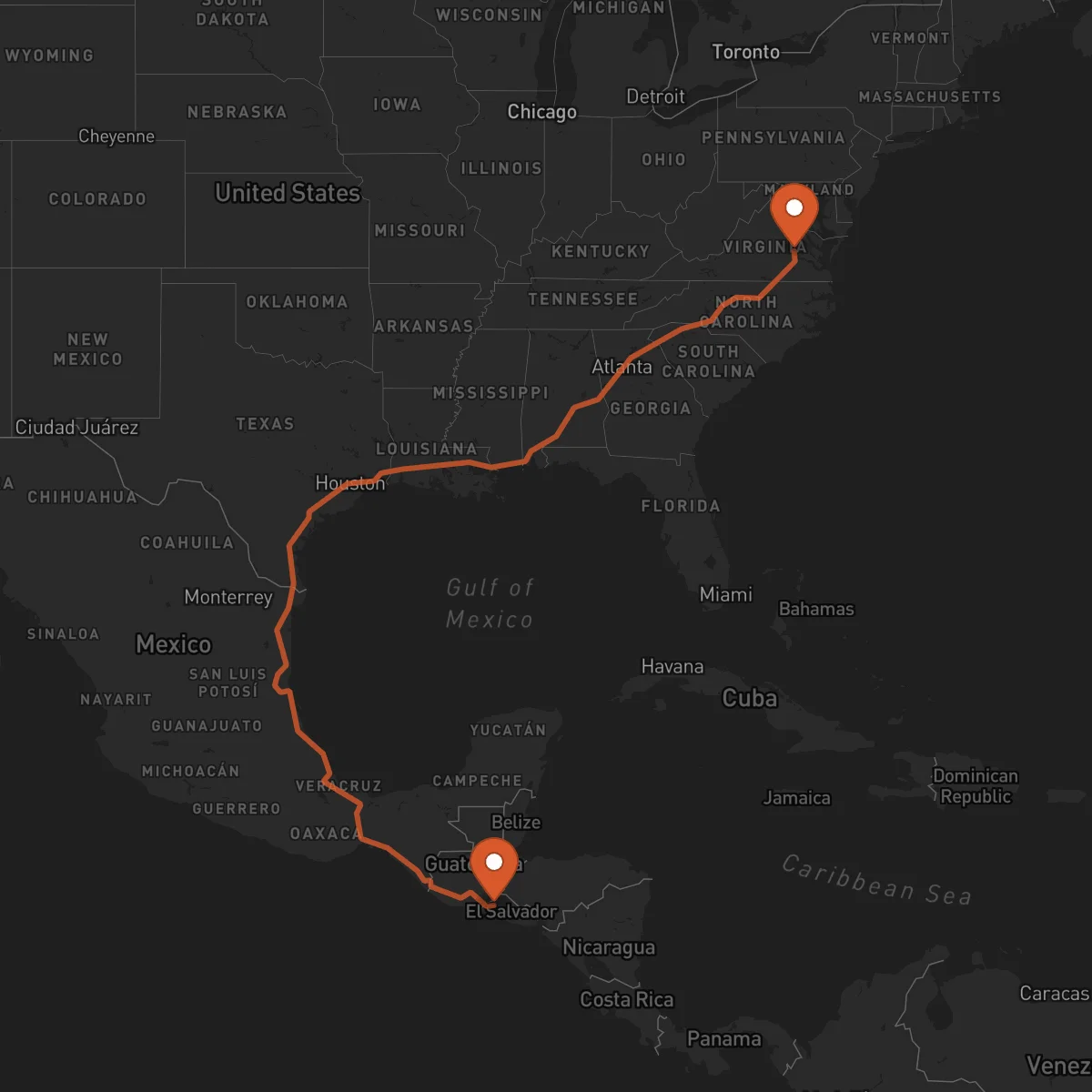
Santa Ana to Richmond
Richmond → Santa AnaFTL freight transportation service between Santa Ana and Richmond. Reliable logistics solutions for your business.
Route Description
Everything you need to know about the corridor Santa Ana - Richmond
The Santa Ana to Richmond corridor represents a critical North-South logistics artery connecting Central America's industrial heartland with the Mid-Atlantic U.S. market. This strategic cross-border route facilitates the seamless movement of goods between El Salvador's key production zones and one of America's most significant distribution hubs, underpinning supply chains for diverse industries. The corridor’s efficiency is vital for manufacturers and exporters seeking reliable access to U.S. consumers and for importers distributing goods southward.
Economically, the region is defined by robust manufacturing and agricultural output. El Salvador's Santa Ana department is a powerhouse for textiles, apparel, food processing, and agricultural exports like coffee and sugar. Richmond, Virginia, serves as a major logistics and manufacturing center for the Eastern U.S., with strong sectors in pharmaceuticals, chemicals, food and beverage, and advanced manufacturing. The corridor directly supports these industries by enabling the transport of raw materials inbound and finished goods outbound, creating a vital trade link.
Control Terrestre facilitates operations on this corridor through our specialized alliance network, exclusively focused on Full Truckload (FTL) solutions. We manage the complexities of cross-border transport, leveraging our providers' certifications including C-TPAT and FAST for expedited, secure clearance at key border crossings like the El Paso/Ciudad Juárez gateway and subsequent U.S. entry points. Our services encompass dedicated, expedited, and specialized cargo handling (including temperature-controlled and oversized freight) to match the specific needs of corridor shippers. We coordinate the entire door-to-door journey, from Santa Ana's industrial parks to Richmond's distribution centers, ensuring a single point of contact for a streamlined, transparent process.
The primary overland infrastructure relies on a network of major highways. From Santa Ana, cargo typically moves via CA-1 and CA-2 to the Guatemalan border, then through Mexico via the Pan-American Highway (MX-190, MX-150) and key corridors like MX-57 and MX-40. In the U.S., the route converges on major interstates, primarily I-35 through Texas and I-81 or I-95 for the final leg into Virginia. This highway-dependent route underscores the importance of reliable carrier partnerships and meticulous planning for border transitions and potential congestion points.
Services for this Route
Available services for the corridor Santa Ana - Richmond
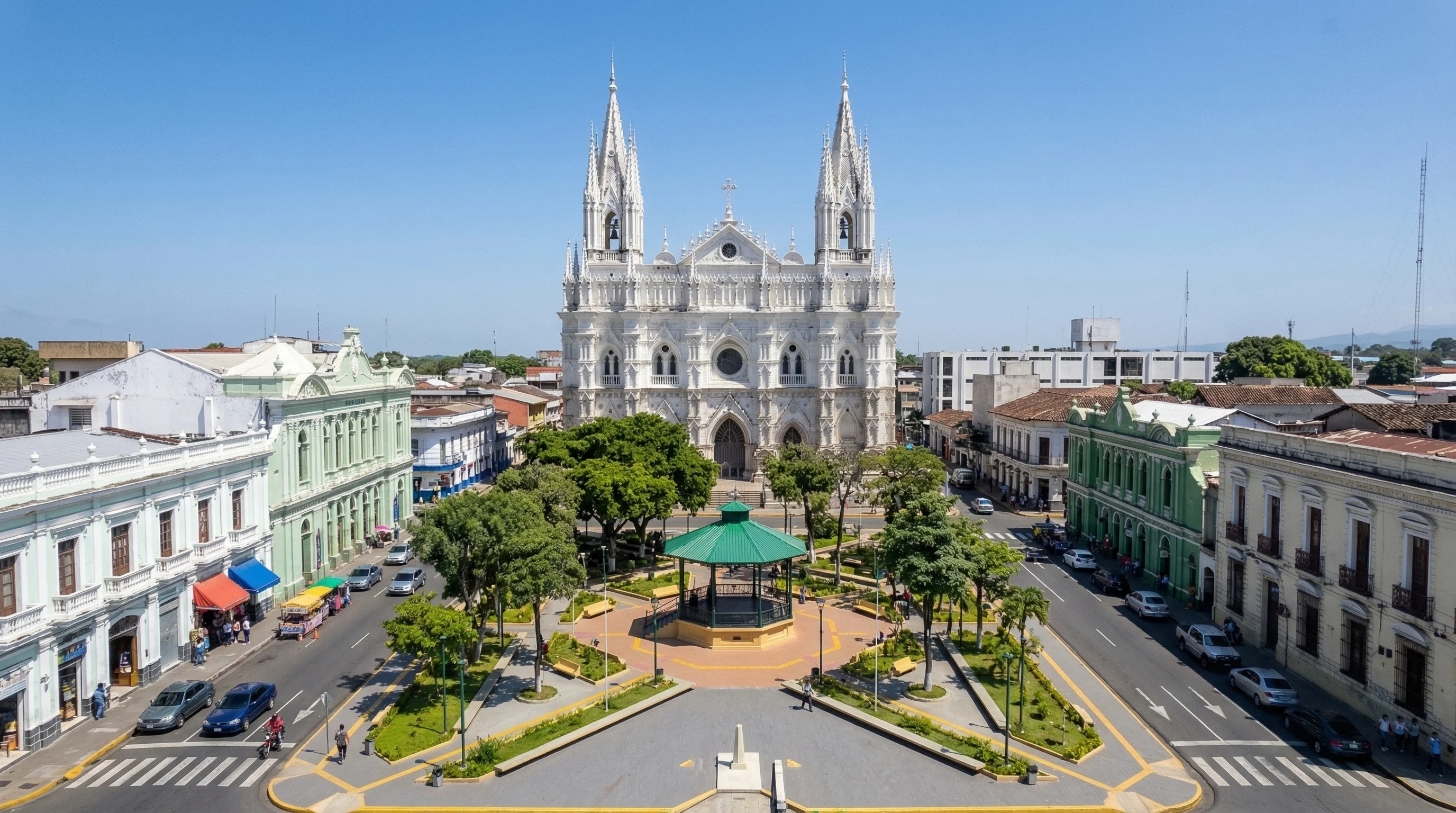 Origin
Santa Ana
Santa Ana, El Salvador, is a pivotal logistics origin in Central America, strategically located in the country's western region. It serves as a primary industrial and agricultural hub, with the department hosting major zones for textiles, apparel manufacturing, food and beverage processing, and coffee/sugar production. Its infrastructure supports export activities through proximity to the Port of Acajutla on the Pacific coast and key highway connections (CA-1, CA-2) that funnel goods north toward Guatemala and Mexico. The area's concentration of manufacturing facilities and agricultural producers creates consistent demand for robust outbound freight solutions to international markets.
 Destination
Richmond
Richmond, Virginia, is a premier logistics destination in the Mid-Atlantic United States, offering a strategic nexus for distribution. The city is a critical node in the East Coast's supply chain, boasting excellent connectivity via Interstates 95, 64, and 81, and proximity to the Port of Virginia (Norfolk) and major rail hubs. Its economy is driven by advanced manufacturing, pharmaceuticals, chemicals, and food production, supported by a vast network of warehouses and distribution centers. Richmond's location provides efficient access to the dense consumer markets of the Northeast, Southeast, and Midwest, making it an essential endpoint for cross-border and domestic freight flows.










