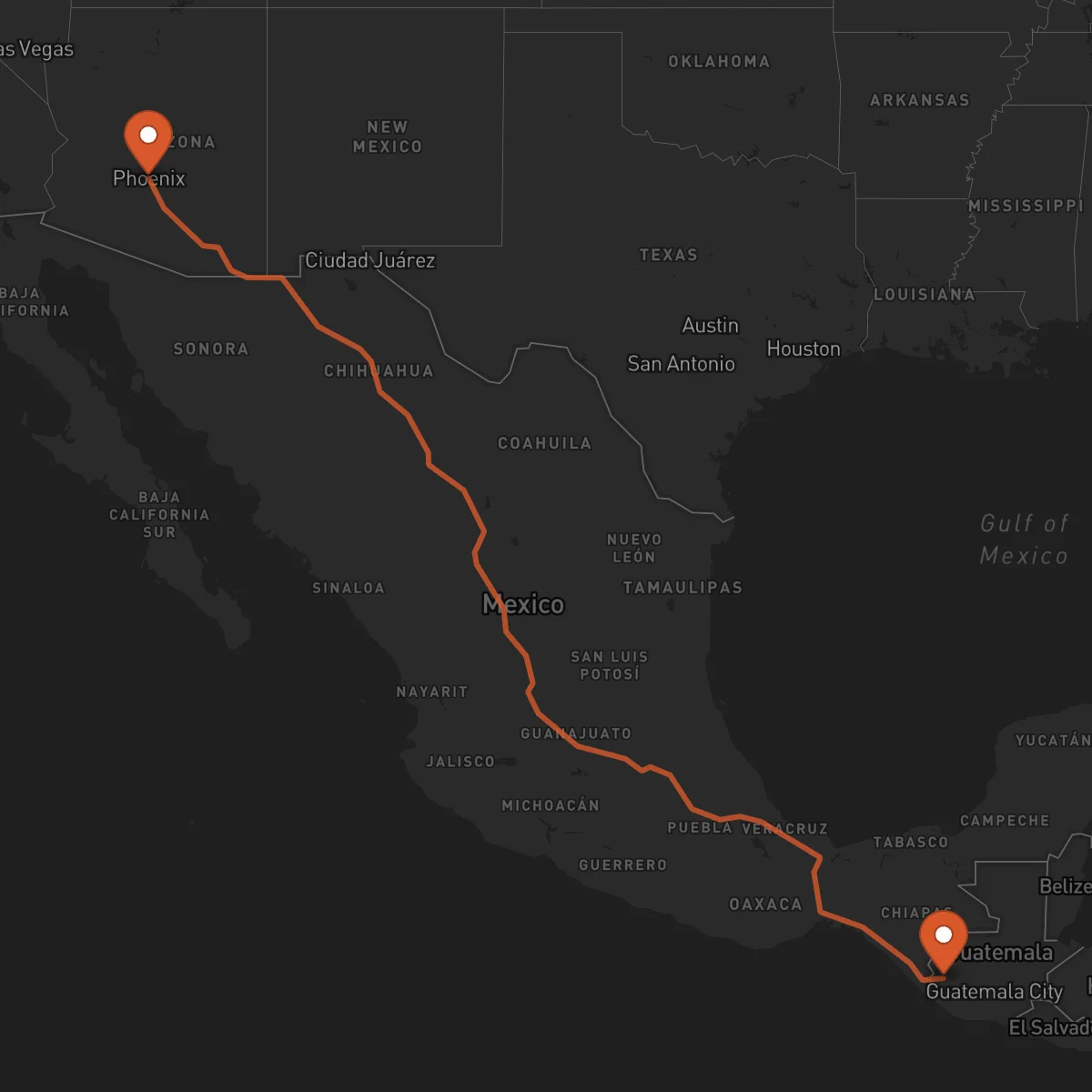
San Marcos to Phoenix
Phoenix → San MarcosFTL freight transportation service between San Marcos and Phoenix. Reliable logistics solutions for your business.
Route Description
Everything you need to know about the corridor San Marcos - Phoenix
The logistics corridor between San Marcos, Guatemala and Phoenix, Arizona represents a vital trade link connecting Central America with the southwestern United States. This extensive route spans approximately 2,895 kilometers and serves as a crucial artery for freight transportation between the two regions. The corridor facilitates the movement of diverse cargo types, from agricultural products and textiles to manufactured goods and industrial equipment, supporting the growing commercial relationship between Guatemala and Arizona's business communities.
This cross-border route traverses through Mexico, utilizing major transportation infrastructure including the Mexican Federal Highway network. The journey involves strategic border crossings that connect the Central American corridor with North American trade routes. Phoenix, as a major logistics hub in the southwestern United States, provides excellent distribution capabilities for goods arriving from Central America. The city's proximity to major ports of entry and its integration with the broader U.S. transportation network makes it an ideal destination for freight from Guatemala.
Control Terrestre facilitates seamless operations along this corridor through our network of certified transportation providers. Our expertise in cross-border logistics ensures efficient handling of customs procedures, documentation requirements, and regulatory compliance for shipments moving between Guatemala and the United States. We provide dedicated full truckload services that maintain cargo integrity throughout the journey, offering businesses reliable transportation solutions for their supply chain needs between San Marcos and Phoenix.
Services for this Route
Available services for the corridor San Marcos - Phoenix
 Origin
San Marcos
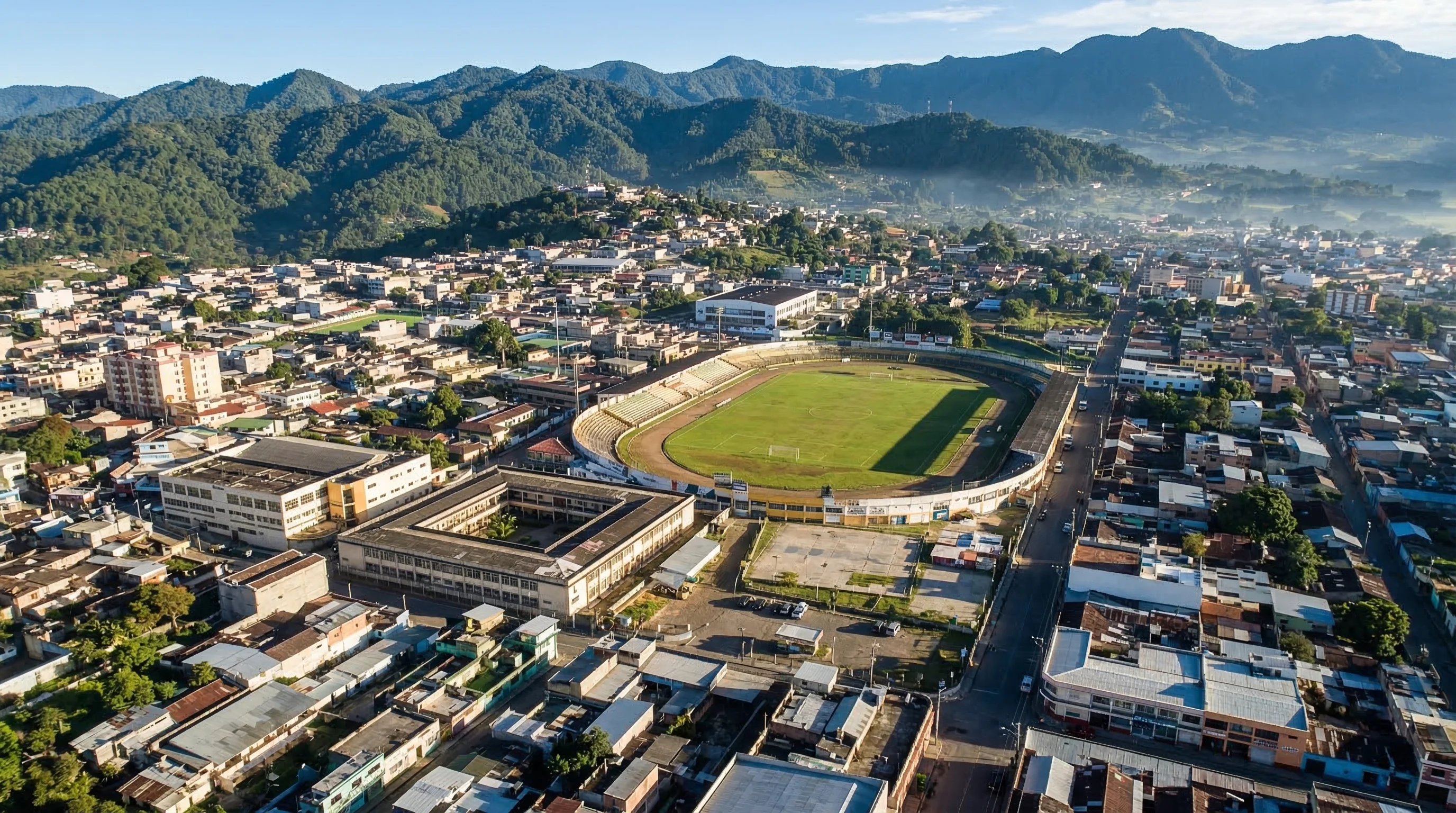
San Marcos, located in western Guatemala near the border with Mexico, serves as a strategic gateway for international trade and logistics operations. The region benefits from its proximity to major transportation routes connecting Guatemala with Mexico and the broader Central American market. San Marcos has developed significant infrastructure to support freight movement, including access to the CA-1 highway network that connects to major ports and border crossings. The area's logistics capabilities are enhanced by its position as a commercial center for the western highlands region of Guatemala.
The economy of San Marcos is diverse, with strong agricultural, textile, and manufacturing sectors driving freight demand. The region is known for coffee production, vegetable farming, and textile manufacturing, all of which require reliable transportation to reach international markets. Additionally, San Marcos benefits from growing industrial activity and export-oriented businesses that depend on efficient cross-border logistics services. The availability of transportation infrastructure and the region's economic diversity make it an important origin point for freight shipments to the United States.
 Destination
Phoenix
Phoenix, Arizona stands as a major logistics and distribution center in the southwestern United States, offering exceptional strategic advantages for freight operations. The city's location provides access to major interstate highways including I-10, I-17, and I-8, creating efficient connections to other major U.S. markets. Phoenix's transportation infrastructure includes Sky Harbor International Airport and proximity to major West Coast ports, making it an ideal hub for goods arriving from international origins. The region's logistics ecosystem is supported by numerous warehousing facilities, distribution centers, and third-party logistics providers.
The Phoenix metropolitan area hosts a diverse industrial base that drives freight demand, including aerospace, electronics, semiconductor manufacturing, and food processing industries. The region's climate-controlled warehousing capabilities are particularly valuable for temperature-sensitive cargo. Phoenix's position as a logistics hub is further strengthened by its role in supporting trade with Mexico and other Latin American markets. The city's infrastructure and economic diversity create strong demand for reliable freight transportation services connecting Central American origins with southwestern U.S. destinations.










