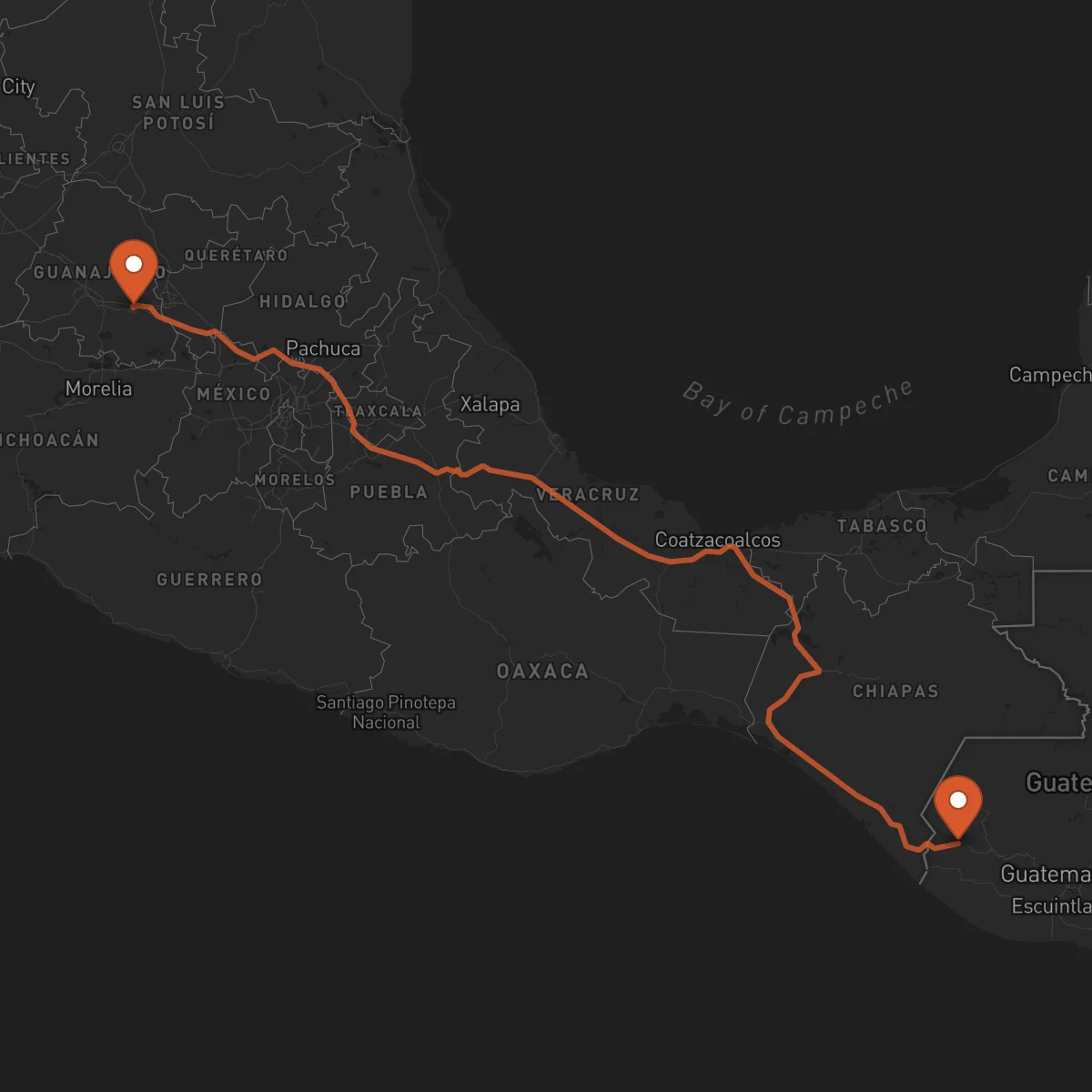
San Marcos to Celaya
Celaya → San MarcosFTL freight transportation service between San Marcos and Celaya. Reliable logistics solutions for your business.
Route Description
Everything you need to know about the corridor San Marcos - Celaya
The San Marcos, Guatemala to Celaya, Mexico corridor is a vital cross-border link connecting Central American production with the industrial heartland of Mexico's Bajío region. This approximately 1136 km route serves as a strategic artery for supply chains, enabling the efficient movement of goods between key economic zones. The corridor's importance is underscored by the growing trade volume between Guatemala and Mexico, driven by regional manufacturing and agricultural sectors.
Economically, San Marcos is a significant production hub in southwestern Guatemala, known for its agricultural output including coffee, bananas, and sugar cane, alongside a robust textile and light manufacturing sector. Celaya, in contrast, anchors a dynamic industrial corridor in Guanajuato, with major industries in automotive manufacturing (notably near General Motors facilities), food processing—especially confectionery—metalworking, and advanced logistics. This economic complementarity fuels consistent demand for reliable full truckload freight services along the route.
Infrastructure relies primarily on Guatemala's CA-1 highway from San Marcos to the Tecún Umán border crossing, transitioning to Mexico's federal highway network, including routes 190, 200, and 45, which provide direct access to Celaya and the broader Bajío region. The principal border crossing at Ciudad Hidalgo requires meticulous customs compliance; our provider network's certifications—including C-TPAT, FAST, and BASC—facilitate streamlined clearance processes, reducing delays for our clients' shipments.
Control Terrestre optimizes operations on this corridor through our specialized alliance of transportation providers. We exclusively handle full truckload (FTL) services, offering dedicated, expedited, and specialized cargo solutions—including refrigerated, oversized, and hazardous materials—tailored to the corridor's demands. Our focus on human-centric and environmentally responsible logistics, combined with door-to-door coordination, ensures a seamless cross-border experience from origin to destination without compromising on reliability or compliance.
Services for this Route
Available services for the corridor San Marcos - Celaya
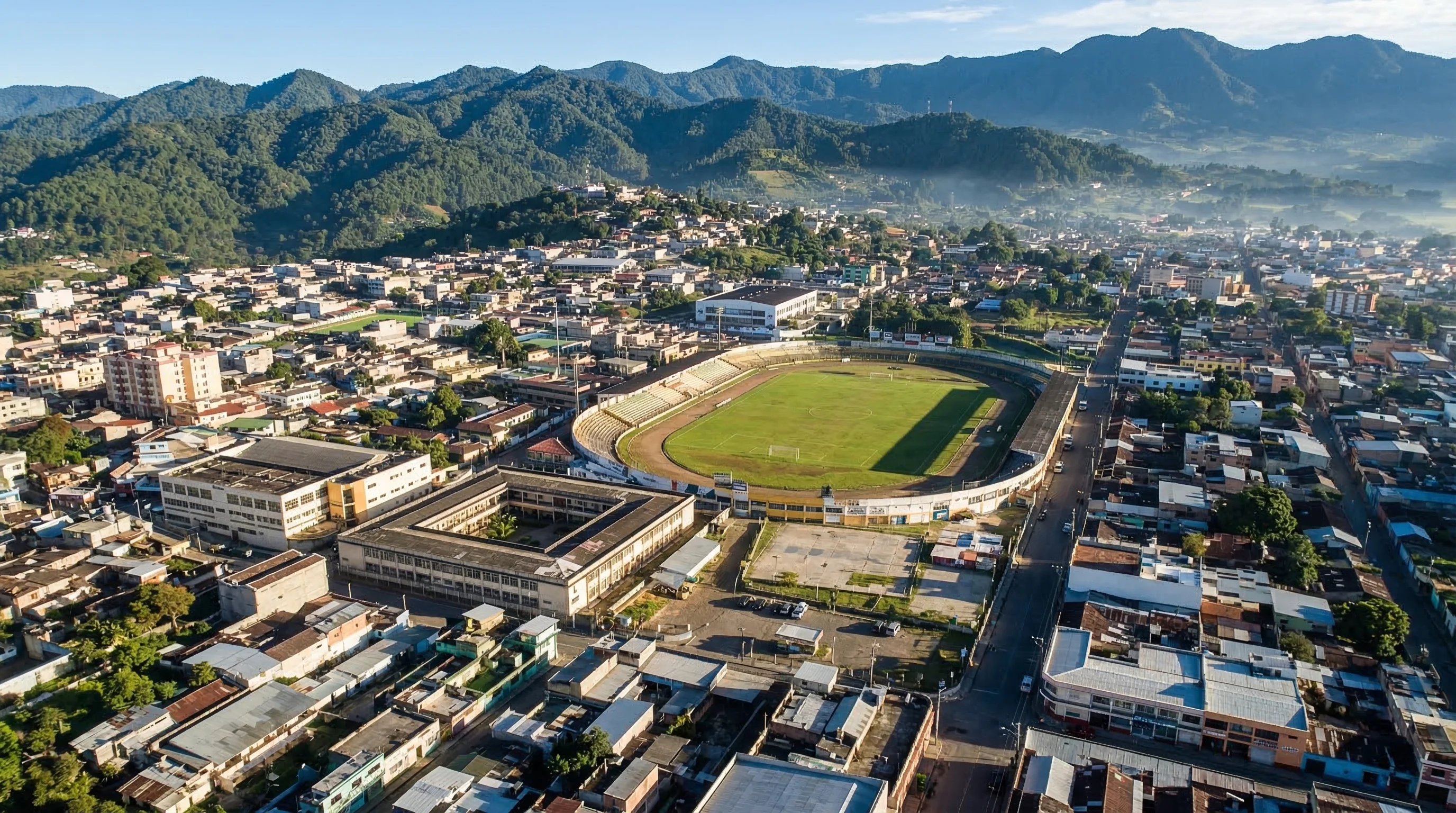 Origin
San Marcos
San Marcos, Guatemala, enjoys a strategic location in the country's southwestern region, bordering Mexico and positioned near the Pacific coast. This geography makes it a natural gateway for land-based trade into Mexico and beyond. The department's economy is anchored by agriculture, with coffee—including renowned specialty varieties—bananas, and sugar cane as primary exports, supported by a significant textile and light manufacturing sector. Key transportation infrastructure includes the CA-1 highway, which provides a direct link to the Tecún Umán border crossing, and the port of Champerico for multimodal options, though our focus remains on road freight. San Marcos functions as a critical production and export node, generating consistent demand for FTL services to move goods northward.
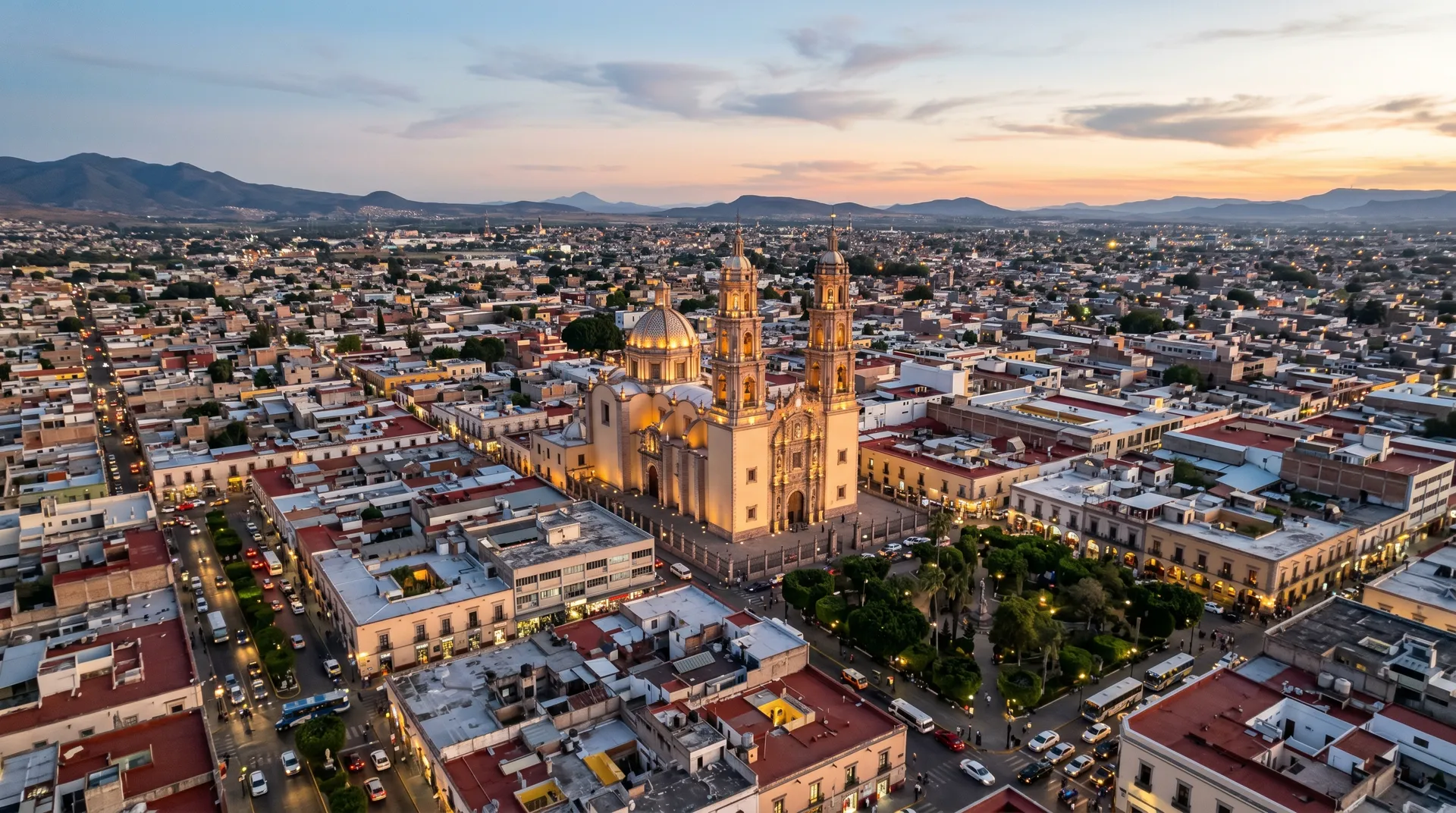 Destination
Celaya
Celaya, Guanajuato, is strategically situated in the core of Mexico's Bajío industrial region, between the economic poles of Mexico City and Monterrey. This central location offers exceptional connectivity via federal highways 45, 51, and 20, as well as rail networks, enabling efficient distribution across Mexico and into the United States. The city is a major industrial hub, with dominant sectors including automotive manufacturing (proximate to a large General Motors plant), food processing—particularly confectionery and baked goods—metalworking, and logistics services. Celaya's well-developed infrastructure and industrial parks drive high volumes of freight, making it a pivotal destination for full truckload transportation from Central America and a key redistribution point for regional supply chains.










