San Marcos to Boston
Boston → San MarcosFTL freight transportation service between San Marcos and Boston. Reliable logistics solutions for your business.
Route Description
Everything you need to know about the corridor San Marcos - Boston
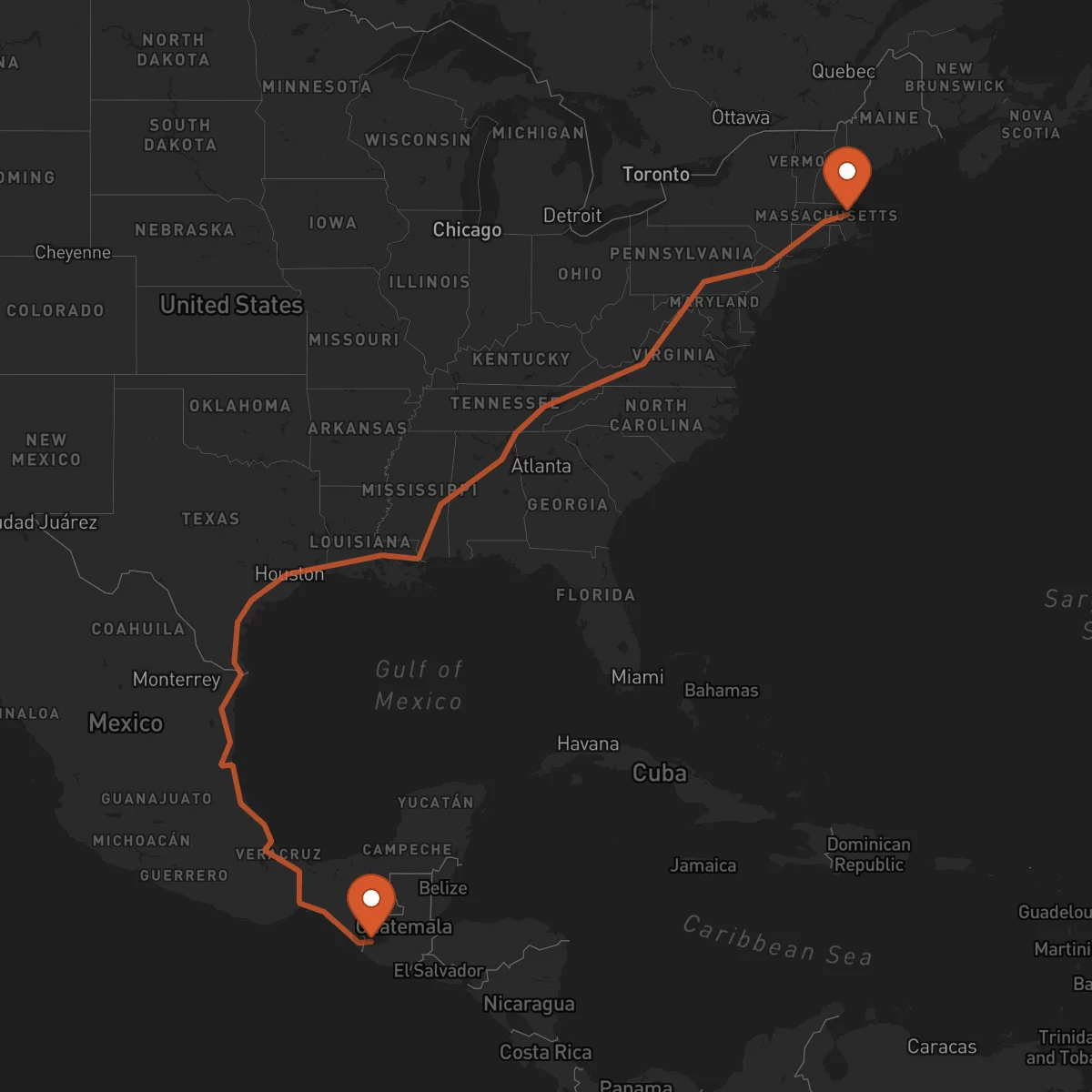
The logistics corridor connecting San Marcos, Guatemala to Boston, Massachusetts represents a vital trade link between Central America and the northeastern United States. This extensive route spans approximately 3,636 kilometers, traversing multiple countries and crossing diverse terrains. The corridor serves as a critical pathway for goods moving between the manufacturing and agricultural sectors of Guatemala and the industrial and commercial markets of New England.
The economic significance of this corridor is substantial, facilitating trade in products ranging from agricultural commodities and textiles to manufactured goods and industrial equipment. Key industries utilizing this route include agriculture, apparel manufacturing, electronics, and automotive parts. The corridor passes through major transportation hubs and industrial centers, connecting with key distribution networks in both Guatemala and the United States.
Transportation infrastructure along this route includes major highways such as CA-1 in Guatemala, connecting to Mexican Federal Highways, and continuing through the United States via I-35, I-40, and I-95. The corridor involves crucial border crossings at the Mexico-Guatemala border and the US-Mexico border, requiring careful coordination of customs procedures and documentation. Control Terrestre's expertise in cross-border logistics ensures seamless movement of freight through these critical transition points, managing all necessary compliance requirements and documentation for efficient transit.
Services for this Route
Available services for the corridor San Marcos - Boston
 Origin
San Marcos
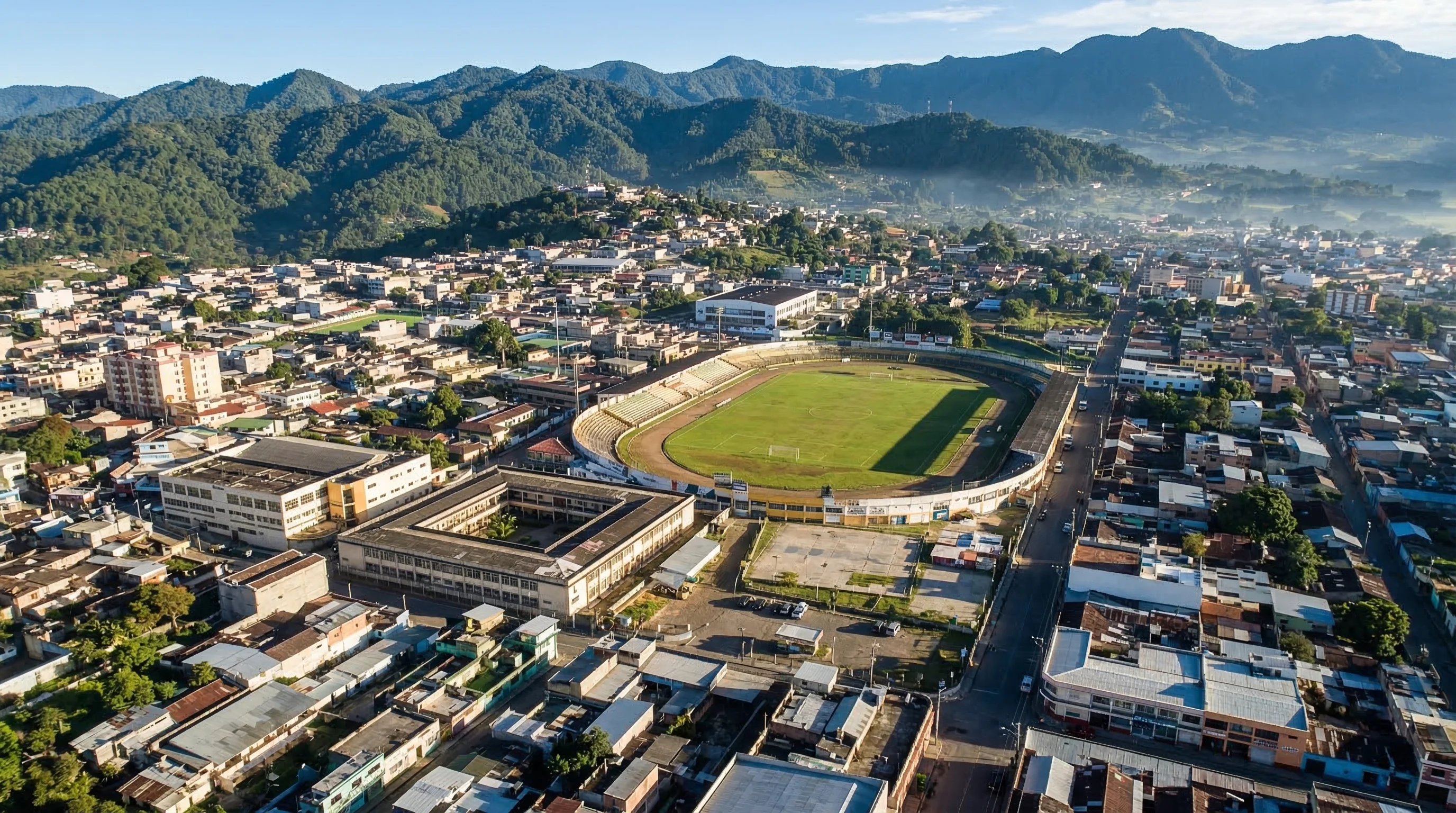
San Marcos, located in western Guatemala near the border with Mexico, serves as a strategic logistics hub for Central American trade. The region's proximity to major border crossings makes it an ideal origin point for cross-border freight movements. San Marcos benefits from its location along key transportation routes connecting Guatemala's interior with Mexico and beyond. The area is characterized by a mix of agricultural production and light manufacturing, with industries including coffee cultivation, vegetable farming, and textile production. The city's transportation infrastructure includes access to the CA-1 highway, which connects to the broader Central American highway network, and rail connections that facilitate inland distribution.
 Destination
Boston
Boston, Massachusetts stands as a major logistics and economic center in the northeastern United States, offering strategic advantages for international freight distribution. The city's location provides access to the Port of Boston, one of the oldest and most significant ports in the country, as well as extensive highway networks including I-90 and I-95. Boston's economy is diverse, with strong presence in higher education, healthcare, biotechnology, finance, and technology sectors. The metropolitan area serves as a distribution hub for New England, with sophisticated warehousing and logistics facilities supporting both regional and international trade. The city's infrastructure includes Logan International Airport and multiple rail connections, making it an ideal destination for cross-border freight operations.










