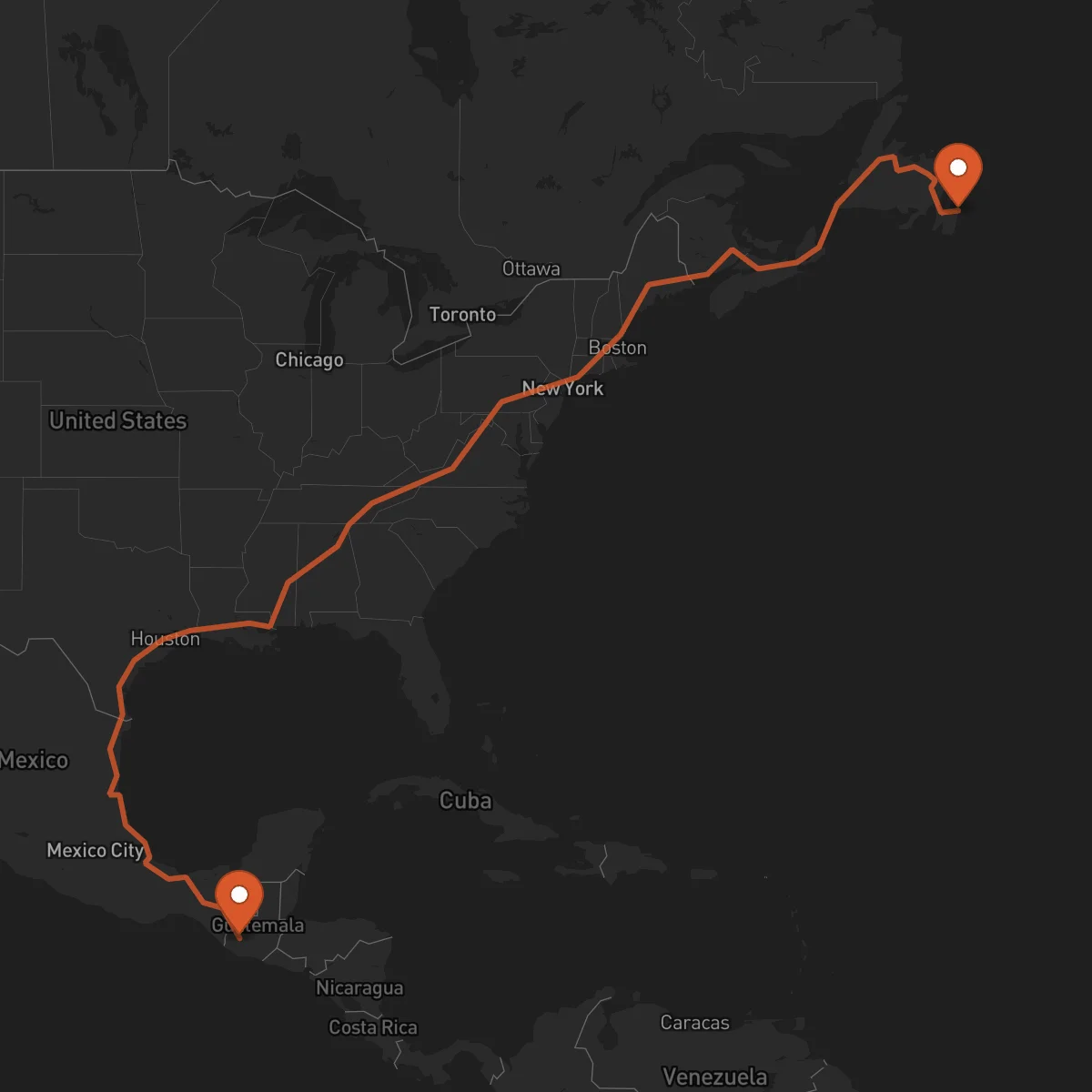
St. John's to Totonicapán
Totonicapán → St. John'sFTL freight transportation service between St. John's and Totonicapán. Reliable logistics solutions for your business.
Route Description
Everything you need to know about the corridor St. John's - Totonicapán
The logistics corridor connecting San Juan de Terranova (St. John's), Terranova y Labrador, Canada to Totonicapán, Totonicapán, Guatemala represents a critical cross-border route spanning approximately 5072 kilometers. This corridor serves as a vital link between the North American and Central American markets, facilitating the movement of goods across distinct economic zones. Its strategic importance lies in connecting the Atlantic coastal operations of Canada with the highland production centers of Guatemala.
The economic context of the region is driven by diverse industrial needs. In Canada, the corridor supports resource extraction and manufacturing sectors, while in Guatemala, it connects to agricultural production and light manufacturing hubs. The main industries utilizing this corridor include agribusiness, manufacturing, and general merchandise distribution, requiring reliable full truckload solutions.
Transportation infrastructure along this route relies on established highway networks, including the Trans-Canada Highway system in the northern segments and the Pan-American Highway infrastructure as the corridor extends into Central America. Key border crossings necessitate careful consideration of customs procedures between Canada and Guatemala. Control Terrestre facilitates operations on this corridor by leveraging our exclusive FTL services, utilizing equipment such as dry vans and refrigerated units, and ensuring compliance with the specific certifications required for cross-border transport, thereby providing a seamless connection between these two points.
Services for this Route
Available services for the corridor St. John's - Totonicapán
 Origin
St. John's
San Juan de Terranova (St. John's) serves as a strategic logistics hub on the Atlantic coast of Newfoundland, Canada. Its location provides essential connectivity for maritime and air freight, allowing for efficient distribution routes into the North American mainland. The port and airport infrastructure support robust export capabilities.
The main economic sectors driving logistics in this origin point include seafood processing, mining, and offshore industries. These sectors generate significant freight volume requiring specialized handling. The available transportation infrastructure features deep-water ports and international airports, complemented by strong road and rail connections to facilitate the initial leg of long-haul journeys. This infrastructure ensures that cargo can be efficiently consolidated and prepared for international transit.
 Destination
Totonicapán
Totonicapán functions as a key logistical node within the highlands of Guatemala, central to the region's economic activity. Its location provides access to major production areas and distribution centers across Central America. The city's infrastructure supports the flow of goods to and from neighboring countries.
The primary industries in this destination include textile and apparel manufacturing, agricultural processing, and regional trade, creating a consistent demand for dedicated transportation services. The available transportation infrastructure consists of a developing highway network that connects to the broader Central American system. This infrastructure requires specialized transport solutions to navigate the terrain, where Control Terrestre's fleet, including flatbeds and specialized equipment for oversized cargo, ensures that shipments are handled with precision from border arrival to final delivery.


Ready to ship your cargo?
Get a personalized quote for your freight.
Quote Now St. John's - Totonicapán








