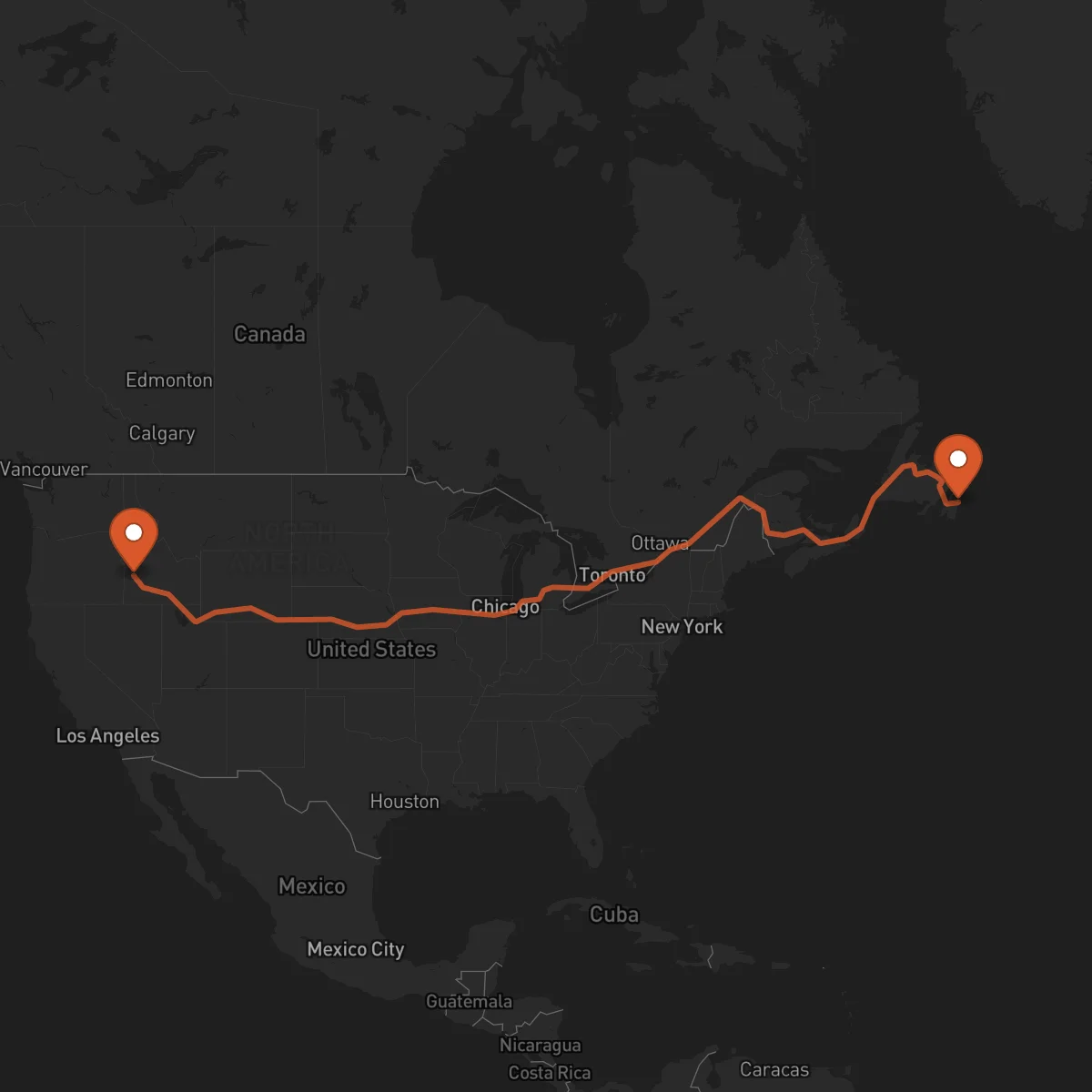
St. John's to Boise
Boise → St. John'sFTL freight transportation service between St. John's and Boise. Reliable logistics solutions for your business.
Route Description
Everything you need to know about the corridor St. John's - Boise
The cross-border corridor between San Juan de Terranova (St. John's) and Boise represents a vital logistics connection spanning over 4,818 kilometers across eastern Canada to the northwestern United States. This route traverses diverse terrain and connects two distinct economic regions, facilitating the movement of goods between Atlantic Canada's port facilities and the industrial heartland of Idaho. The corridor's strategic importance lies in its ability to link maritime shipping capabilities with inland distribution networks, creating a seamless supply chain solution for businesses operating across North America.
The economic significance of this corridor is underscored by the complementary industrial profiles of both regions. San Juan de Terranova serves as a critical gateway for Atlantic Canada's fishing, mining, and emerging technology sectors, while Boise anchors a robust economy centered on agriculture, manufacturing, and high-tech industries. This creates a dynamic trade flow where specialized goods from Newfoundland's resource-based economy meet the diverse manufacturing and agricultural products of Idaho's Treasure Valley region.
Transportation infrastructure along this corridor relies primarily on major highway networks including the Trans-Canada Highway (Route 1) connecting to U.S. Interstate systems. The route requires careful coordination of cross-border logistics, with key considerations including customs clearance procedures, documentation requirements, and seasonal weather impacts. Control Terrestre's expertise in managing these complex cross-border operations ensures reliable full truckload (FTL) service, providing dedicated transportation solutions that maintain cargo integrity throughout the entire journey from origin to destination.
Services for this Route
Available services for the corridor St. John's - Boise
 Origin
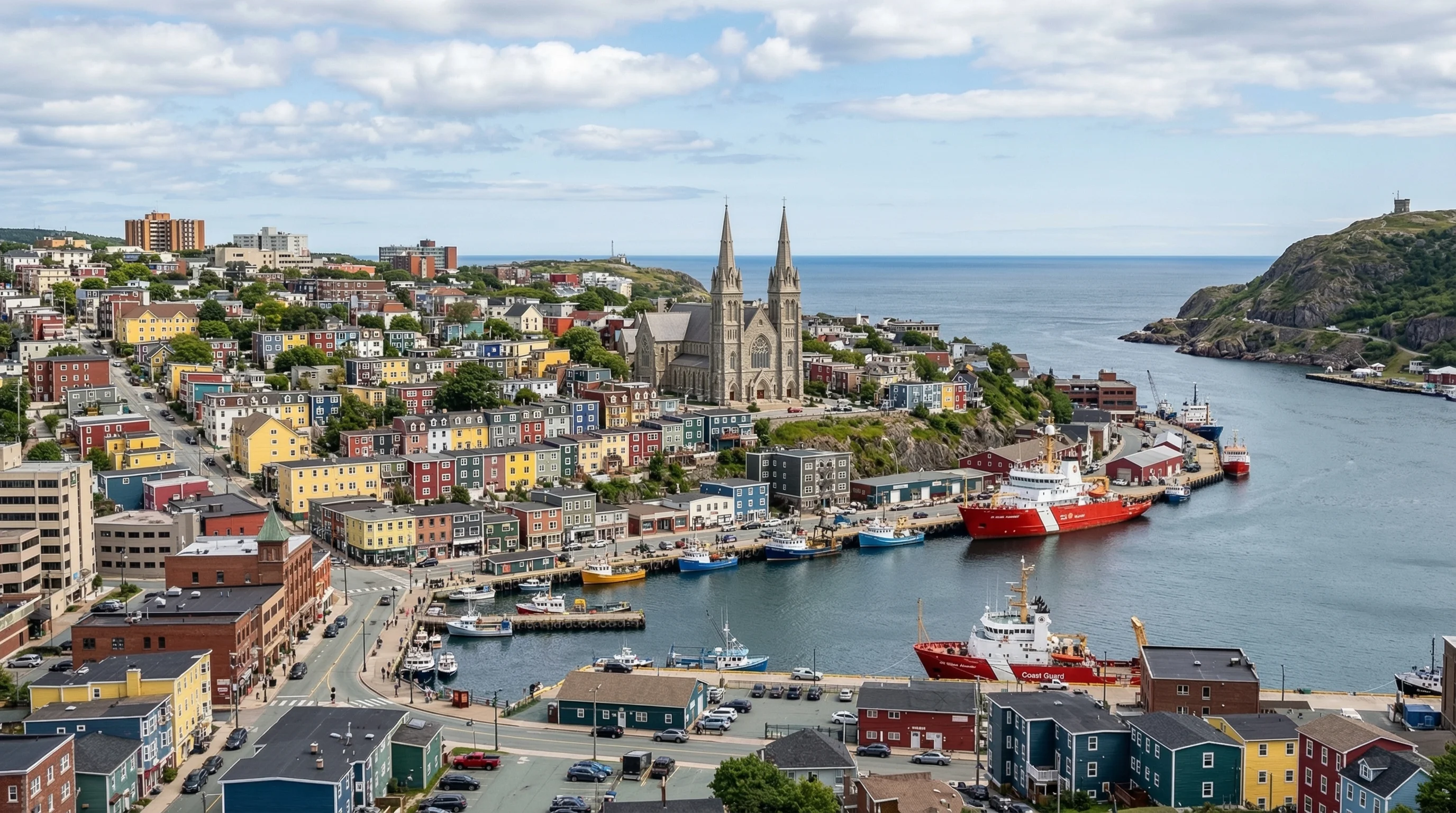
St. John's
San Juan de Terranova (St. John's), located on the eastern tip of Newfoundland and Labrador, serves as Atlantic Canada's primary maritime gateway and a strategic logistics hub for North American trade. The city's deep-water port facilities and proximity to transatlantic shipping lanes make it an essential origin point for goods destined for mainland Canada and the United States. St. John's benefits from its position as the easternmost major port in North America, offering unique advantages for transshipment and distribution operations that require Atlantic access.
The local economy is anchored by the offshore oil and gas industry, commercial fishing, and emerging sectors in ocean technology and renewable energy. These industries generate substantial freight volumes requiring specialized transportation solutions. The region's transportation infrastructure includes the St. John's International Airport, the Port of St. John's with its modern container and bulk cargo facilities, and an extensive road network connecting to the provincial highway system. The combination of maritime and ground transportation options provides flexible logistics solutions for businesses operating from this strategic Atlantic location.
 Destination
Boise
Boise, Idaho, serves as a crucial logistics hub in the northwestern United States, strategically positioned to serve the growing markets of the Pacific Northwest and Intermountain West. The city's location in the Treasure Valley provides excellent access to major transportation corridors including Interstate 84, which connects to Portland, Oregon, and Salt Lake City, Utah. Boise's infrastructure supports efficient distribution operations with its proximity to both manufacturing centers and agricultural regions of Idaho, creating a dynamic environment for freight movement and supply chain management.
The Boise metropolitan area anchors a diverse economy featuring technology companies, food processing facilities, agricultural equipment manufacturing, and distribution centers for major retailers. The region's strong agricultural sector, particularly in potatoes, dairy products, and grains, generates consistent freight volumes requiring reliable transportation services. Boise's transportation infrastructure includes the Boise Airport with dedicated cargo facilities, rail connections via Union Pacific, and a well-maintained highway system. The city's central location within the western United States makes it an ideal destination for cross-country freight movements, offering businesses efficient access to markets throughout the region.










