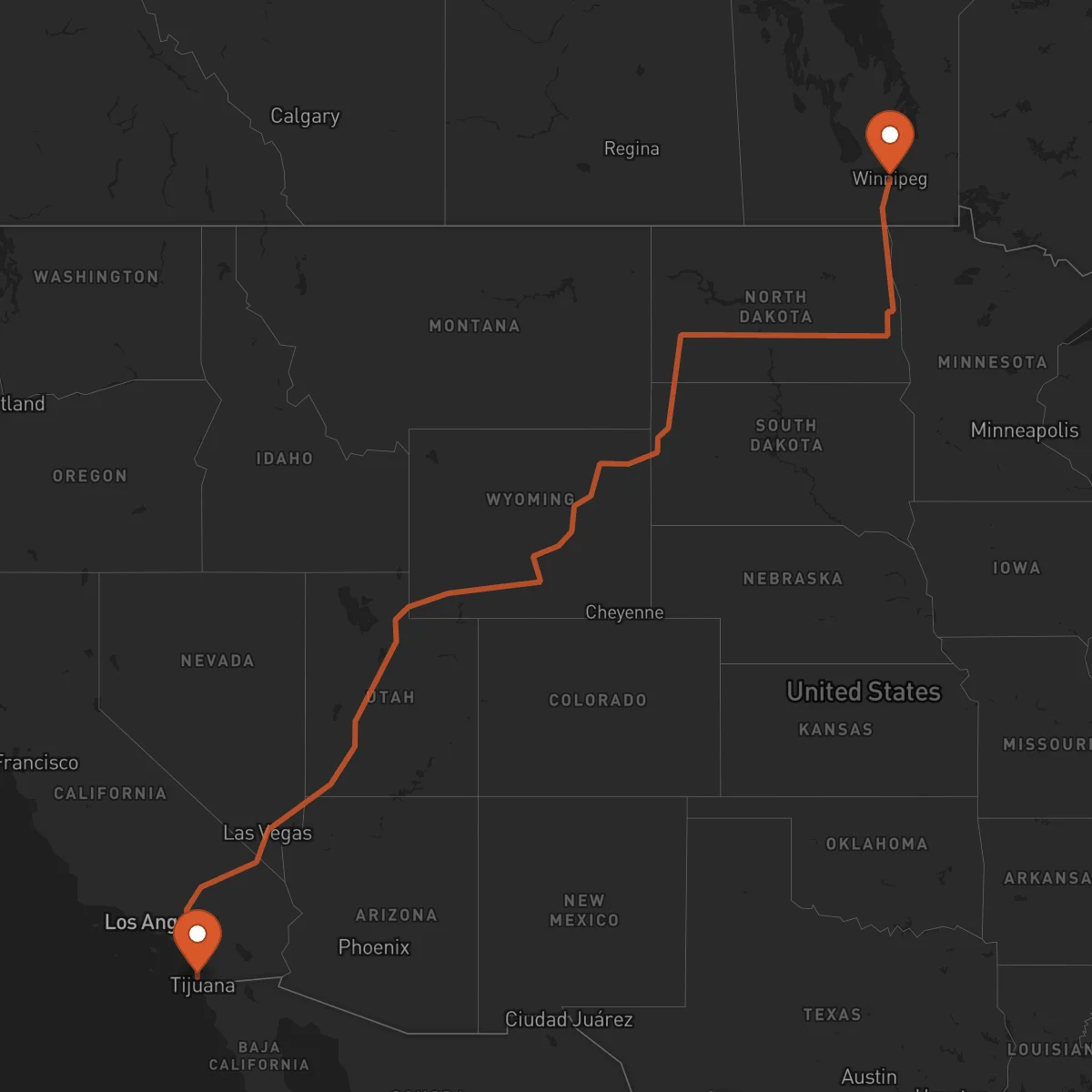
San Diego to Winnipeg
Winnipeg → San DiegoFTL freight transportation service between San Diego and Winnipeg. Reliable logistics solutions for your business.
Route Description
Everything you need to know about the corridor San Diego - Winnipeg
The San Diego to Winnipeg corridor represents a vital north-south freight artery connecting the Pacific coast of the United States with the Canadian Prairies. This 2,523-kilometer route traverses diverse landscapes and crosses the international border at multiple points, facilitating the movement of goods between two major economic regions. The corridor serves as a critical link in the North American supply chain, connecting the manufacturing and agricultural powerhouses of California and Manitoba.
The region's economic landscape is characterized by complementary industries. San Diego's economy is driven by advanced manufacturing, biotechnology, military defense, and international trade, while Winnipeg serves as a major distribution hub for agricultural products, food processing, and manufacturing for central Canada. The corridor particularly benefits the automotive, electronics, agricultural equipment, and consumer goods sectors, which rely on efficient cross-border transportation to maintain their supply chains.
Key transportation infrastructure includes Interstate 15 and Interstate 29 in the United States, transitioning to Provincial Highways 75 and 75 in Canada. The corridor crosses the border at several points, with the most commonly used being the Pembina-Emerson crossing, which offers efficient customs processing for commercial traffic. Control Terrestre's expertise in cross-border operations ensures seamless movement through these checkpoints, with our C-TPAT and FAST certifications facilitating expedited customs clearance and reducing transit times for our clients.
Services for this Route
Available services for the corridor San Diego - Winnipeg
 Origin
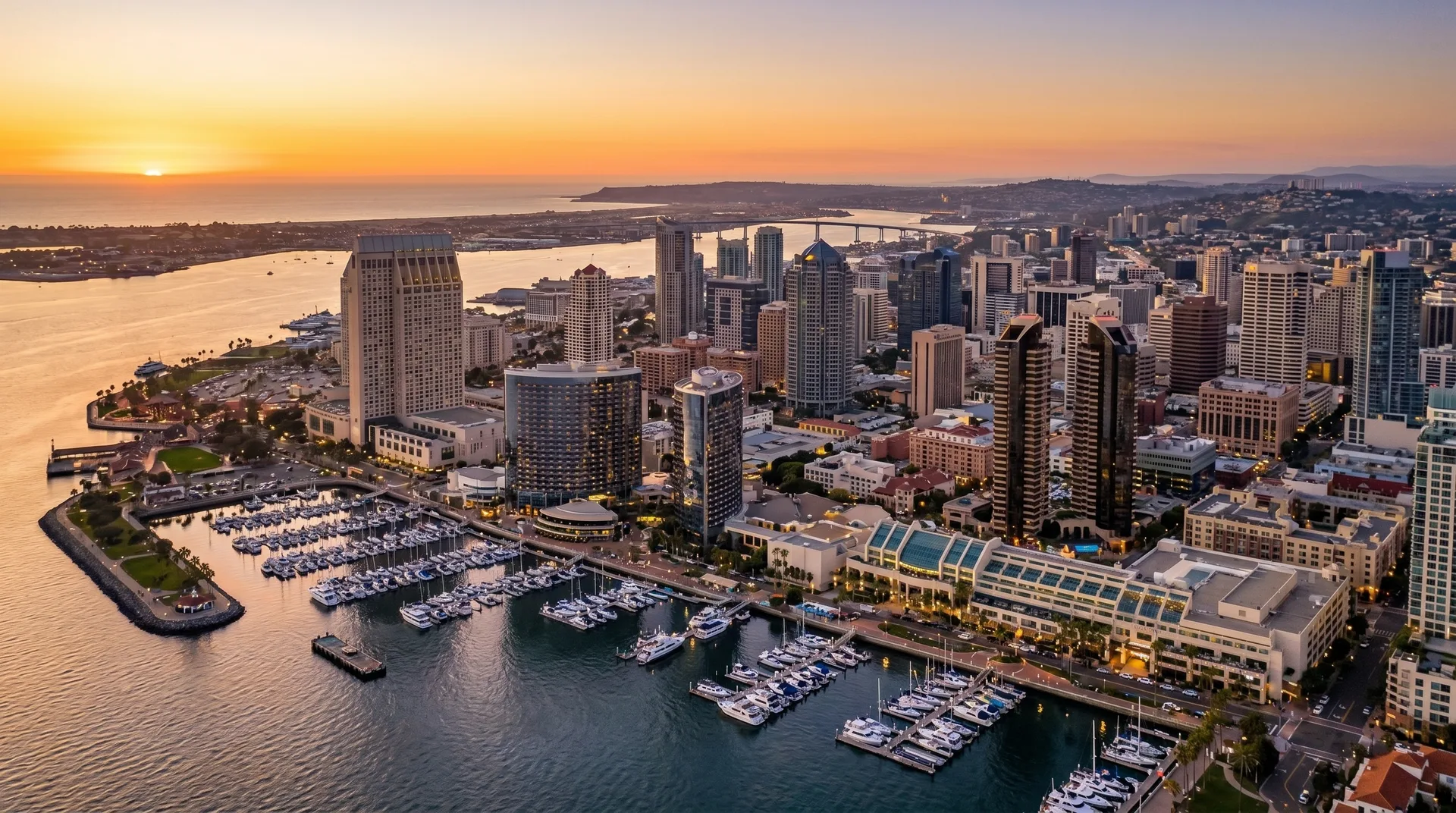
San Diego
San Diego serves as a strategic gateway for international trade, with its location on the Pacific coast and proximity to the U.S.-Mexico border. The city's economy is anchored by its deep-water port, international airport, and extensive rail connections, making it an ideal origin point for cross-border freight movements. San Diego's diverse industrial base includes advanced manufacturing, biotechnology, telecommunications, and military defense sectors, all of which require reliable transportation solutions to reach markets across North America. The city's infrastructure includes multiple interstate highways, the San Diego International Airport, and the Port of San Diego, providing multimodal transportation options for businesses.
 Destination
Winnipeg's strategic location at the geographic center of North America makes it a crucial logistics hub for the Canadian Prairies and beyond. The city's economy is driven by its role as a major distribution center for agricultural products, food processing, and manufacturing industries. Winnipeg's transportation infrastructure includes the Winnipeg James Armstrong Richardson International Airport, extensive rail networks, and major highways connecting to both coasts. The city's central location allows for efficient distribution to major Canadian markets and serves as a gateway to northern territories, making it an essential destination for cross-border freight movements.










