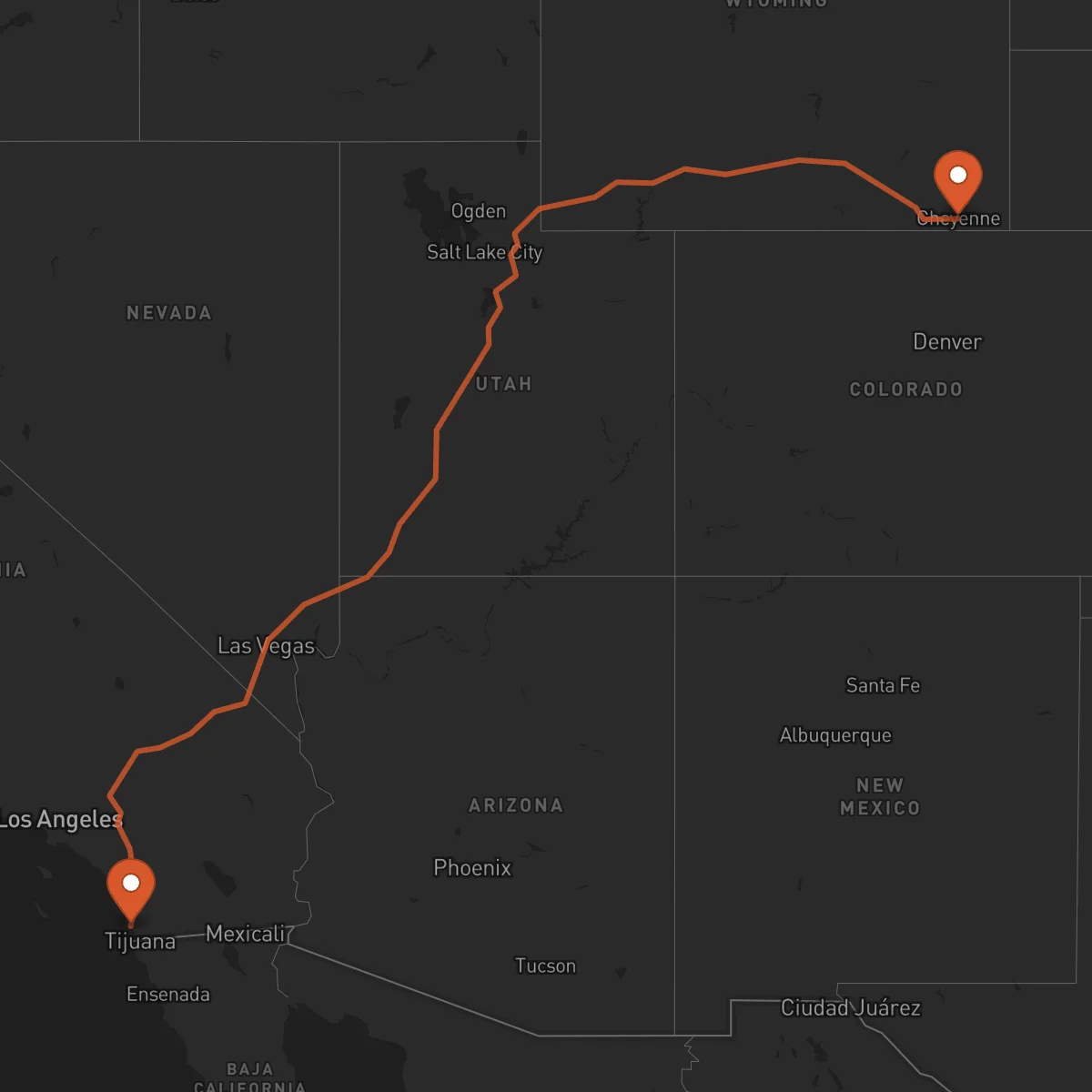
San Diego to Cheyenne
Cheyenne → San DiegoFTL freight transportation service between San Diego and Cheyenne. Reliable logistics solutions for your business.
Route Description
Everything you need to know about the corridor San Diego - Cheyenne
The San Diego to Cheyenne corridor represents a vital logistics connection between the West Coast and the Rocky Mountain region. This 1439 km route traverses diverse terrain, connecting California's Pacific port access with Wyoming's energy and agricultural heartland. The corridor serves as a crucial link in the national freight network, enabling efficient movement of goods between two economically significant regions.
The economic importance of this corridor is underscored by its role in supporting key industries. San Diego's proximity to the Mexican border and its position as a major Pacific port gateway creates substantial outbound freight volumes, while Cheyenne serves as a distribution hub for Wyoming's mining, energy, and agricultural sectors. The route facilitates trade flows that are essential to both regional and national supply chains.
Control Terrestre provides comprehensive full truckload (FTL) transportation services along this corridor, leveraging our extensive network of certified carriers. Our dedicated services ensure that shipments move efficiently through major transportation hubs including Los Angeles, Las Vegas, and Salt Lake City. We understand the unique challenges of this route, from California's urban congestion to the mountain passes of the Rockies, and our experienced team coordinates every aspect of the journey.
Our FTL solutions for the San Diego-Cheyenne corridor include specialized equipment options such as dry vans, refrigerated units, and flatbed trailers to accommodate various cargo types. With our C-TPAT certified partners and commitment to reliable service, we ensure your freight reaches its destination safely and on schedule, supporting your supply chain continuity across this critical North American trade route.
Services for this Route
Available services for the corridor San Diego - Cheyenne
 Origin
San Diego
San Diego serves as a strategic logistics hub on the West Coast, offering unparalleled access to international trade through its proximity to the Mexican border and the Port of San Diego. The city's position as a major Pacific gateway makes it an ideal origin point for freight distribution throughout the western United States. San Diego's robust transportation infrastructure includes major highways like I-5 and I-15, providing direct connections to inland destinations and facilitating efficient cargo movement.
The region's economy is driven by diverse sectors including manufacturing, technology, defense, and agriculture. San Diego's biotech and telecommunications industries generate significant freight volumes, while its proximity to Mexico creates substantial cross-border trade opportunities. The city's international airport and extensive warehousing facilities further enhance its logistics capabilities, making it an optimal starting point for freight shipments to destinations like Cheyenne.
 Destination
Cheyenne
Cheyenne functions as a strategic logistics center in the Rocky Mountain region, serving as Wyoming's capital and largest city. Its location at the intersection of major transportation routes, including I-25 and I-80, provides excellent connectivity to surrounding states and beyond. Cheyenne's position as a distribution hub makes it an ideal destination for freight arriving from coastal regions, offering efficient access to Wyoming's vast interior and neighboring states.
The local economy is anchored by government services, energy production, and agriculture. Wyoming's mining and energy sectors, centered around coal, natural gas, and oil, create substantial freight demand, while the region's agricultural activities generate consistent cargo volumes. Cheyenne's transportation infrastructure includes rail connections and a regional airport, complemented by extensive warehousing and distribution facilities that support its role in regional supply chains.










