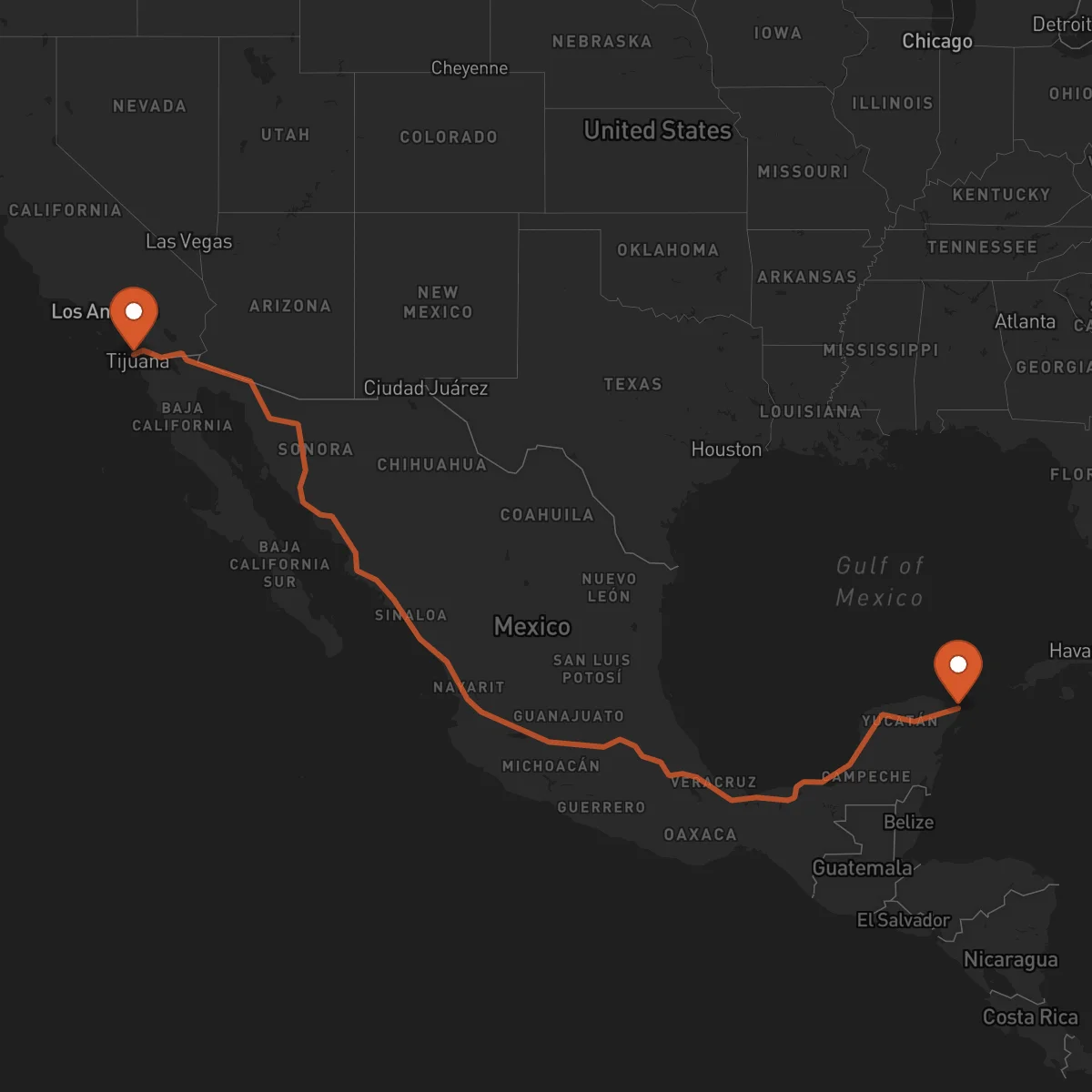
San Diego to Cancún
Cancún → San DiegoFTL freight transportation service between San Diego and Cancún. Reliable logistics solutions for your business.
Route Description
Everything you need to know about the corridor San Diego - Cancún
The logistics corridor connecting San Diego, California, with Cancún, Quintana Roo, represents a vital trade route linking the United States and Mexico across a distance of approximately 3,253 kilometers. This cross-border corridor traverses diverse terrain and connects two distinct economic regions, offering significant opportunities for freight transportation and supply chain optimization. San Diego serves as a major gateway for international trade, with its proximity to the U.S.-Mexico border and robust transportation infrastructure, while Cancún stands as a key economic hub in southeastern Mexico, known for its tourism industry and growing manufacturing sector.
The corridor facilitates the movement of various goods between these regions, supporting industries such as electronics, automotive parts, consumer goods, and agricultural products. The route primarily utilizes major highways including Interstate 5 (I-5) in the United States, which connects to Mexican Federal Highway 1 (Carretera Federal 1) and other key routes leading to Cancún. The border crossing at Tijuana is a critical point for customs clearance and requires careful coordination to ensure efficient transit times. Control Terrestre specializes in managing the complexities of cross-border transportation, offering expertise in customs procedures, documentation, and regulatory compliance to ensure seamless freight movement along this corridor.
Our team understands the unique challenges of this route, including varying road conditions, weather patterns, and regulatory requirements in different jurisdictions. We provide dedicated full truckload (FTL) services that cater to the specific needs of shippers moving goods between San Diego and Cancún. With our strategic partnerships and certified transportation providers, we ensure reliable and timely delivery while maintaining the highest standards of safety and efficiency. Our commitment to being the most human and green transportation company means we prioritize sustainable practices and transparent communication throughout the shipping process.
Services for this Route
Available services for the corridor San Diego - Cancún
 Origin
San Diego
San Diego, located in Southern California, serves as a strategic logistics hub due to its proximity to the U.S.-Mexico border and its extensive transportation infrastructure. The city is home to the Port of San Diego, which handles a significant volume of international cargo, and is served by multiple interstate highways including I-5 and I-8, providing direct connections to major markets. San Diego's economy is diverse, with key industries including biotechnology, telecommunications, defense, and manufacturing. The region also has a strong presence in the electronics and medical device sectors, making it an important origin point for high-value, time-sensitive shipments. The San Diego International Airport and multiple rail connections further enhance the city's logistics capabilities, offering multimodal transportation options for businesses looking to optimize their supply chains.
 Destination
Cancún
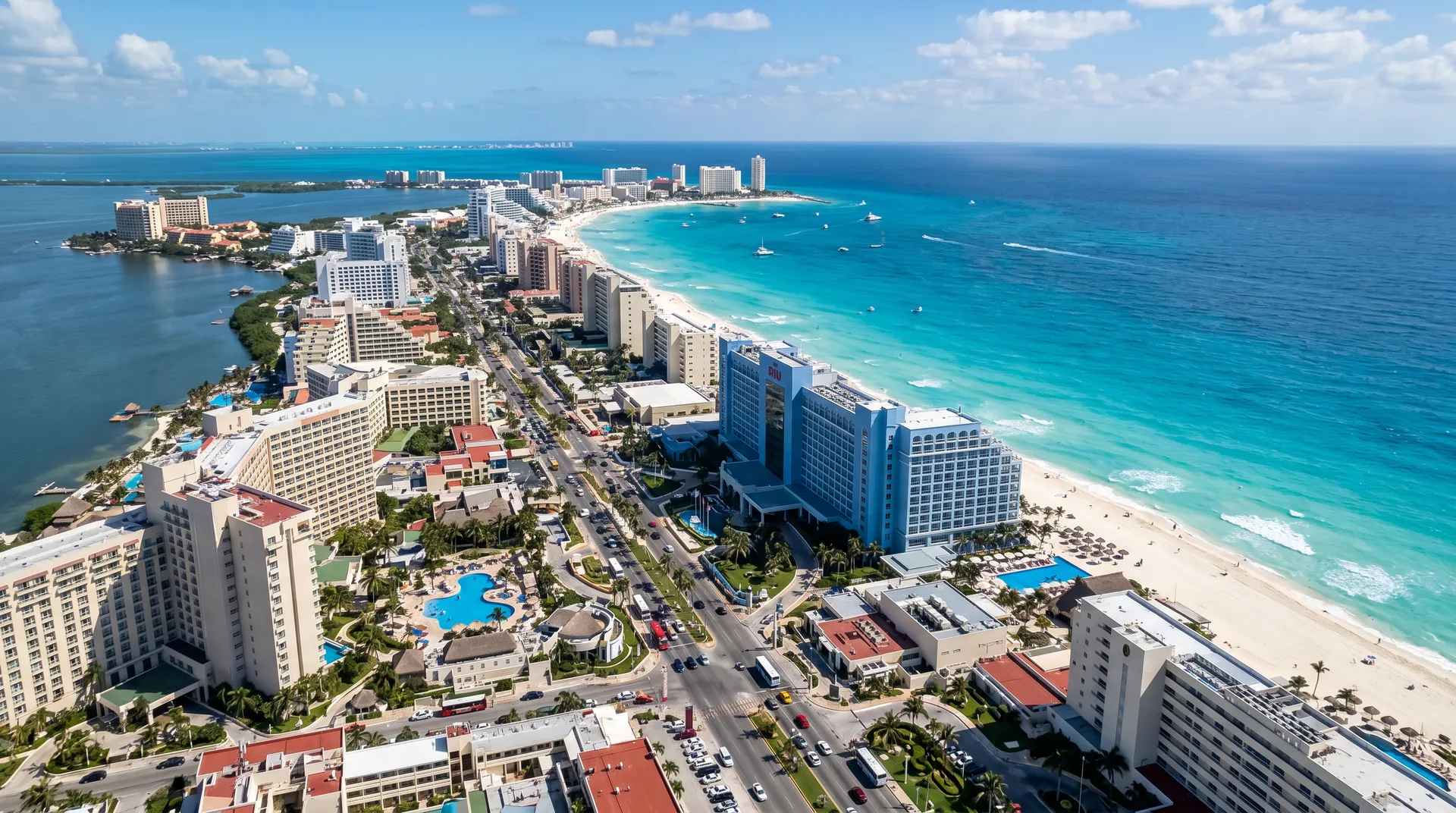
Cancún, situated in the state of Quintana Roo on Mexico's Caribbean coast, is a strategic logistics destination that combines tourism with industrial growth. The city is served by the Cancún International Airport, one of Mexico's busiest airports, and is connected to the rest of the country via Federal Highway 180 and other major routes. Cancún's economy is primarily driven by tourism, but the region has also seen significant growth in manufacturing, particularly in the aerospace, automotive, and electronics sectors. The nearby municipality of Solidaridad, home to the growing city of Playa del Carmen, further expands the industrial base of the region. Cancún's location makes it an important gateway for goods entering the Yucatán Peninsula, with its port facilities and transportation infrastructure supporting both import and export activities. The city's strategic position also facilitates trade with Central America, making it a key node in regional supply chains.










