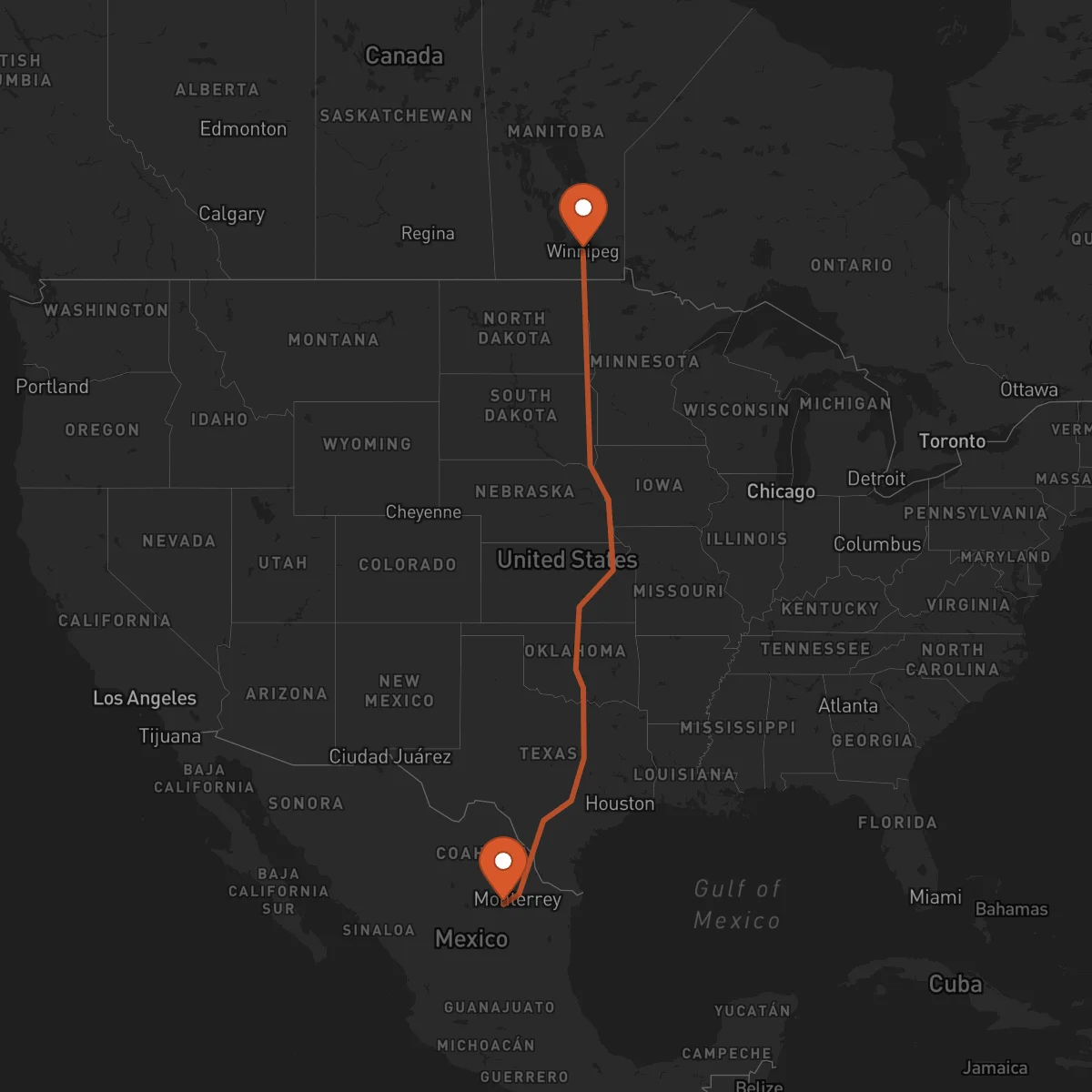
Saltillo to Winnipeg
Winnipeg → SaltilloFTL freight transportation service between Saltillo and Winnipeg. Reliable logistics solutions for your business.
Route Description
Everything you need to know about the corridor Saltillo - Winnipeg
The Saltillo-Winnipeg logistics corridor represents a vital cross-border connection between northern Mexico and central Canada, spanning approximately 2,739 kilometers through the heart of North America. This strategic route links Coahuila's industrial powerhouse with Manitoba's agricultural and manufacturing hub, creating essential supply chain opportunities for companies operating in both regions. The corridor traverses diverse terrain and crosses multiple state and provincial lines, requiring specialized knowledge of cross-border regulations, customs procedures, and regional transportation networks.
The economic significance of this corridor is substantial, connecting Mexico's automotive manufacturing center with Canada's agricultural processing and heavy equipment production industries. Saltillo, known as the "Detroit of Mexico," produces vehicles and auto parts that serve the North American market, while Winnipeg serves as a distribution center for agricultural products, machinery, and manufactured goods. The route facilitates the movement of automotive components, agricultural equipment, food products, and industrial machinery between these two economic centers.
Key transportation infrastructure along this corridor includes Mexico's Federal Highway 45, which connects to major U.S. interstates through Texas and the Midwest, eventually linking to Canadian Highway 75 into Winnipeg. The primary border crossing at Laredo/Nuevo Laredo handles significant freight volume, while alternative crossings at Eagle Pass/Piedras Negras offer flexibility for time-sensitive shipments. Control Terrestre's expertise in cross-border operations ensures seamless customs clearance, proper documentation, and compliance with all regulatory requirements, providing reliable full truckload (FTL) transportation solutions that keep your supply chain moving efficiently across international boundaries.
Services for this Route
Available services for the corridor Saltillo - Winnipeg
 Origin
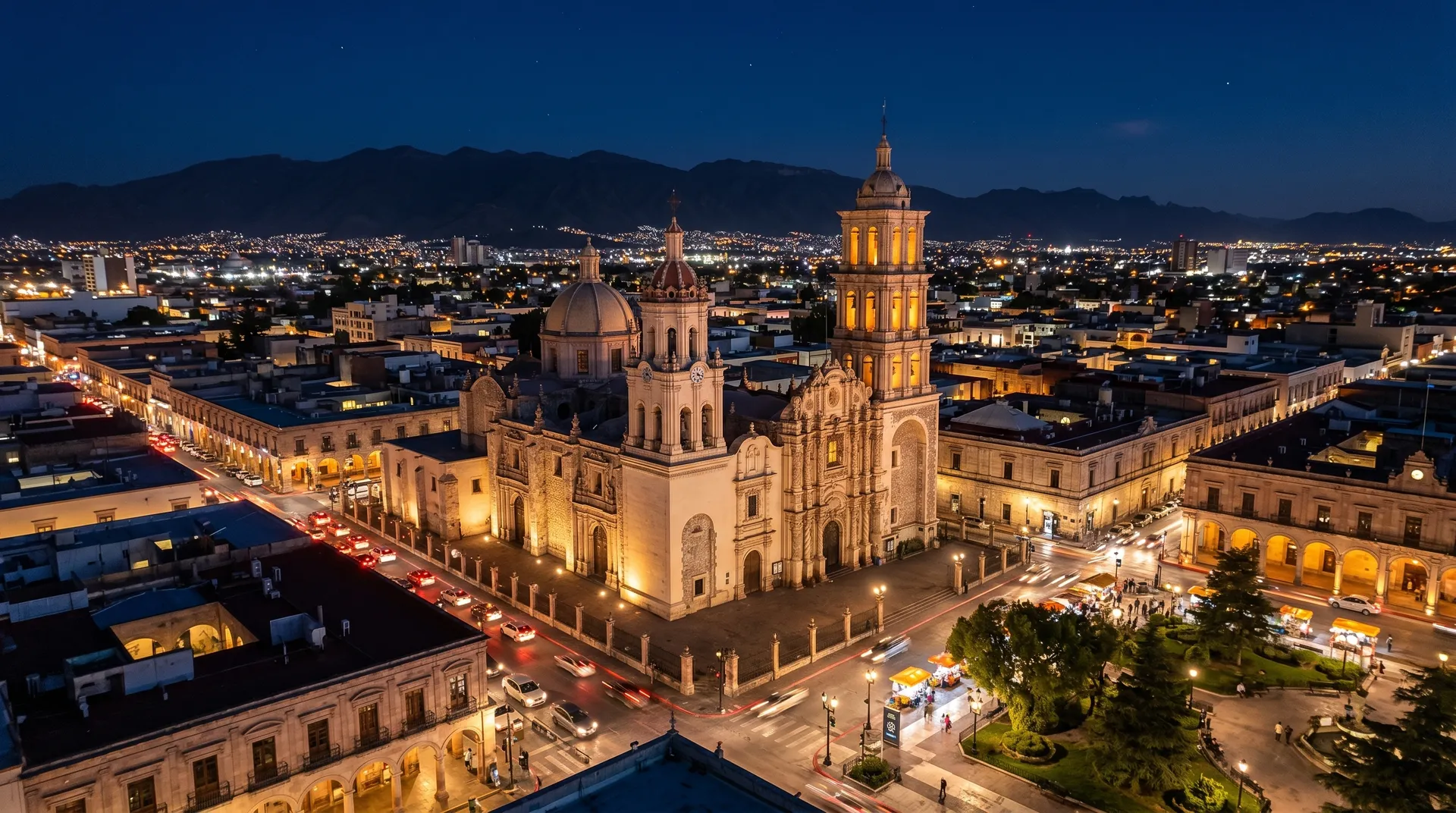
Saltillo, located in the state of Coahuila, Mexico, serves as a strategic logistics hub in northern Mexico with excellent connectivity to major industrial centers. The city's proximity to the U.S. border (approximately 400 km from Laredo) and its position along Federal Highway 45 make it an ideal origin point for cross-border freight movements. Saltillo's transportation infrastructure includes the Plan de Guadalupe International Airport, extensive rail connections through Ferromex, and a well-developed highway network that facilitates efficient cargo movement throughout Mexico and into the United States.
The economic landscape of Saltillo is dominated by the automotive industry, with major manufacturers including General Motors, Chrysler, and numerous Tier 1 and Tier 2 suppliers establishing operations in the region. Beyond automotive, Saltillo hosts industries in aerospace, electronics, and manufacturing, creating diverse freight generation opportunities. The city's industrial parks and manufacturing clusters generate consistent demand for full truckload transportation services, particularly for time-sensitive automotive parts and finished vehicles destined for North American markets.
 Destination
Winnipeg, the capital city of Manitoba, Canada, occupies a strategic position at the geographic center of North America, making it a crucial logistics and distribution hub. Located at the confluence of the Red and Assiniboine rivers, Winnipeg serves as the gateway to Western Canada and provides excellent connectivity through major transportation corridors. The city's infrastructure includes the Winnipeg James Armstrong Richardson International Airport, extensive rail networks operated by Canadian National Railway and Canadian Pacific Railway, and a comprehensive highway system that connects to all major Canadian markets.
The economic base of Winnipeg is diverse, with strong sectors in agriculture, manufacturing, and transportation. The city is a major center for agricultural processing, handling grain, livestock products, and food processing for both domestic consumption and export. Manufacturing industries include agricultural equipment, aerospace components, and advanced manufacturing. Winnipeg's role as a distribution center for Western Canada creates consistent demand for full truckload transportation services, particularly for agricultural products moving to and from the U.S. Midwest and for industrial equipment servicing the Canadian Prairies.










