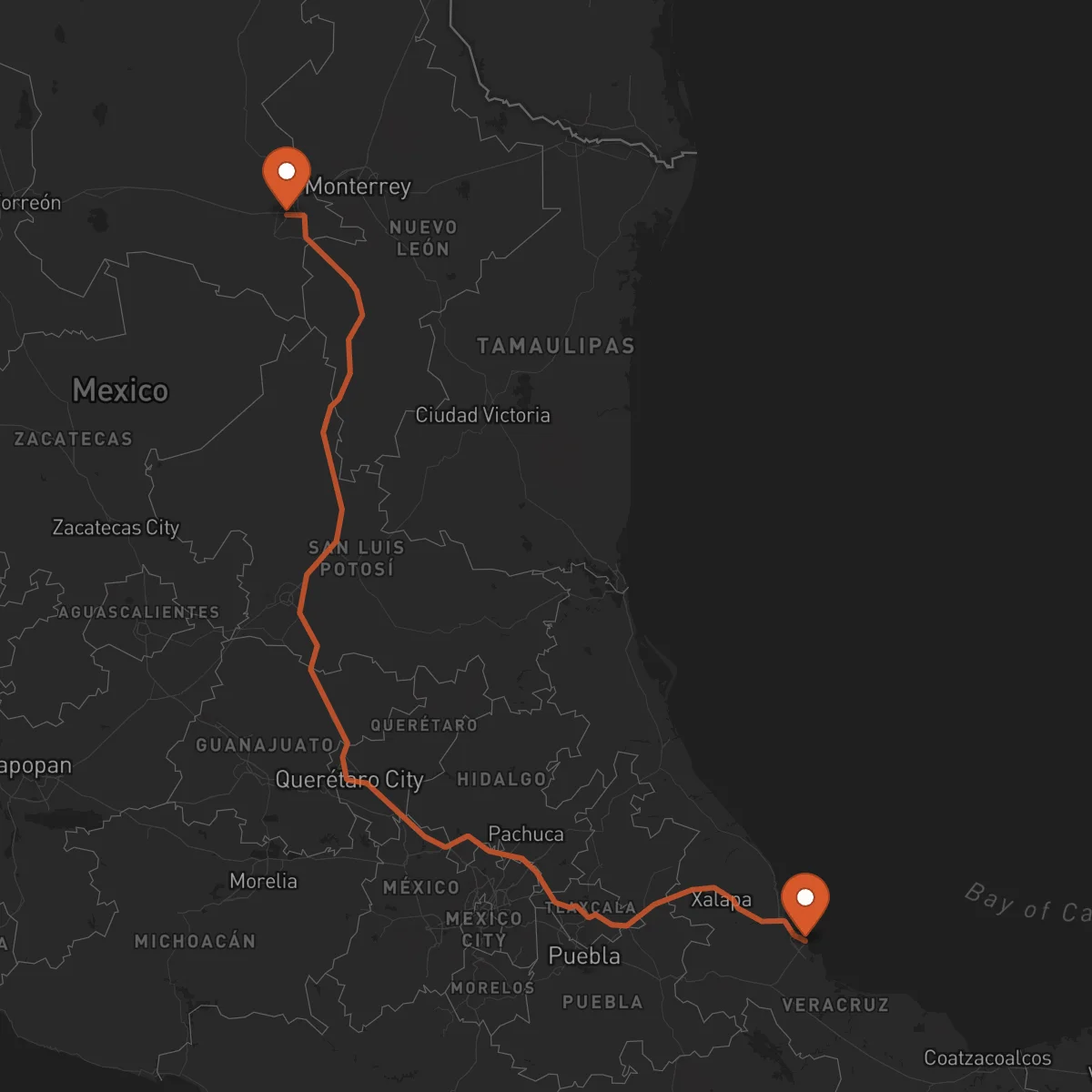
Saltillo to Veracruz
Veracruz → SaltilloFTL freight transportation service between Saltillo and Veracruz. Reliable logistics solutions for your business.
Route Description
Everything you need to know about the corridor Saltillo - Veracruz
The Saltillo-Veracruz corridor represents a vital logistics connection in Mexico, spanning approximately 856 kilometers between the industrial powerhouse of Coahuila and the strategic Gulf port. This route serves as a critical link between Mexico's northern manufacturing belt and its primary maritime gateway on the Atlantic, facilitating the flow of goods between the country's industrial heartland and international markets.
The corridor traverses diverse terrain and connects two fundamentally different economic regions. Saltillo, located in the high plateau of northern Mexico, is a cornerstone of the country's automotive and manufacturing sectors. In contrast, Veracruz represents Mexico's primary Atlantic port, serving as the entry point for imports and the exit for exports to Europe, the United States East Coast, and global markets. This complementary relationship makes the corridor essential for supply chain optimization.
The Saltillo-Veracruz route primarily serves automotive manufacturers, auto parts suppliers, steel producers, and industrial equipment companies. These industries require reliable, full truckload transportation to move heavy machinery, components, and finished products. The corridor also supports the agricultural sector, with Veracruz serving as a key point for importing raw materials and exporting processed foods and beverages.
Control Terrestre provides specialized FTL transportation services along this corridor, ensuring that cargo moves efficiently and securely between these two strategic points. Our experienced carriers understand the specific requirements of industrial cargo, offering dedicated trucks, specialized handling, and real-time tracking to meet the demanding schedules of modern supply chains.
Services for this Route
Available services for the corridor Saltillo - Veracruz
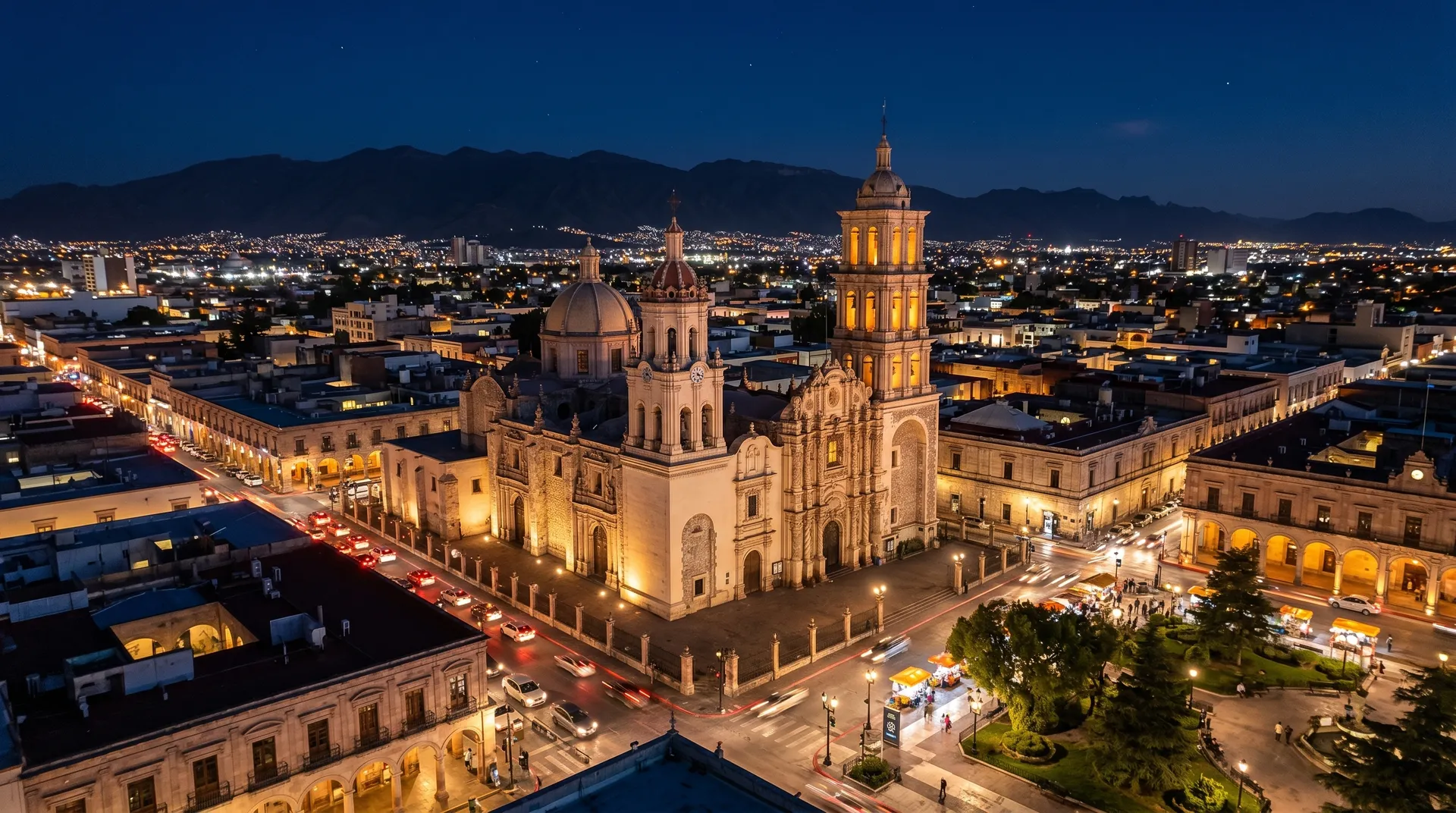 Origin
Saltillo, the capital of Coahuila, stands as one of Mexico's most important industrial cities. Strategically located in the northeast, it serves as a logistics hub for northern Mexico, with excellent connectivity to major industrial centers and the U.S. border. The city's industrial parks and manufacturing facilities make it a focal point for freight transportation in the region.
The city's economy is dominated by the automotive industry, with major assembly plants and parts manufacturers operating in the area. Saltillo is also home to significant steel production, aerospace manufacturing, and machinery production. This industrial diversity creates a constant demand for reliable freight transportation services to move both raw materials inbound and finished products outbound.
Saltillo benefits from excellent transportation infrastructure, including direct access to federal highways such as Highway 40 and Highway 57, which connect to major cities and border crossings. The city also has rail connections and proximity to Monterrey International Airport, providing multimodal transportation options for businesses operating in the region.
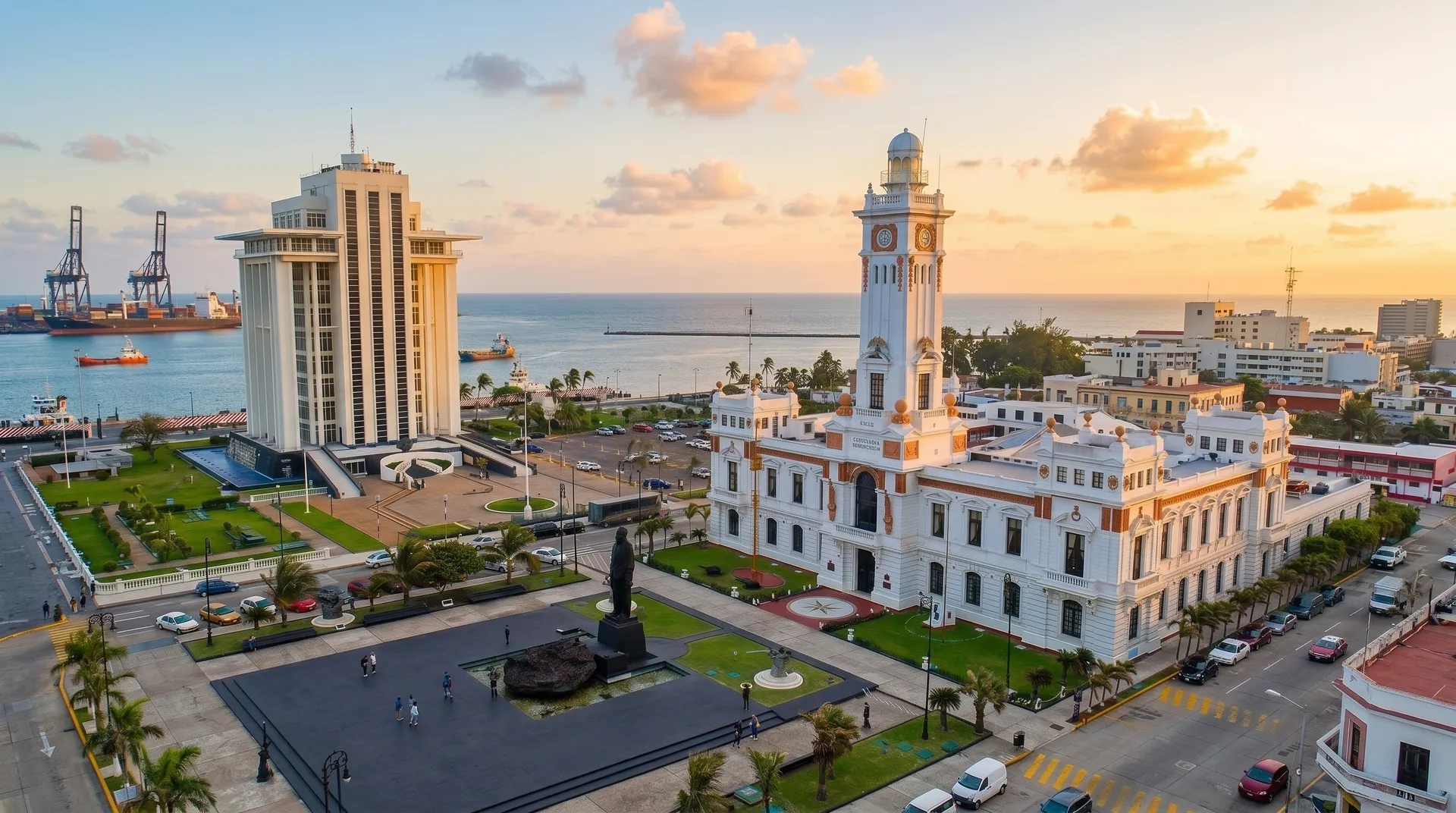 Destination
Veracruz, located on Mexico's Gulf coast, is the country's most important Atlantic port and a strategic logistics center. Its position as the primary maritime gateway to the Gulf of Mexico makes it essential for international trade, connecting Mexican industries with global markets through its extensive port facilities and transportation infrastructure.
The city's economy revolves around port activities, with major industries including petroleum refining, food processing, and chemical manufacturing. Veracruz also serves as a key point for agricultural exports from the Gulf coast region and imports of raw materials for Mexico's industrial sector. The port's capacity to handle diverse cargo types makes it a critical node in national supply chains.
Veracruz boasts world-class port infrastructure, including multiple terminals capable of handling containerized, bulk, and specialized cargo. The city is connected to the national highway network via Highway 180 and Highway 140, providing efficient road access to central and northern Mexico. Additionally, rail connections link the port to inland destinations, offering multimodal transportation solutions for businesses operating in the region.










