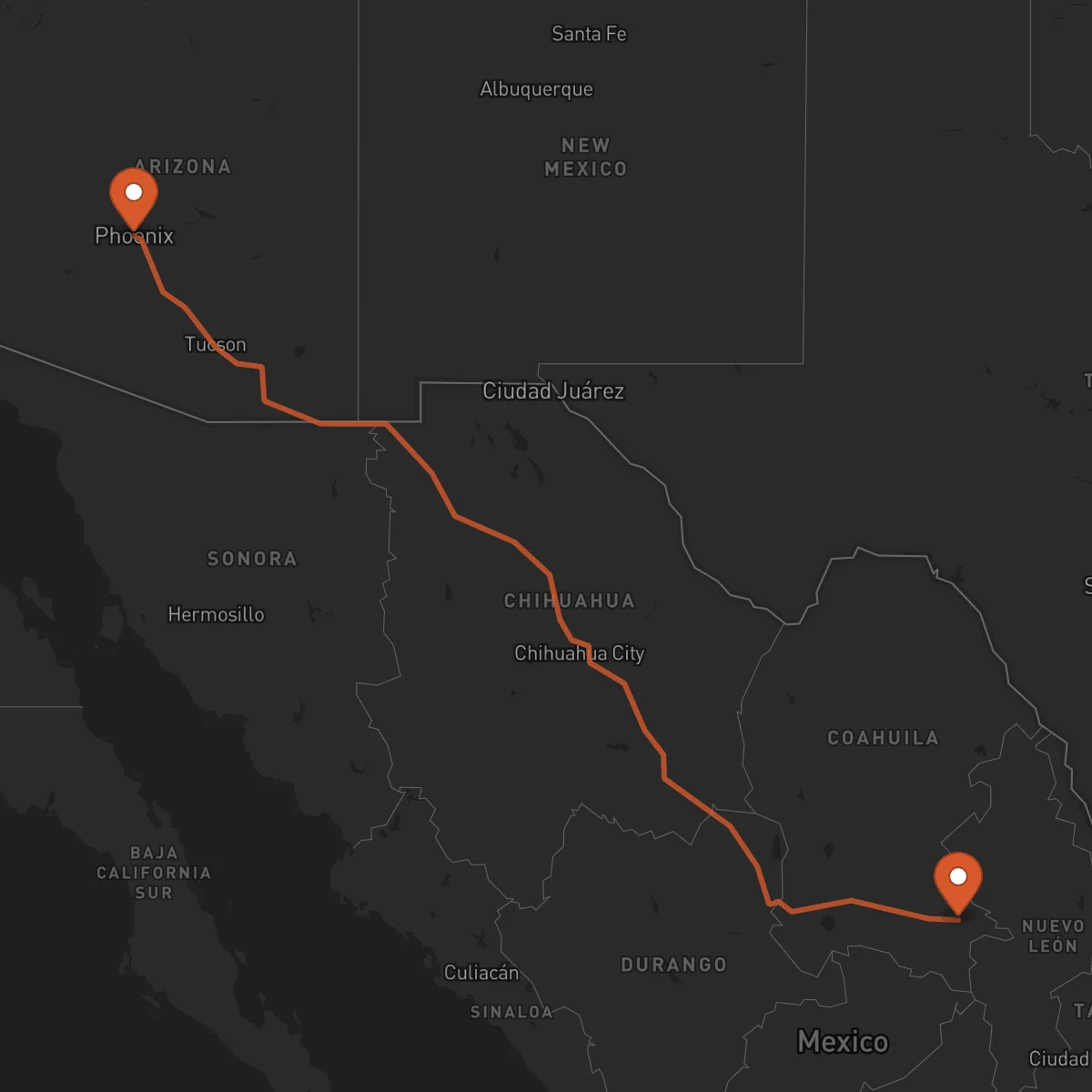
Saltillo to Phoenix
Phoenix → SaltilloFTL freight transportation service between Saltillo and Phoenix. Reliable logistics solutions for your business.
Route Description
Everything you need to know about the corridor Saltillo - Phoenix
The Saltillo-Phoenix corridor represents a vital logistics connection between Mexico's industrial heartland and one of the most dynamic commercial hubs in the southwestern United States. This 1,394 km route links Coahuila's automotive manufacturing center with Arizona's expanding distribution and technology sectors, facilitating the seamless movement of goods across the North American border. The corridor serves as a crucial artery for cross-border trade, connecting two regions with complementary economic strengths and growing industrial capabilities.
This route traverses a region characterized by significant industrial development on both sides of the border. Saltillo, known as the "Detroit of Mexico," hosts major automotive assembly plants and a robust supplier network, while Phoenix has emerged as a key logistics and distribution center for the southwestern United States, with strong presence in technology, aerospace, and advanced manufacturing. The corridor supports industries including automotive parts, electronics, machinery, consumer goods, and agricultural products, reflecting the integrated nature of the North American supply chain.
The primary transportation infrastructure consists of the MEX-40 and I-10 highways, offering efficient connectivity between the two cities. The corridor crosses at the Douglas-Agua Prieta or Naco ports of entry, providing strategic options for customs clearance depending on cargo type and urgency. Control Terrestre facilitates seamless operations on this corridor through our expertise in cross-border logistics, C-TPAT certified carriers, and comprehensive knowledge of customs procedures, ensuring reliable and efficient freight transportation between Saltillo and Phoenix.
Services for this Route
Available services for the corridor Saltillo - Phoenix
 Origin
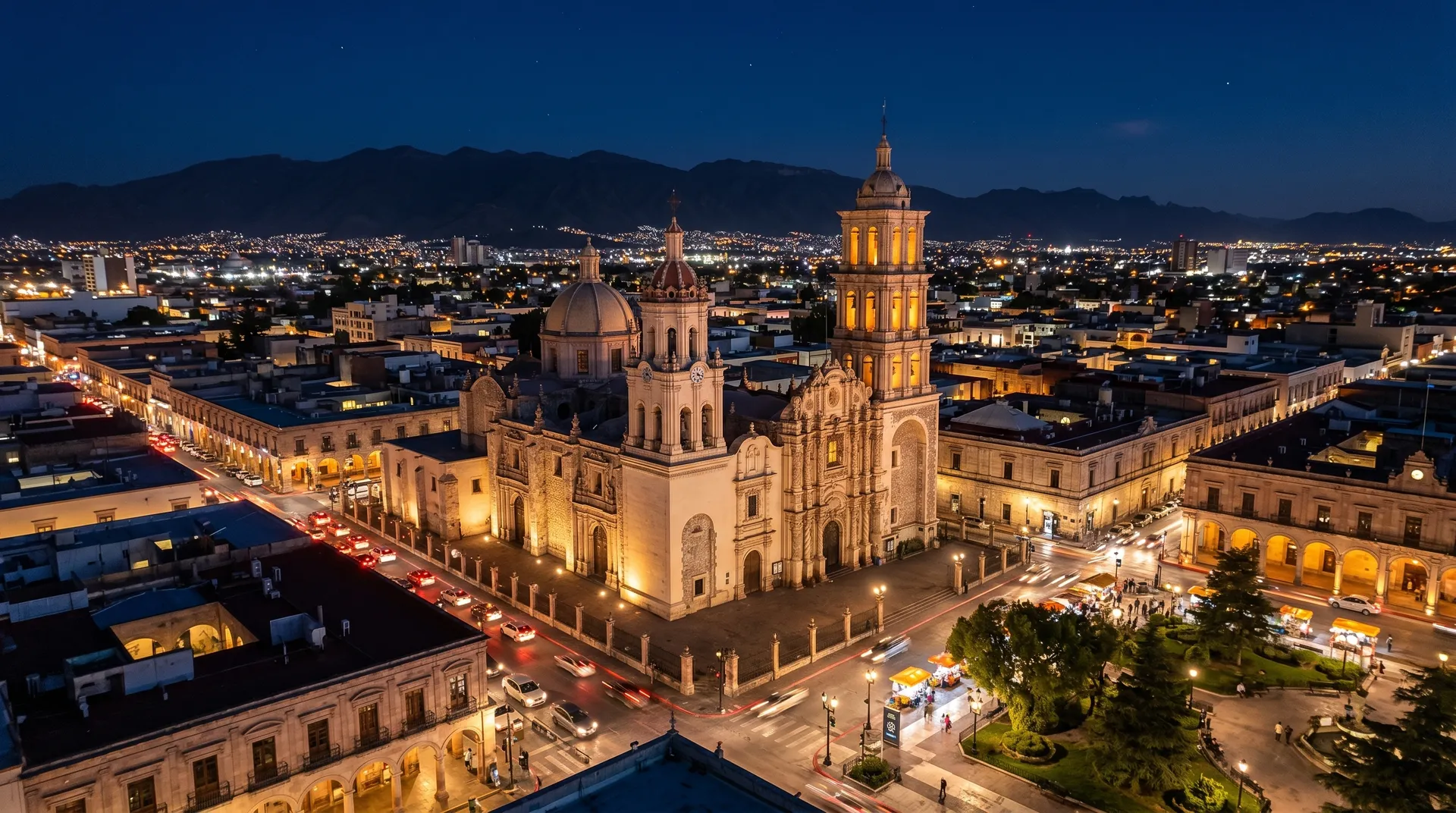
Saltillo, the capital of Coahuila, stands as a strategic logistics hub in northern Mexico, benefiting from its proximity to the U.S. border and its position within the industrial corridor of northeastern Mexico. The city's location provides excellent connectivity to major markets in both Mexico and the United States, making it an ideal origin point for cross-border freight operations. Saltillo's infrastructure includes the Plan de Guadalupe International Airport, rail connections through Ferromex, and direct highway access to the U.S. border via MEX-40.
The city's economy is anchored by its automotive industry, hosting assembly plants for major manufacturers and a comprehensive network of Tier 1 and Tier 2 suppliers. Beyond automotive, Saltillo's industrial base includes aerospace manufacturing, metal products, and agricultural processing. The region's skilled workforce, industrial parks, and established supply chain networks make it a critical origin point for high-value, time-sensitive freight moving to U.S. markets.
 Destination
Phoenix
Phoenix, Arizona serves as a strategic logistics and distribution hub in the southwestern United States, offering exceptional connectivity to major markets across the region. The city's location provides access to the growing markets of the Southwest, including California, Nevada, and the broader Mountain West region. Phoenix's Sky Harbor International Airport and extensive highway network, including I-10 and I-17, create a multimodal transportation environment ideal for efficient freight movement and distribution operations.
The Phoenix metropolitan area has developed a diverse economic base, with strong presence in technology, aerospace, semiconductor manufacturing, and logistics services. The region's proximity to major West Coast ports, combined with lower operational costs compared to coastal California, has attracted significant warehousing and distribution investment. Phoenix's climate-controlled warehousing facilities and advanced logistics infrastructure make it particularly well-suited for handling temperature-sensitive and high-value cargo, supporting the sophisticated supply chain requirements of modern industries.










