Saltillo to Charlotte
Charlotte → SaltilloFTL freight transportation service between Saltillo and Charlotte. Reliable logistics solutions for your business.
Route Description
Everything you need to know about the corridor Saltillo - Charlotte
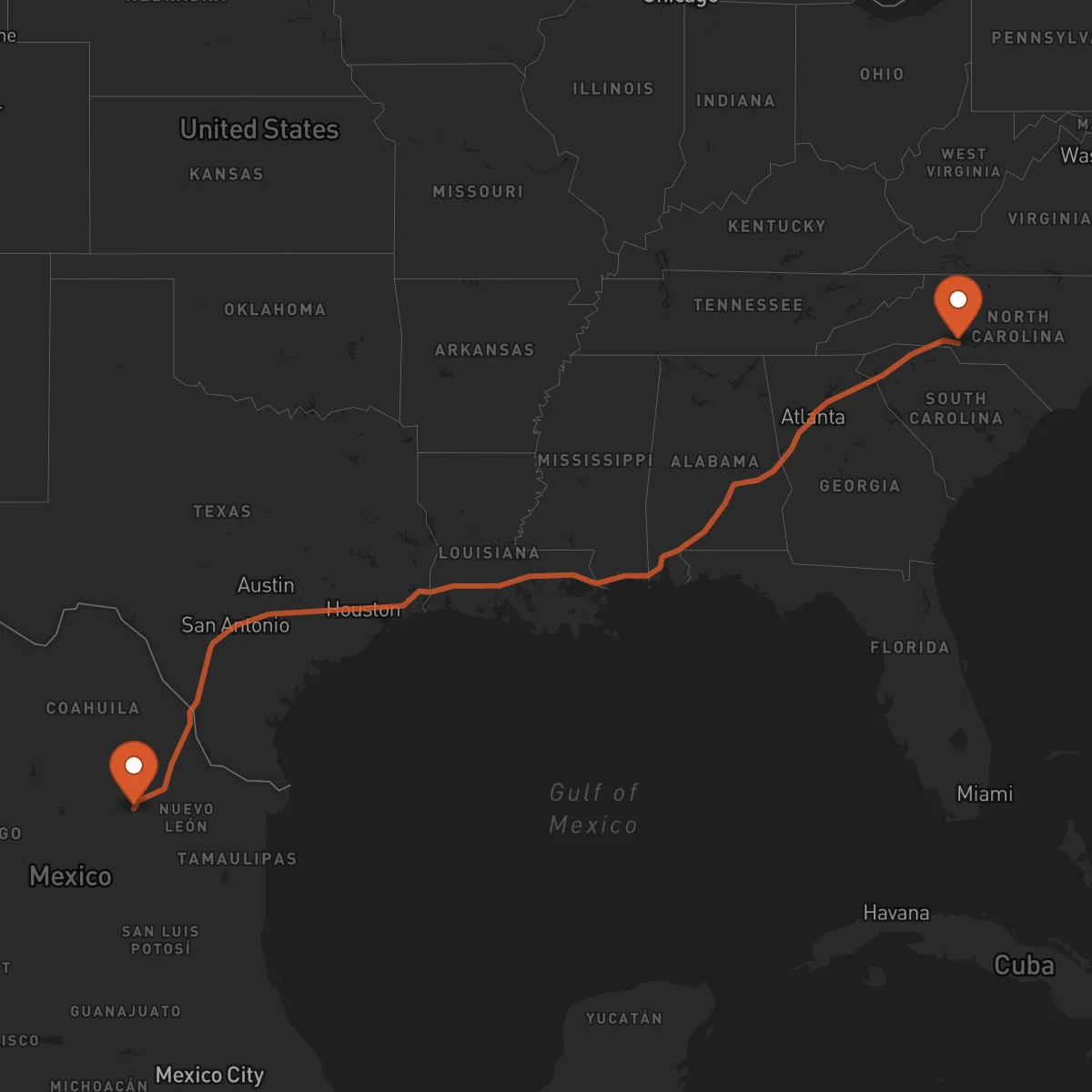
The logistics corridor connecting Saltillo, Coahuila, Mexico to Charlotte, North Carolina, United States represents a vital trade route spanning approximately 2,211 kilometers. This cross-border corridor facilitates the movement of goods between Mexico's industrial heartland and one of the southeastern United States' most dynamic economic centers. The route traverses diverse terrain and crosses multiple state and international boundaries, requiring expert coordination to ensure seamless freight movement.
The corridor serves as a critical link between Mexico's automotive manufacturing powerhouse in Saltillo and Charlotte's thriving logistics and distribution ecosystem. Saltillo, known as the "Detroit of Mexico," produces vehicles and components that supply assembly plants throughout North America, while Charlotte has emerged as a major hub for freight forwarding, warehousing, and distribution services. This complementary relationship drives substantial freight volume along this route.
Key industries utilizing this corridor include automotive manufacturing, aerospace components, electronics, and industrial machinery. The transportation infrastructure consists primarily of major highways including Mexican Federal Highway 40D, which connects to Interstate 35 in Laredo, followed by I-35 North to Dallas, then I-30 East to Little Rock, I-40 East through Tennessee, and finally I-77 South into Charlotte. The corridor typically crosses at the Laredo-Nuevo Laredo border crossing, one of North America's busiest commercial ports of entry.
Control Terrestre specializes in managing the complexities of this cross-border operation, ensuring compliance with customs regulations, coordinating documentation, and providing reliable door-to-door FTL service. Our experienced team understands the specific requirements for automotive and industrial cargo, facilitating smooth transitions between Mexican and US transportation networks while maintaining the highest standards of cargo security and delivery reliability.
Services for this Route
Available services for the corridor Saltillo - Charlotte
 Origin
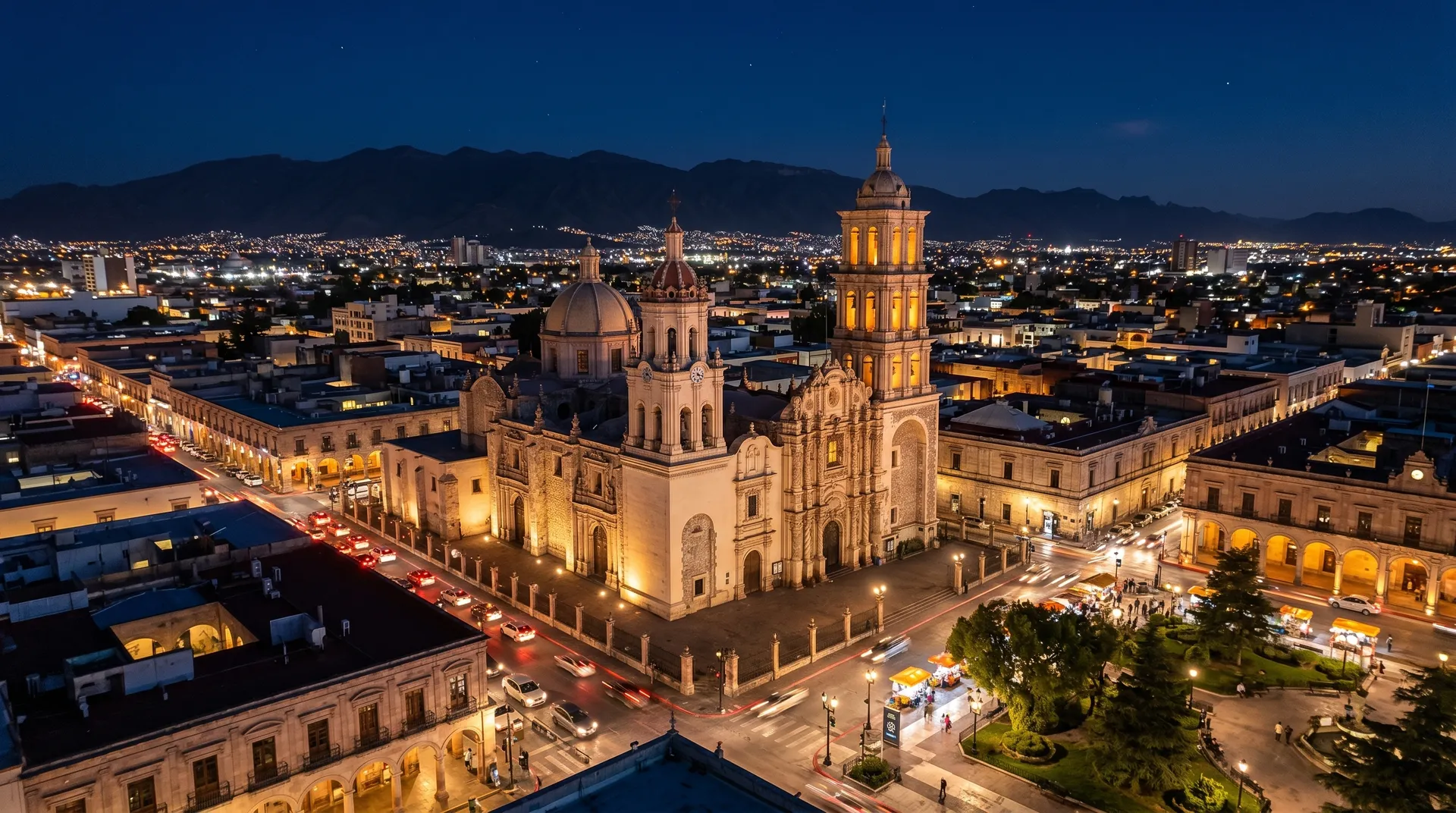
Saltillo, the capital of Coahuila, occupies a strategic position in northern Mexico's industrial corridor. Located approximately 400 kilometers south of the US-Mexico border, the city serves as a crucial logistics hub with excellent connectivity to major transportation networks. Saltillo's industrial parks and manufacturing facilities benefit from proximity to the border while maintaining lower operational costs than border cities.
The city's economy is dominated by the automotive industry, hosting assembly plants for major manufacturers including General Motors, Chrysler, and numerous Tier 1 and Tier 2 suppliers. Aerospace manufacturing, metal mechanics, and electronics production also contribute significantly to the local economy. Saltillo's transportation infrastructure includes direct access to Mexican Federal Highway 40D (the Saltillo-Monterrey highway), which connects to the border at Nuevo Laredo, as well as rail connections through Kansas City Southern de México. The city's industrial parks are equipped with modern facilities designed to support just-in-time manufacturing and efficient freight movement.
 Destination
Charlotte
Charlotte, North Carolina, stands as a premier logistics and distribution center in the southeastern United States. The city's strategic location provides access to over 60% of the US population within a two-hour flight radius, making it an ideal hub for companies serving the eastern seaboard and beyond. Charlotte's transportation infrastructure includes the Charlotte Douglas International Airport, one of the world's busiest airports for aircraft movements, extensive highway networks including I-77, I-85, and I-40, and direct rail connections through Norfolk Southern and CSX Transportation.
The Charlotte metropolitan area has evolved into a major center for freight forwarding, warehousing, and third-party logistics services. The region's economic diversity spans financial services, healthcare, energy, and advanced manufacturing, creating robust demand for freight transportation. Charlotte's Foreign Trade Zone #147 provides significant advantages for companies engaged in international trade, offering duty deferral, reduction, or elimination opportunities. The city's concentration of logistics providers, combined with its skilled workforce and business-friendly environment, makes it an optimal destination for companies seeking efficient distribution networks throughout the eastern United States.










