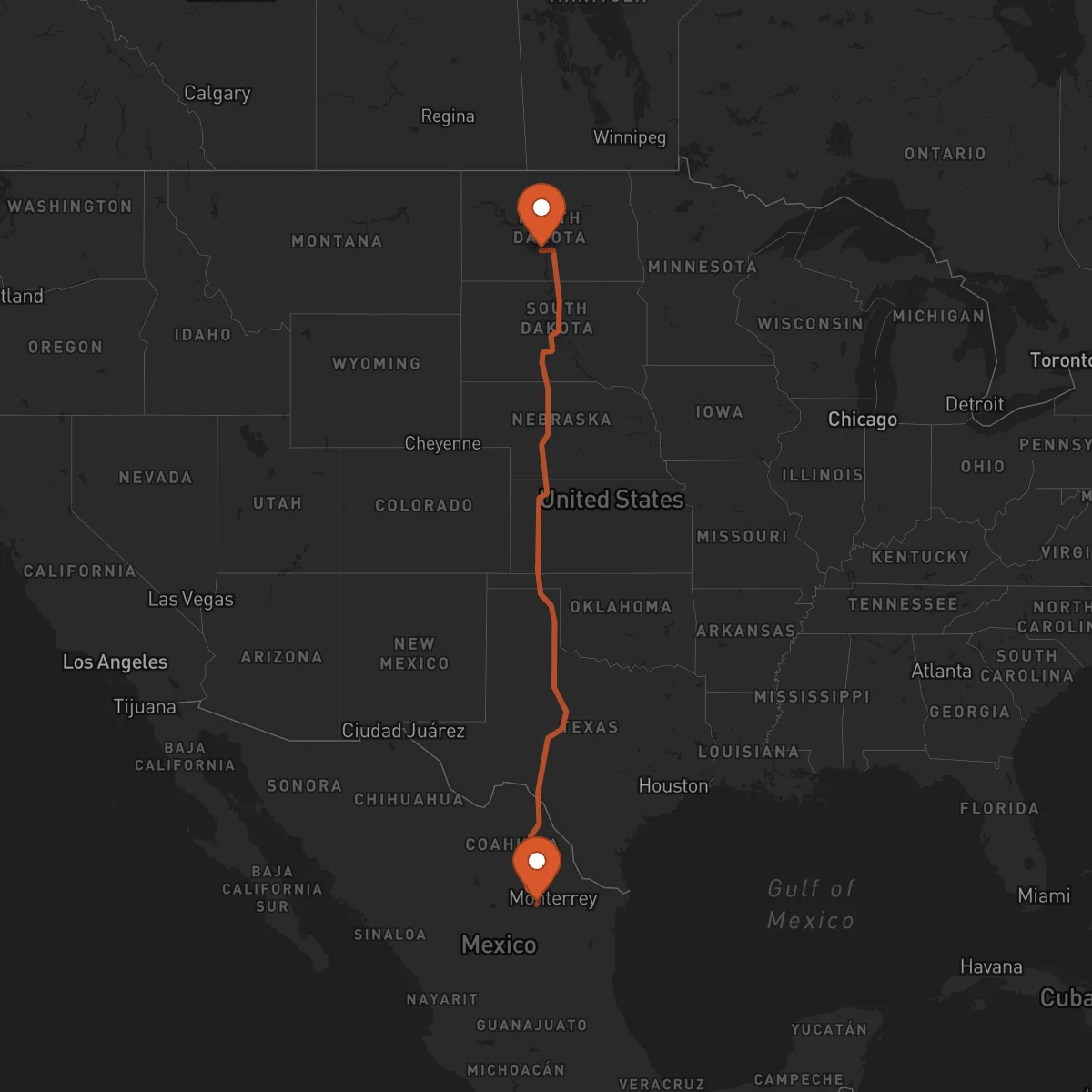
Saltillo to Bismarck
Bismarck → SaltilloFTL freight transportation service between Saltillo and Bismarck. Reliable logistics solutions for your business.
Route Description
Everything you need to know about the corridor Saltillo - Bismarck
The Saltillo-Bismarck corridor represents a vital cross-border connection between the industrial powerhouse of northern Mexico and the thriving agricultural and energy hub of North Dakota. This 2,376 km route traverses the heart of North America, linking the automotive and manufacturing center of Saltillo with Bismarck's growing economy. The corridor serves as a critical supply chain artery for industries requiring reliable full truckload transportation between Mexico and the Upper Midwest.
This strategic route passes through key economic regions, connecting Mexico's automotive corridor with the United States' energy and agricultural heartland. The journey crosses the U.S.-Mexico border at Laredo, utilizing the most active commercial crossing in North America, before continuing north through major transportation hubs including San Antonio, Oklahoma City, and Minneapolis. The route benefits from extensive highway infrastructure, primarily following I-35 and I-29, which are maintained to high standards and designed for efficient freight movement.
Control Terrestre specializes in managing the complexities of this cross-border corridor, ensuring seamless door-to-door service for our clients. Our expertise includes navigating customs procedures, coordinating with certified carriers, and providing real-time tracking throughout the journey. We understand the unique requirements of transporting goods between these regions, whether it's automotive parts from Saltillo's manufacturing plants or specialized equipment destined for Bismarck's energy sector. Our C-TPAT certified partners and experienced logistics team guarantee that your full truckload shipments move efficiently and securely across this important trade route.
Services for this Route
Available services for the corridor Saltillo - Bismarck
 Origin
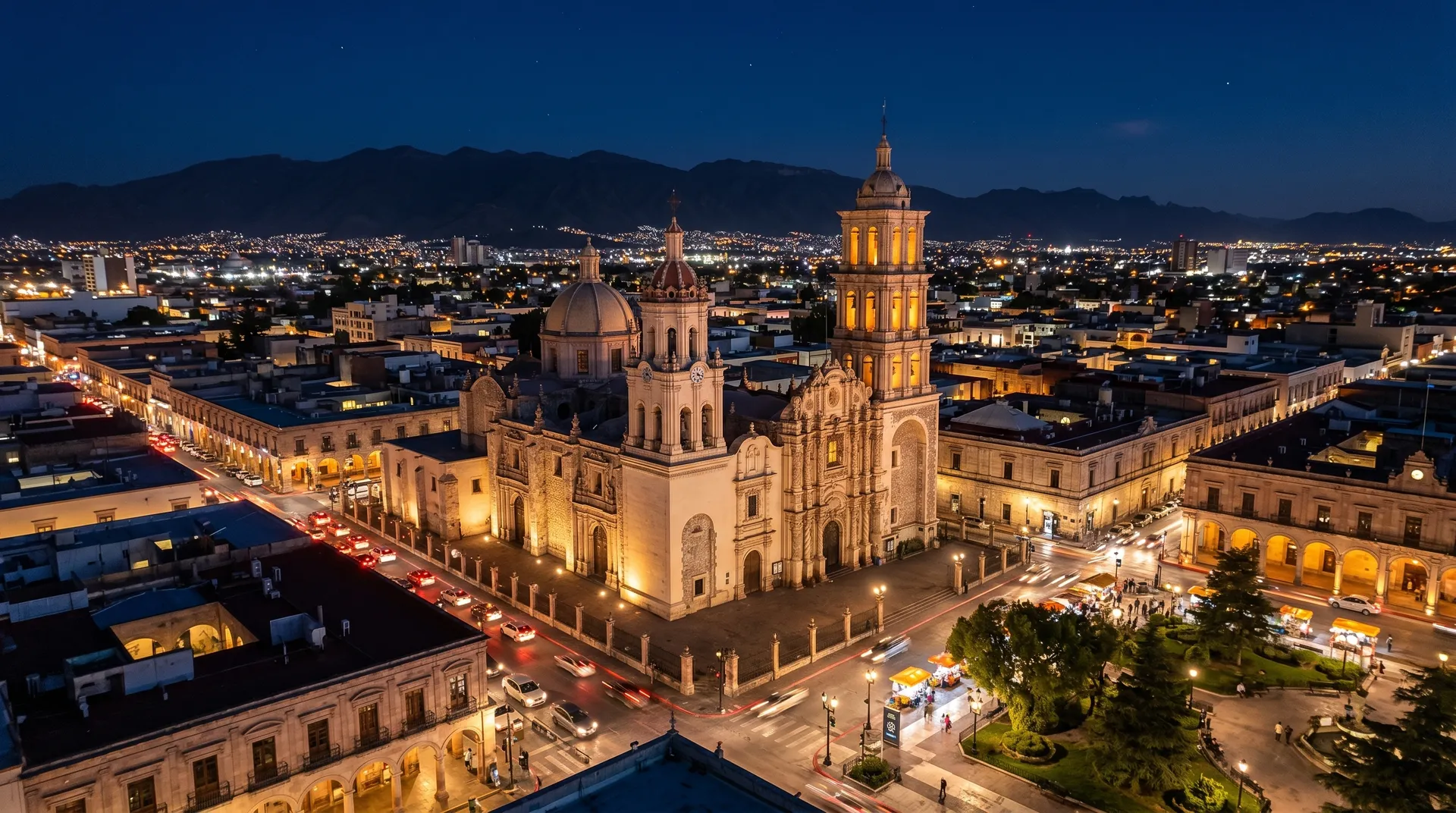
Saltillo, the capital of Coahuila, stands as one of Mexico's most important industrial cities and a key logistics hub in northern Mexico. Known as the "Detroit of Mexico," Saltillo hosts major automotive manufacturing facilities from global brands, creating a robust industrial ecosystem that includes parts suppliers, logistics providers, and support services. The city's strategic location in the northeast of Mexico, with direct access to major highways including Highway 40 and Highway 45, makes it an ideal origin point for cross-border freight movements.
The city benefits from excellent transportation infrastructure, including the Plan de Guadalupe International Airport and proximity to the Ramos Arizpe Coahuila rail hub. Saltillo's industrial parks are equipped with modern warehousing and distribution facilities, supporting the efficient movement of goods. The region's economic strength extends beyond automotive manufacturing to include aerospace, electronics, and agricultural products, creating diverse freight opportunities for full truckload services heading north to the United States.
 Destination
Bismarck
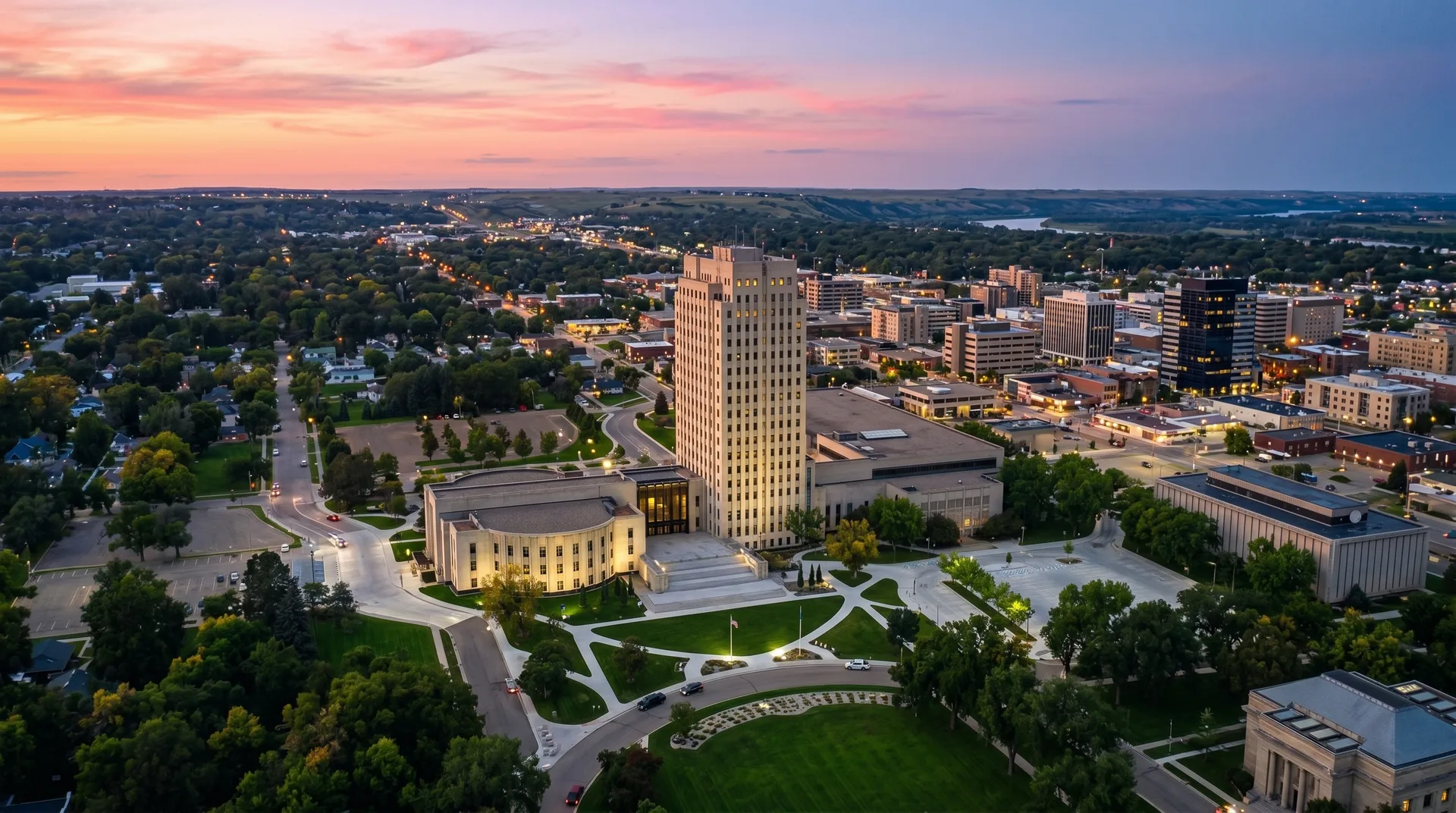
Bismarck, the capital city of North Dakota, serves as a strategic logistics center for the Upper Midwest region. Located along the Missouri River, Bismarck acts as a gateway to the northern plains and benefits from its position at the crossroads of major transportation routes. The city's economy is anchored by government services, healthcare, energy production, and agriculture, creating a stable demand for inbound freight and logistics services. Bismarck's role as a regional distribution center makes it an important destination for cross-border freight from Mexico.
The city is well-connected through Interstate 94, which links Bismarck to major markets in the eastern United States, and U.S. Highway 83, providing north-south connectivity. Bismarck International Airport and the nearby Port of Bismarck offer additional transportation options for time-sensitive or specialized cargo. The region's energy sector, particularly oil and natural gas from the Bakken formation, creates specific logistics needs for heavy equipment and industrial supplies, while the agricultural community requires reliable transportation for seasonal goods and farming equipment.










