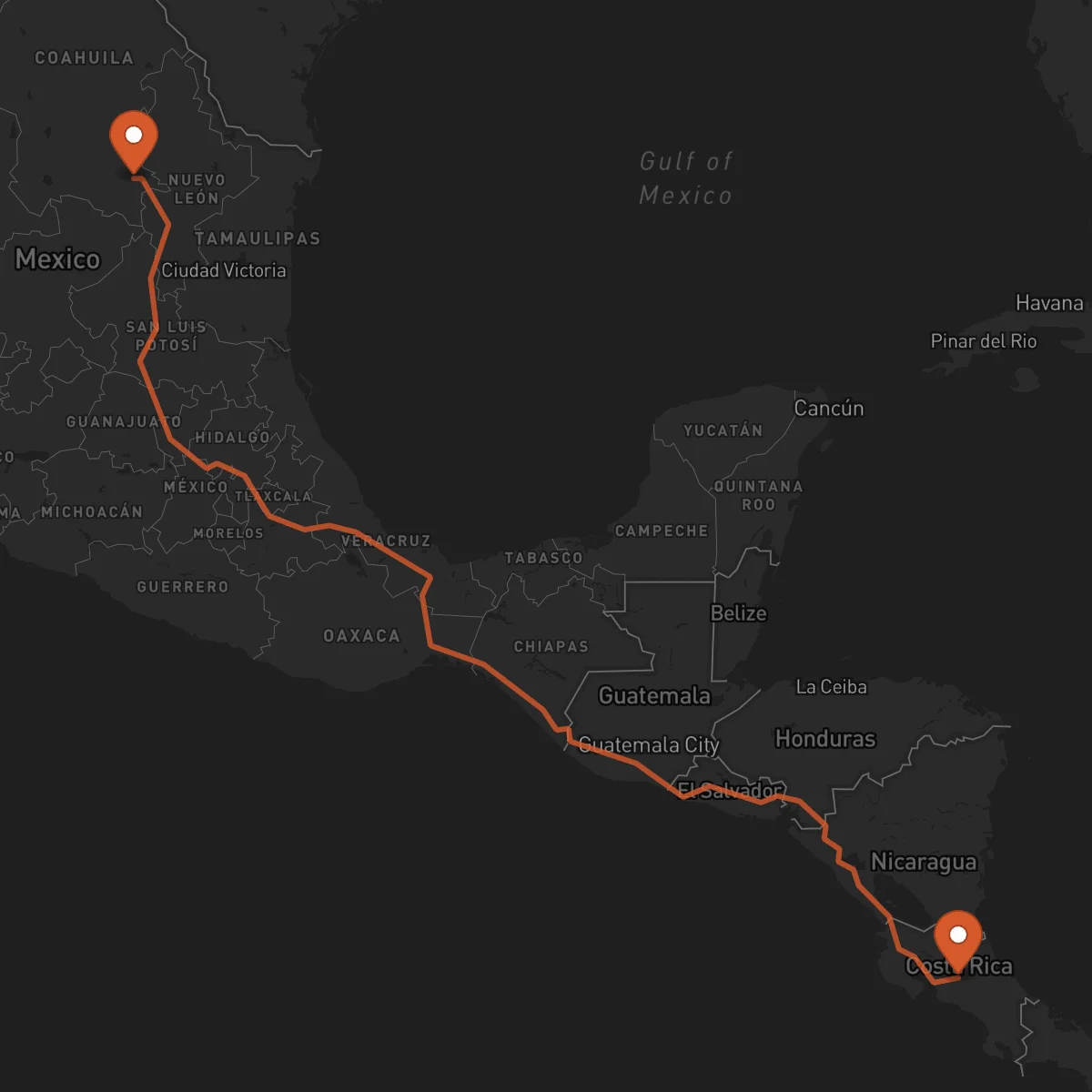
Saltillo to Alajuela
Alajuela → SaltilloFTL freight transportation service between Saltillo and Alajuela. Reliable logistics solutions for your business.
Route Description
Everything you need to know about the corridor Saltillo - Alajuela
The Saltillo to Alajuela corridor represents a critical north-south logistics artery connecting the industrial heartland of northern Mexico with the dynamic economy of Costa Rica's Central Valley. Spanning approximately 2,463 km, this cross-border route is a strategic conduit for trade between the United States, Mexico, and Central America, facilitating the movement of high-value goods across multiple jurisdictions. The corridor's importance is underscored by its role in integrating manufacturing supply chains, particularly those tied to the automotive, appliance, and advanced manufacturing sectors prevalent in northern Mexico with the agricultural export, technology, and consumer goods markets of Costa Rica.
Economically, the corridor bridges two vital production and consumption zones. Saltillo is a major automotive and heavy manufacturing hub, while Alajuela is a central node for Costa Rican agriculture, pharmaceuticals, and technology assembly. Key industries leveraging this route include automotive parts and finished vehicles, agricultural machinery, processed foods, electronics, and industrial components. The transportation infrastructure relies on a network of major highways, including Mexico Federal Highway 40 from Saltillo to the border, and the Central American Highway system (CA-1, CA-2) through Guatemala, El Salvador, Honduras, Nicaragua, and into Costa Rica. This multi-national highway network is the backbone for overland FTL movement.
Navigating this corridor involves complex border procedures at multiple crossings, most notably at the U.S.-Mexico border (e.g., Paso del Norte/El Paso, Laredo) for northbound shipments and at the Mexico-Guatemala border (e.g., Ciudad Hidalgo/Tecún Umán) for southbound transit. Each crossing presents unique customs, documentation, and regulatory requirements, including compliance with programs like C-TPAT and FAST for expedited clearance. Control Terrestre facilitates seamless operations on this corridor through our robust alliance of certified providers. We manage the entire cross-border process, leveraging our partners' certifications (C-TPAT, BASC, FAST) and expertise to handle customs brokerage, documentation, and coordination, ensuring a single-point-of-contact solution for our clients' dedicated FTL and specialized cargo needs across this complex international route.
Services for this Route
Available services for the corridor Saltillo - Alajuela
 Origin
Saltillo, the capital of Coahuila, is a strategic industrial and logistics powerhouse in northern Mexico. Its location provides direct access to the U.S. border via major highways and proximity to key rail lines, making it an ideal origin for cross-border freight. The city is globally recognized as a major automotive manufacturing center, hosting plants for General Motors, Stellantis, and a vast ecosystem of Tier 1 and 2 suppliers. Beyond automotive, its economy is bolstered by steel production, appliance manufacturing, and mining. The available transportation infrastructure is world-class, featuring the Saltillo International Airport (SLW) for air cargo, extensive rail service from Ferromex and Kansas City Southern, and critical highway connections like Federal Highway 40, which links directly to border crossings in Texas. This robust multi-modal setup allows for efficient consolidation and dispatch of full truckloads destined for Central America.
 Destination
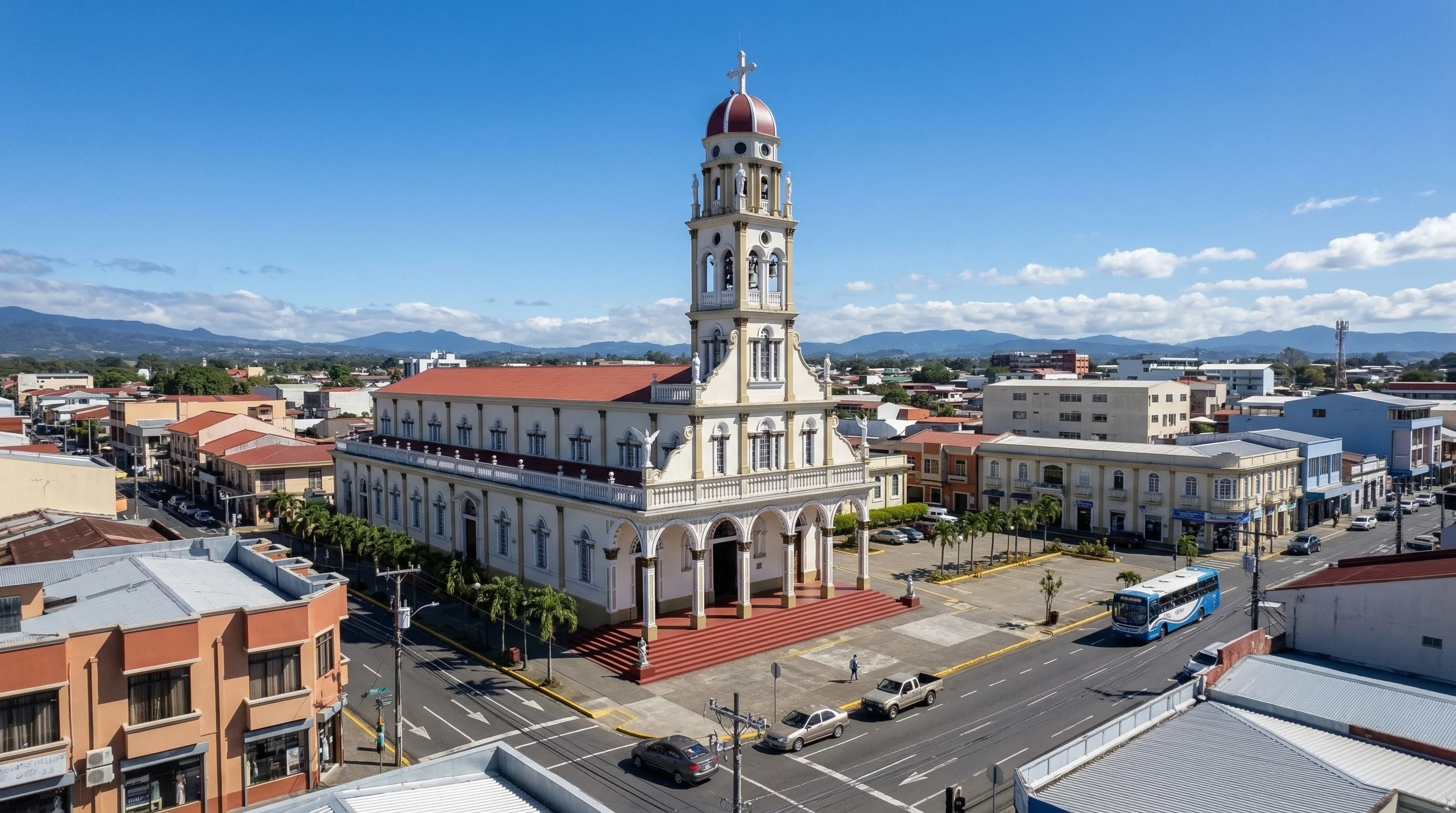
Alajuela
Alajuela, located in Costa Rica's populous Central Valley, is a key logistics and distribution hub for the country and the broader Central American region. Its strategic value lies in its central position, excellent connectivity to both Pacific and Caribbean ports (like Limón and Caldera), and its proximity to Juan Santamaría International Airport (SJO), Costa Rica's main air cargo gateway. The province is an economic engine driven by high-value agriculture (pineapples, coffee, ornamental plants), food and beverage processing, medical device manufacturing, and technology assembly and distribution. The transportation infrastructure is well-developed for the region, featuring the General Cañas Highway (Route 1) for north-south transit and the recently expanded Route 27 providing vital coastal access. This network supports efficient door-to-door FTL service, connecting Alajuela's industrial parks and agricultural zones to the wider Central American highway system.










