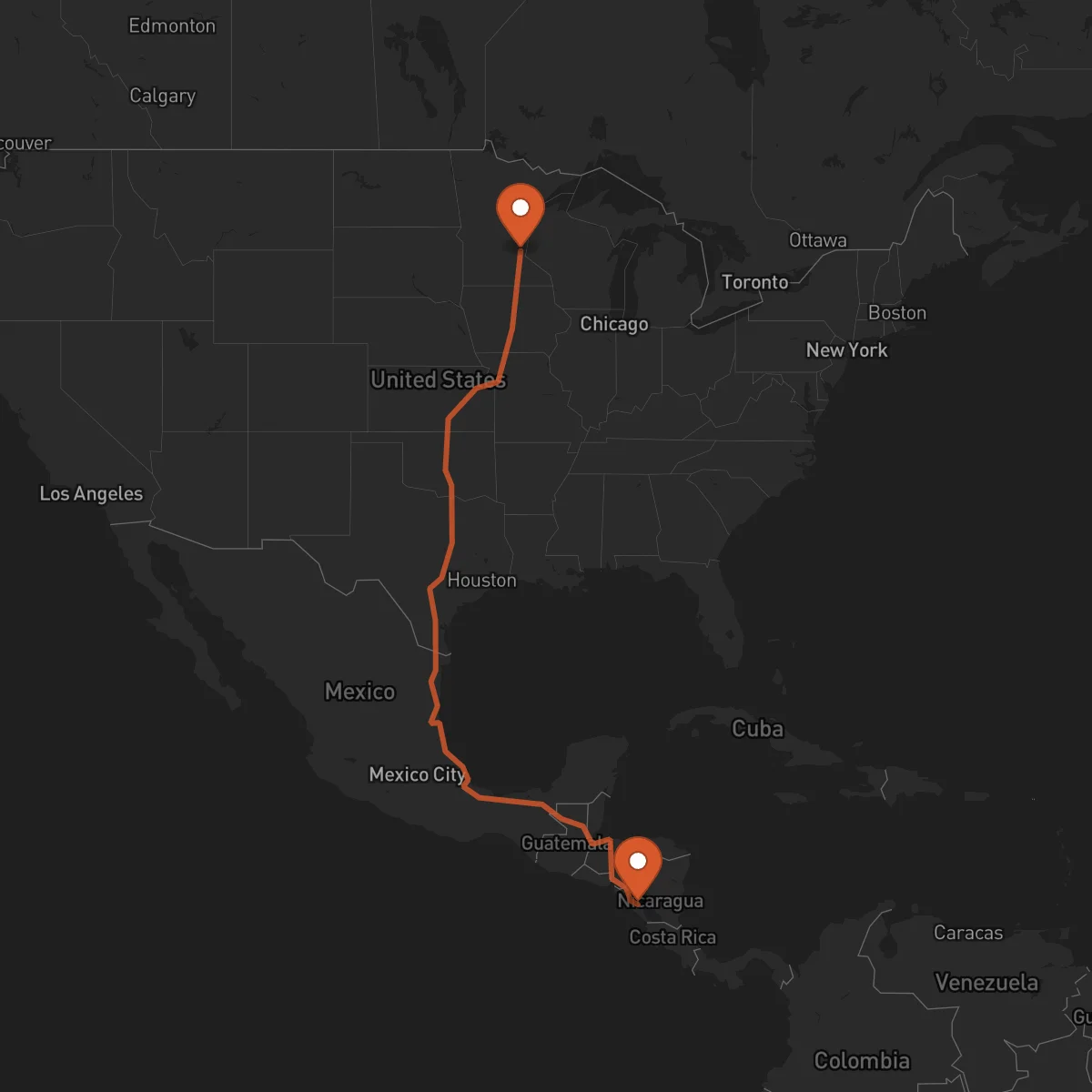
Saint Paul to Managua
Managua → Saint PaulFTL freight transportation service between Saint Paul and Managua. Reliable logistics solutions for your business.
Route Description
Everything you need to know about the corridor Saint Paul - Managua
The logistics corridor connecting Saint Paul, Minnesota, to Managua, Nicaragua, represents a vital cross-border freight transportation route spanning approximately 3,709 kilometers. This corridor serves as a crucial link between the industrial heartland of the Upper Midwest and Central America's growing economic center. The route traverses major transportation networks through the United States, Mexico, and into Nicaragua, facilitating the movement of goods between North and Central American markets.
The economic significance of this corridor lies in its ability to connect manufacturing hubs in Minnesota with distribution centers and production facilities in Nicaragua. Saint Paul's proximity to major manufacturing centers in the Midwest, combined with Managua's strategic position as Nicaragua's capital and economic hub, creates a dynamic trade relationship. The corridor supports various industries including automotive parts, agricultural products, electronics, and consumer goods, with businesses leveraging this route for both import and export operations.
Key transportation infrastructure along this corridor includes major interstate highways in the United States, such as I-35 and I-29, which connect to Mexican Federal Highways and eventually to Nicaraguan road networks. The route typically involves crossing through major border crossings, with customs procedures coordinated through established trade agreements between the three countries. Control Terrestre facilitates seamless operations on this corridor by providing specialized cross-border transportation services, handling all necessary documentation, and ensuring compliance with customs regulations throughout the journey.
Services for this Route
Available services for the corridor Saint Paul - Managua
 Origin
Saint Paul
Saint Paul, Minnesota, serves as a strategic logistics hub in the Upper Midwest, benefiting from its location within the Minneapolis-Saint Paul metropolitan area. The city's transportation infrastructure includes extensive highway networks, rail connections, and proximity to major air cargo facilities. Saint Paul's economic base encompasses manufacturing, healthcare, education, and technology sectors, with numerous distribution centers and warehouses supporting regional and national supply chains. The city's location provides excellent access to major freight corridors connecting to both coasts and international borders, making it an ideal origin point for cross-border shipments.
 Destination
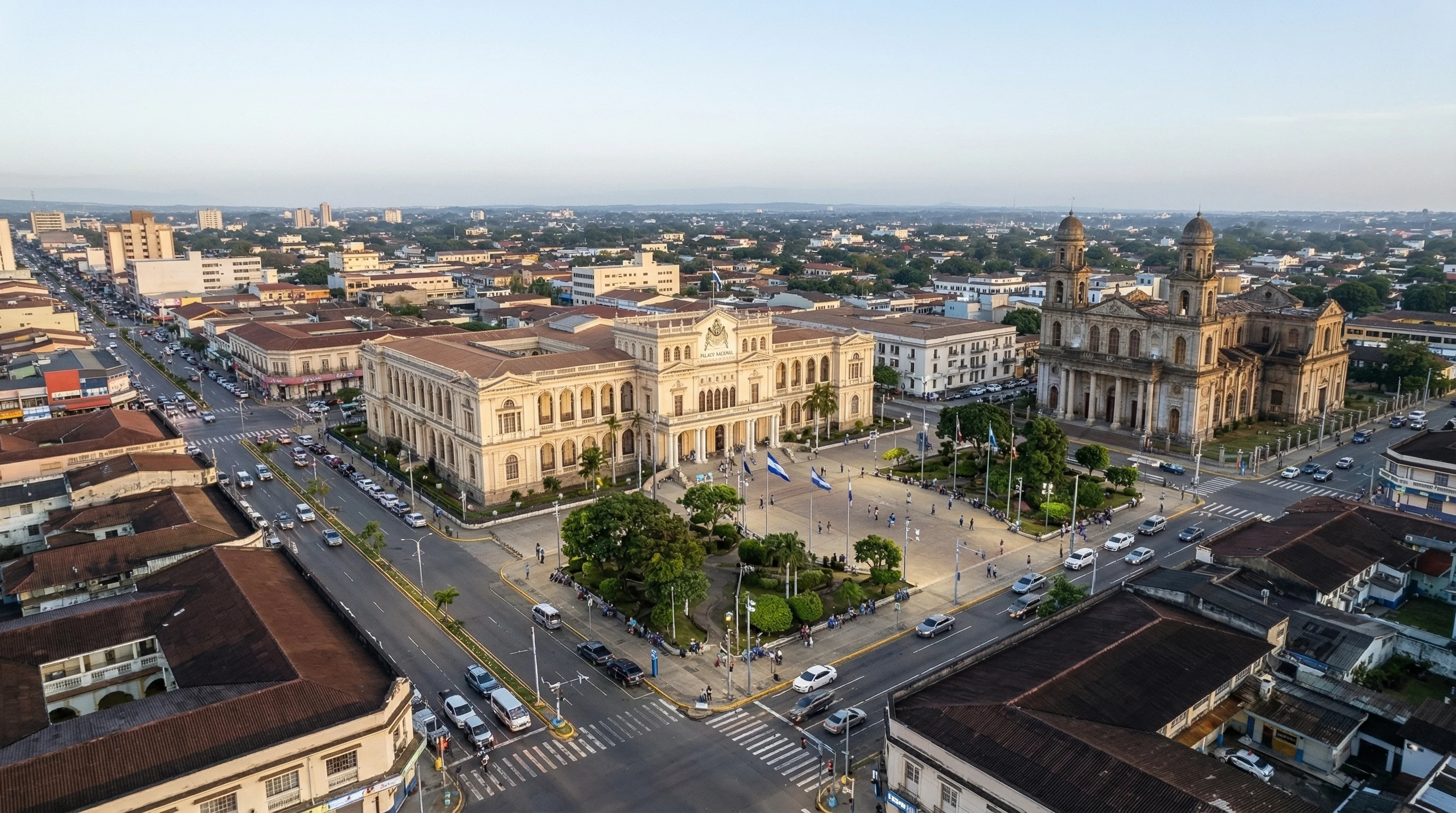
Managua, the capital city of Nicaragua, holds strategic importance as the country's primary economic and logistics center. Located in the western part of Nicaragua, the city provides access to both Pacific ports and land routes connecting to neighboring countries. Managua's economy features diverse industries including manufacturing, agriculture, construction, and services. The city's infrastructure includes an international airport, major highways connecting to other Central American countries, and industrial parks that attract foreign investment. Its position makes it a key destination for goods entering Nicaragua and for products being distributed throughout Central America.










