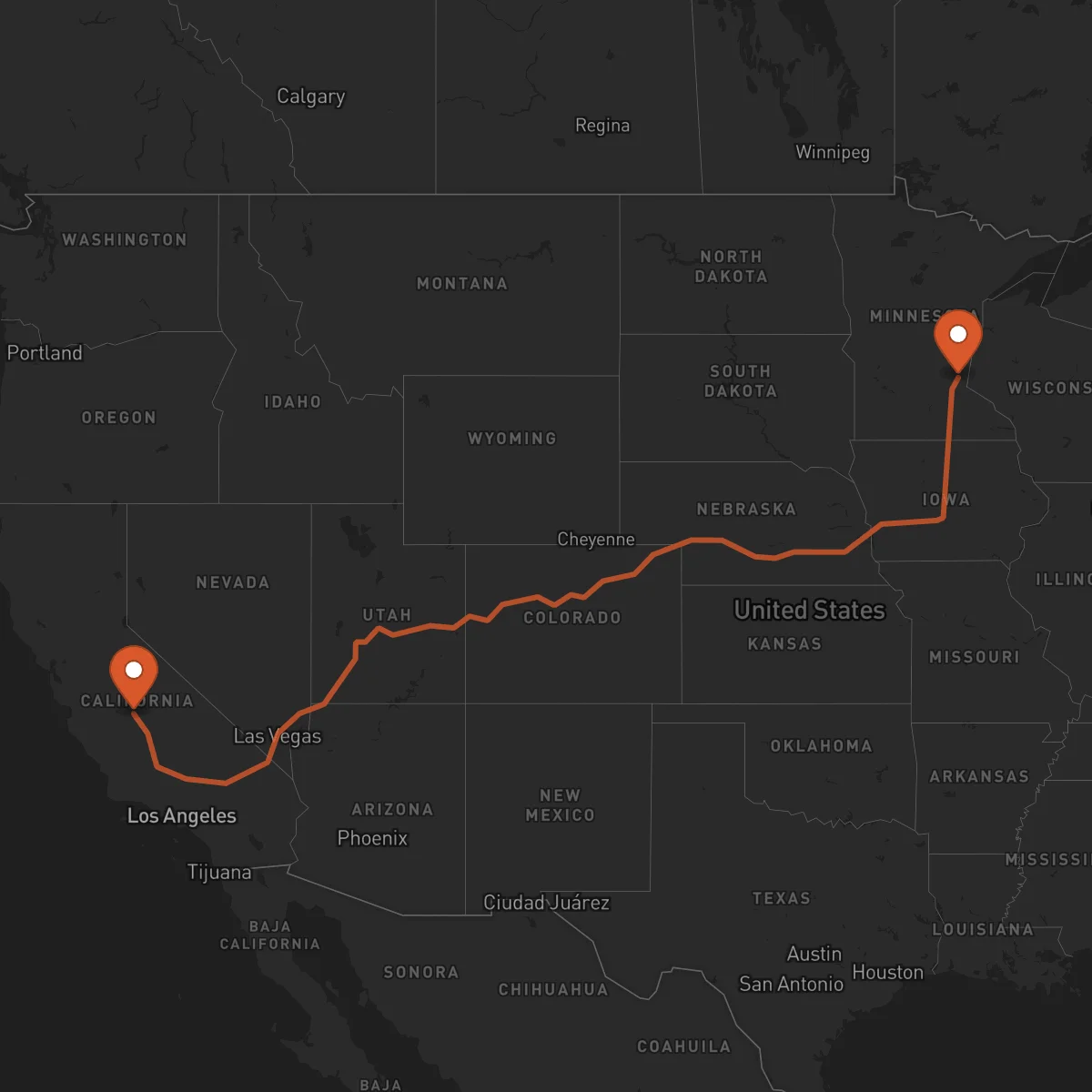
Saint Paul to Fresno
Fresno → Saint PaulFTL freight transportation service between Saint Paul and Fresno. Reliable logistics solutions for your business.
Route Description
Everything you need to know about the corridor Saint Paul - Fresno
The freight transportation corridor between Saint Paul, Minnesota, and Fresno, California, spans approximately 2,410 kilometers and represents a vital link in North America's domestic logistics network. This east-west route connects the Upper Midwest's industrial heartland with California's Central Valley, one of the nation's most productive agricultural regions. The corridor traverses diverse landscapes and crosses multiple states, making it a critical artery for moving goods between these economically significant regions.
The strategic importance of this corridor lies in its ability to bridge complementary economic zones. Saint Paul serves as a major distribution hub for the Upper Midwest, with strong manufacturing and logistics sectors, while Fresno anchors California's agricultural powerhouse. This route facilitates the efficient movement of industrial equipment, manufactured goods, and agricultural products, supporting the supply chains of countless businesses. The corridor's reliability and efficiency directly impact the competitiveness of companies operating in both regions.
Control Terrestre optimizes operations along this corridor through our specialized FTL (Full Truckload) services. Our strategic alliance of certified transportation providers ensures consistent, reliable service across the entire route. We leverage our expertise in managing long-haul domestic shipments to provide seamless door-to-door transportation, coordinating with our network of carriers who hold critical certifications including C-TPAT, FAST, and Clean Transportation. Our dedicated approach means your cargo moves directly from origin to destination without unnecessary stops or transfers, maintaining the integrity and timeliness of your supply chain.
Services for this Route
Available services for the corridor Saint Paul - Fresno
 Origin
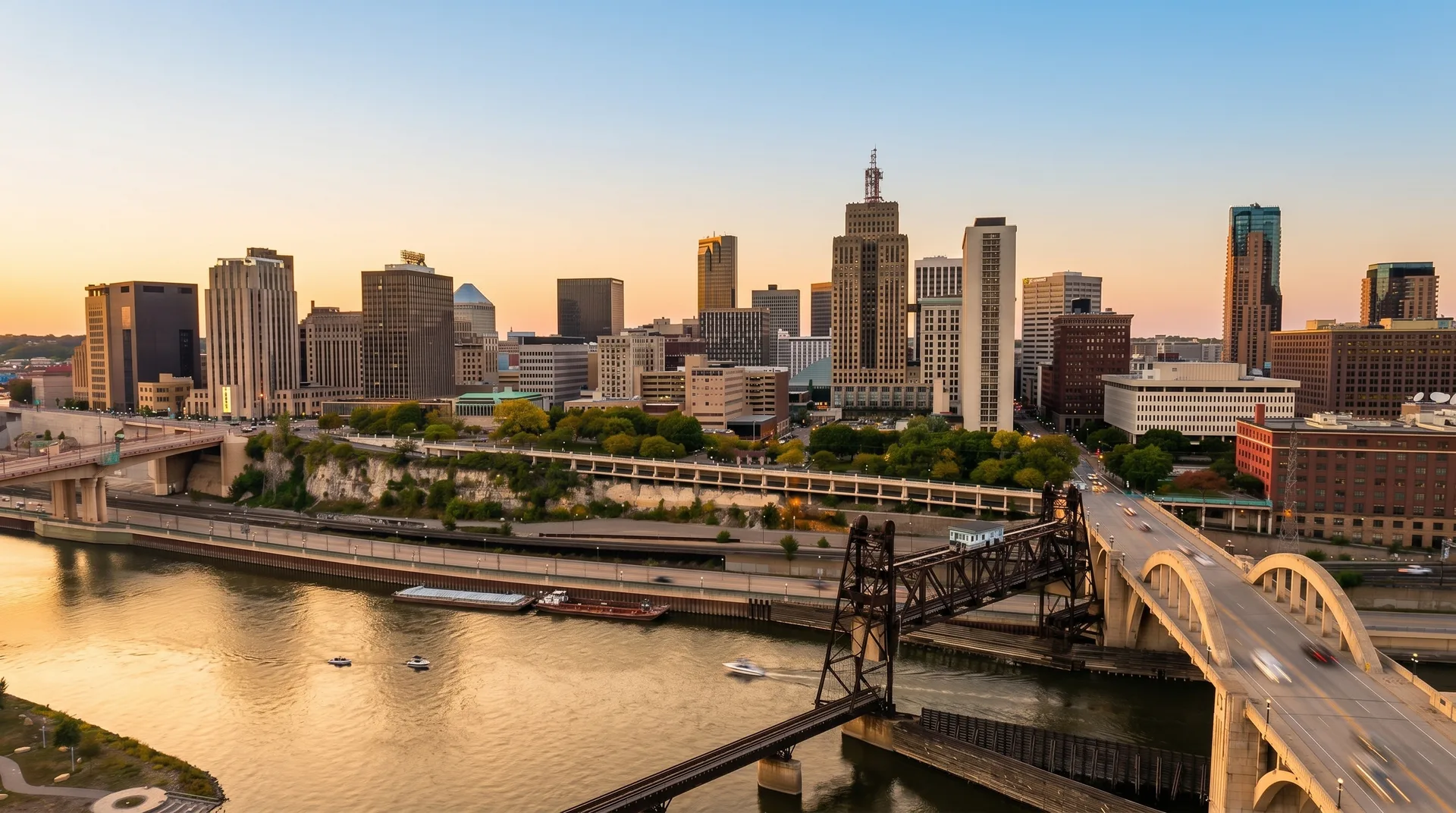
Saint Paul
Saint Paul, Minnesota, serves as a strategic logistics hub in the Upper Midwest, offering exceptional connectivity for freight transportation. Located at the confluence of the Mississippi, Minnesota, and St. Croix rivers, Saint Paul provides multimodal transportation options including extensive rail networks and highway connections. The city's proximity to Minneapolis creates a powerful economic twin-city dynamic, with a combined metropolitan area that hosts numerous distribution centers and manufacturing facilities. Major highways including I-94, I-35E, and I-494 provide direct access to national freight corridors, making Saint Paul an ideal origin point for long-haul shipments across the United States.
The region's economy is anchored by diverse industries including medical technology, food processing, financial services, and advanced manufacturing. Saint Paul is home to several Fortune 500 companies and boasts a strong logistics and warehousing sector that supports regional distribution needs. The area's cold climate has also fostered expertise in refrigerated transportation and cold chain logistics, particularly valuable for food and pharmaceutical shipments. With a skilled workforce and robust infrastructure, Saint Paul continues to strengthen its position as a critical node in North America's supply chain network.
 Destination
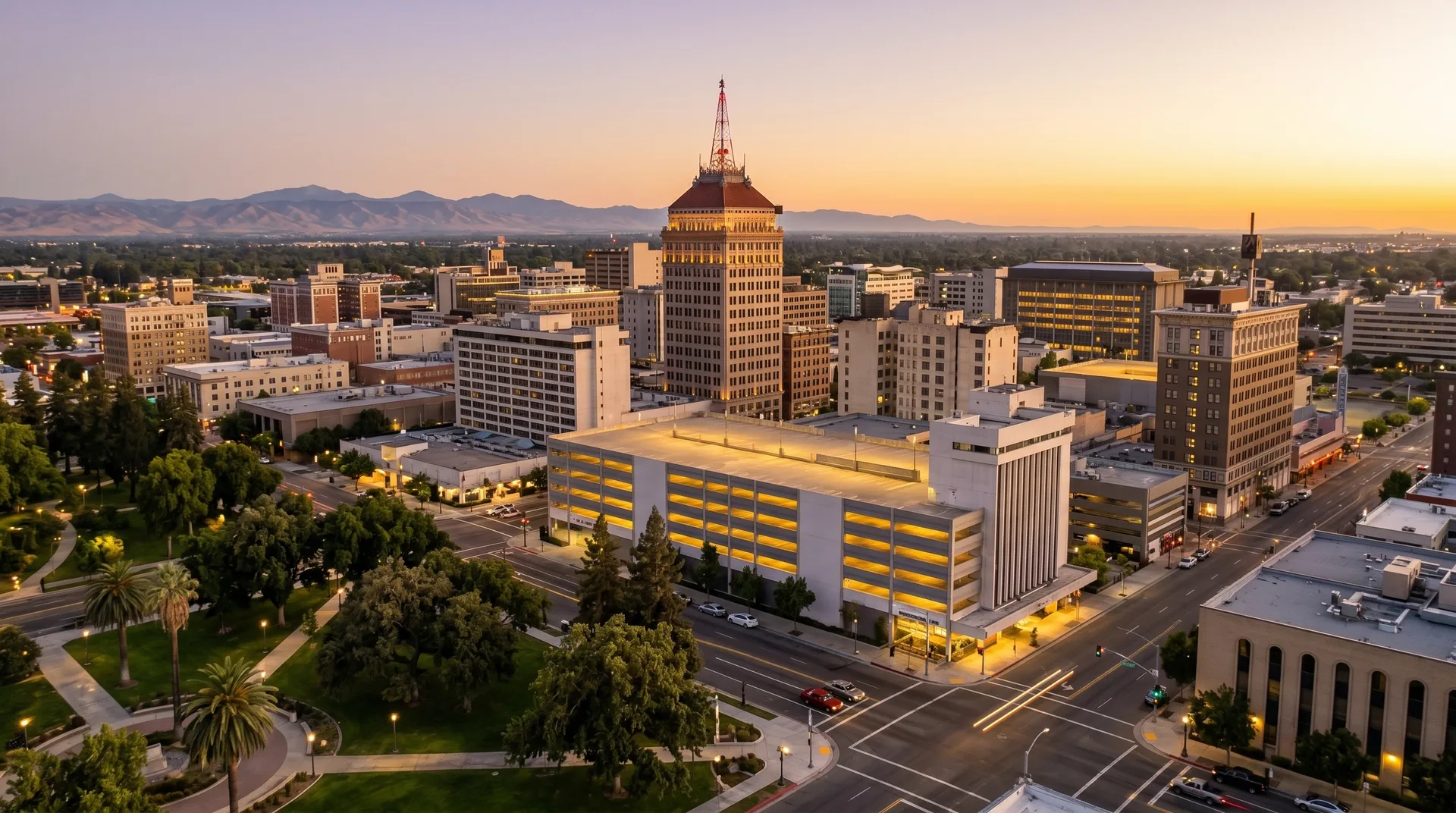
Fresno
Fresno, California, stands as the economic and logistical center of California's Central Valley, one of the most productive agricultural regions in the world. Strategically located in the heart of the San Joaquin Valley, Fresno provides direct access to vast agricultural production areas and serves as a primary gateway for farm-to-market transportation. The city's location along major transportation corridors including State Route 99 and State Route 41 connects it efficiently to both coastal ports and inland distribution networks. Fresno's infrastructure includes modern warehousing facilities and a growing intermodal yard that enhances its logistics capabilities.
The Fresno metropolitan area drives a diverse economy centered on agriculture, food processing, manufacturing, and logistics. As the largest city in California's Central Valley, it processes and distributes agricultural products ranging from fruits and nuts to dairy and wine. The region's year-round growing season creates consistent freight movement needs, while its proximity to major ports like Oakland and Los Angeles positions it as a crucial inland distribution point. Fresno's expanding industrial base and strategic location make it an essential destination for freight transportation connecting the agricultural heartland with national markets.










