Saint Paul to Concord
Concord → Saint PaulFTL freight transportation service between Saint Paul and Concord. Reliable logistics solutions for your business.
Route Description
Everything you need to know about the corridor Saint Paul - Concord
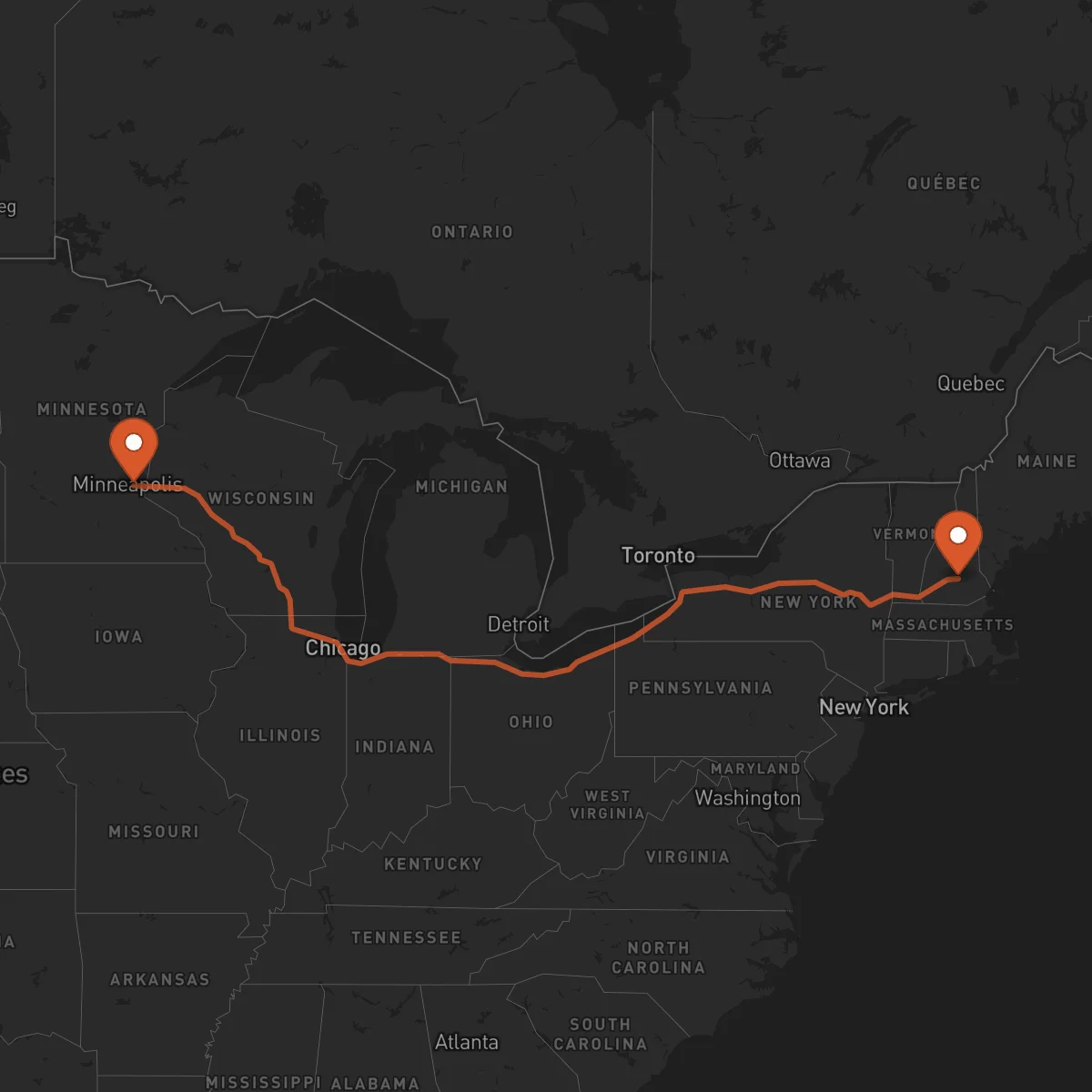
The logistics corridor connecting Saint Paul, Minnesota, to Concord, New Hampshire, spans approximately 1,727 kilometers across the northern United States, traversing a region rich in industrial diversity and economic activity. This corridor links the Midwest's manufacturing heartland with New England's technology and healthcare hubs, creating a vital supply chain artery for businesses operating across multiple states. The route passes through major metropolitan areas including Chicago, Cleveland, and Albany, offering multiple transportation options and strategic advantages for freight movement.
The economic significance of this corridor is underscored by the diverse industries it serves. From Saint Paul's strong presence in medical technology, food processing, and financial services to Concord's growing sectors in healthcare, government services, and advanced manufacturing, this route facilitates the movement of specialized equipment, raw materials, and finished goods. The corridor's importance is amplified by the complementary nature of the economic activities in both regions, creating consistent freight demand throughout the year.
Control Terrestre optimizes transportation operations along this corridor through our network of certified carriers and strategic partnerships. Our dedicated full truckload (FTL) services ensure that shipments maintain their integrity and schedule integrity from origin to destination. With our C-TPAT-certified carriers and commitment to responsible transportation practices, we provide reliable, secure freight solutions that meet the stringent requirements of industries operating across this vital North American trade corridor.
Services for this Route
Available services for the corridor Saint Paul - Concord
 Origin
Saint Paul
Saint Paul, Minnesota, serves as a strategic logistics hub in the Upper Midwest, offering exceptional connectivity through multiple transportation modes. The city's location at the confluence of the Mississippi and Minnesota rivers provides natural advantages for freight movement, while its extensive network of highways, including I-94 and I-35, ensures efficient access to major markets. Saint Paul's robust infrastructure supports seamless integration with rail networks and air cargo facilities, making it an ideal origin point for nationwide freight distribution.
The city's economy is anchored by diverse sectors including healthcare, education, financial services, and advanced manufacturing. Major employers in medical technology and food processing create consistent demand for specialized freight services. Saint Paul's proximity to Minneapolis and the broader Twin Cities metropolitan area further enhances its logistics capabilities, providing access to a skilled workforce and sophisticated supply chain management resources that support complex freight operations.
 Destination
Concord
Concord, New Hampshire, occupies a strategic position in New England's logistics network, offering unique advantages for freight distribution throughout the northeastern United States. The city's location provides efficient access to major markets in Boston, Portland, and Montreal, while its well-maintained highway infrastructure, including I-93 and I-89, ensures reliable transportation connections. Concord's relatively uncongested roadways and proximity to Manchester-Boston Regional Airport create favorable conditions for timely freight delivery.
The capital city's economy features strong representation in healthcare, government services, education, and advanced manufacturing sectors. These industries generate consistent demand for specialized freight services, particularly for medical equipment, technology products, and industrial components. Concord's central location within New Hampshire and its proximity to the state's major industrial centers make it an effective distribution point for regional freight operations, supporting both inbound and outbound logistics activities throughout the year.










