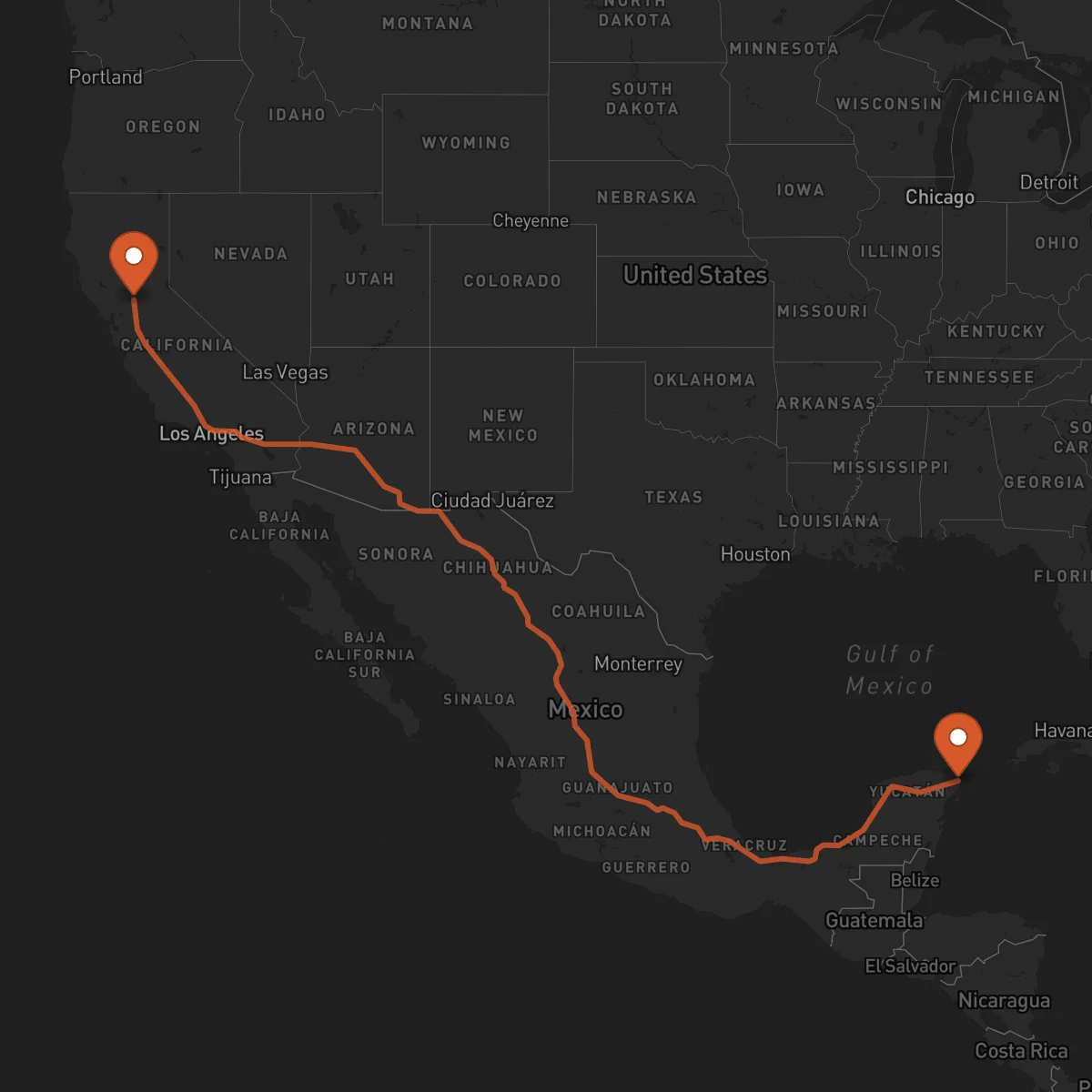
Sacramento to Cancún
Cancún → SacramentoFTL freight transportation service between Sacramento and Cancún. Reliable logistics solutions for your business.
Route Description
Everything you need to know about the corridor Sacramento - Cancún
The logistics corridor connecting Sacramento, California to Cancún, Quintana Roo represents a vital cross-border freight transportation route spanning approximately 3,827 kilometers. This corridor serves as a critical link between the United States' West Coast economic powerhouse and Mexico's premier Caribbean tourist destination. The route traverses diverse terrains and crosses multiple state lines, requiring expert navigation of both U.S. and Mexican transportation networks.
The economic significance of this corridor is substantial, facilitating the movement of goods between Northern California's technology and agricultural sectors and the Yucatán Peninsula's growing manufacturing and tourism industries. Major industries utilizing this route include electronics, automotive components, agricultural products, construction materials, and consumer goods destined for Cancún's retail and hospitality sectors. The corridor supports just-in-time inventory systems for businesses operating across both countries.
Transportation infrastructure along this route includes major U.S. highways such as I-5 and I-10, transitioning to Mexican Federal Highways 180 and 307. Key border crossings include those near El Paso or Laredo, depending on the specific route chosen. Control Terrestre's expertise in cross-border operations ensures seamless customs clearance and compliance with all regulatory requirements for both countries. Our strategic partnerships with certified carriers provide reliable transportation solutions for full truckload shipments along this extensive corridor.
Services for this Route
Available services for the corridor Sacramento - Cancún
 Origin
Sacramento
Sacramento serves as a strategic logistics hub in Northern California, positioned at the confluence of major transportation networks. The city's location provides excellent connectivity to the San Francisco Bay Area, Silicon Valley, and the broader West Coast market. Sacramento's economy is diverse, with strong sectors in government services, healthcare, technology, and agriculture. The region is a major producer of rice, almonds, and other agricultural products that frequently move through this logistics corridor.
The transportation infrastructure in Sacramento includes direct access to Interstate 5, facilitating efficient north-south movement. The Port of Sacramento provides additional multimodal capabilities, while the city's proximity to major air cargo facilities enhances distribution options. Sacramento's logistics ecosystem includes numerous warehousing and distribution centers, making it an ideal origin point for full truckload shipments requiring reliable transportation to destinations throughout North America.
 Destination
Cancún
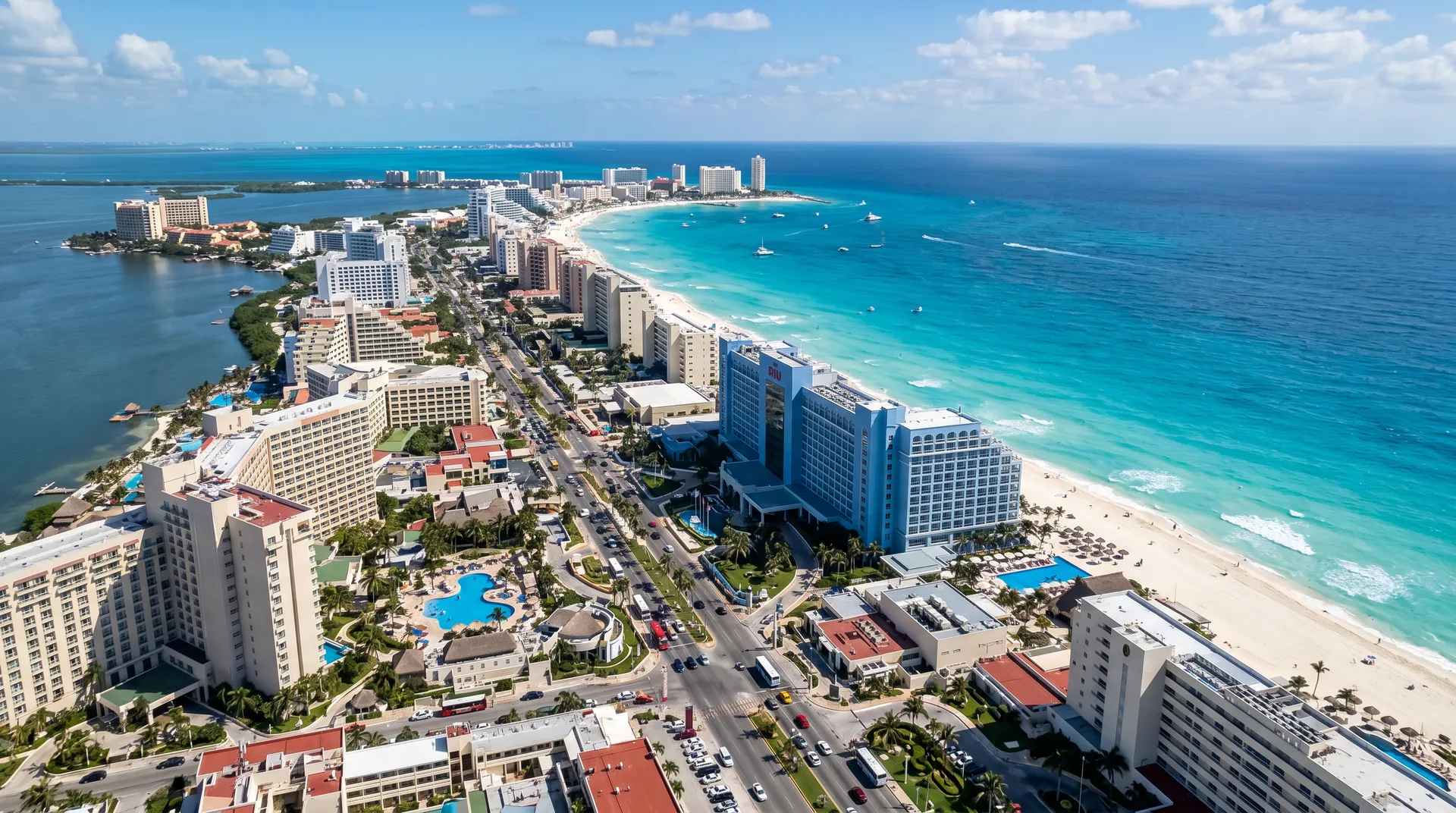
Cancún represents a strategic gateway to Mexico's Yucatán Peninsula and the Riviera Maya region. Located in Quintana Roo, Cancún has evolved from a tourism-focused city into a growing logistics and manufacturing center. The city's international airport is one of Mexico's busiest, facilitating both passenger and cargo movements. Cancún's economy is anchored by tourism, but has diversified to include electronics manufacturing, food processing, and construction materials production.
The transportation infrastructure in Cancún includes modern highways connecting to Mérida and other key cities, as well as the nearby Puerto Morelos railroad terminal. The region's growing industrial parks and free trade zone areas create demand for reliable freight transportation services. Cancún's port facilities, while primarily focused on cruise operations, also handle some cargo movements. The city's strategic Caribbean location makes it an important distribution point for goods destined for both the Mexican southeast and Central American markets.










