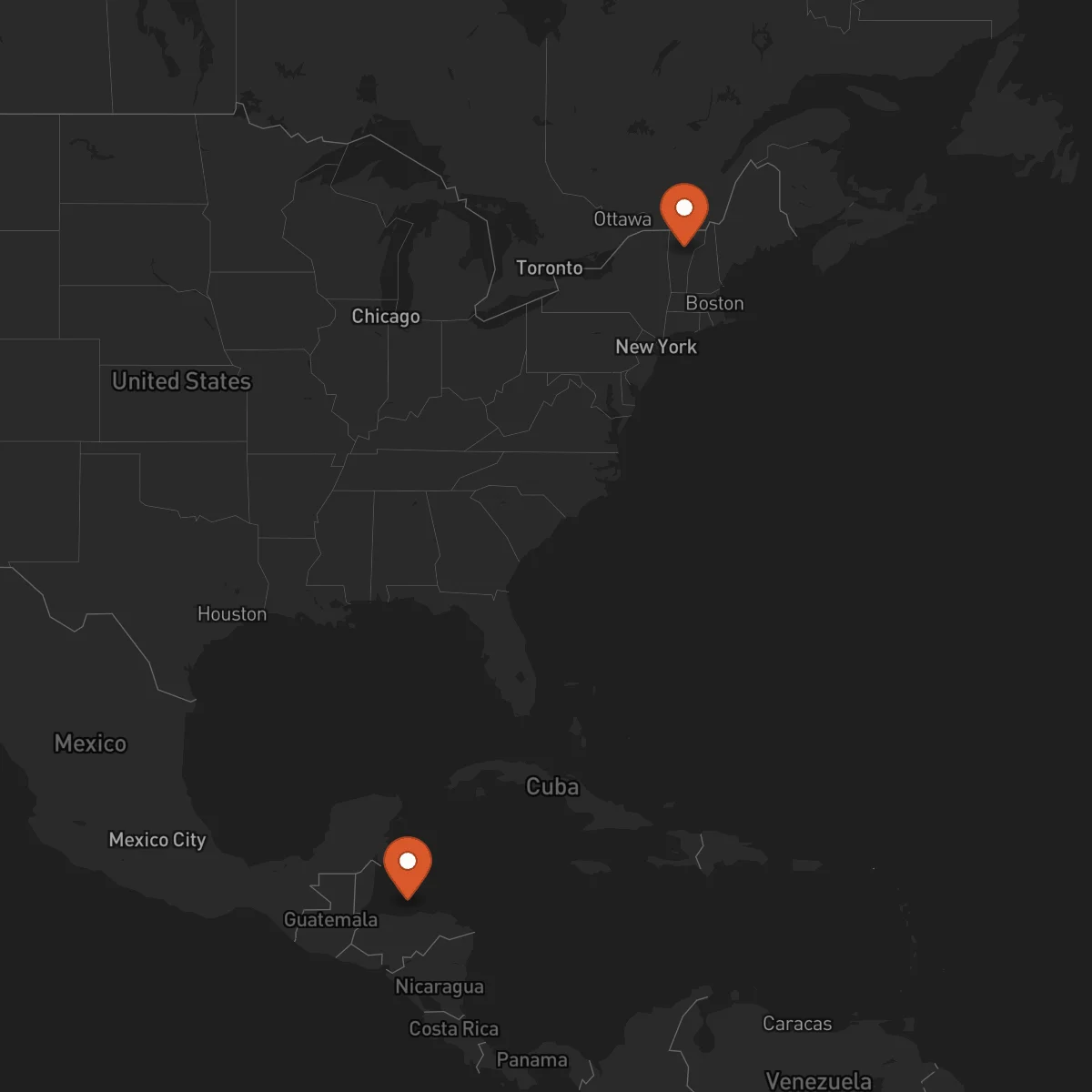
Roatán to Montpelier
Montpelier → RoatánFTL freight transportation service between Roatán and Montpelier. Reliable logistics solutions for your business.
Route Description
Everything you need to know about the corridor Roatán - Montpelier
The freight corridor between Roatán, Islas de la Bahía, Honduras, and Montpelier, Vermont, United States, spans approximately 3,371 kilometers, connecting the Caribbean coast of Central America with the northeastern United States. This cross-border route plays a strategic role in facilitating trade between Honduran producers and importers in one of the most industrialized regions of North America. Its importance lies in enabling the movement of goods from Central American manufacturing and agricultural zones to key logistics hubs and consumer markets in the U.S., supporting supply chains that depend on reliability and cross-border coordination.
Economically, the corridor links regions with complementary economic activities. Roatán and the surrounding Bay Islands serve as a gateway for Honduran exports such as textiles, agricultural products, and manufactured goods, while Vermont’s capital region supports industries including food processing, technology, and specialized manufacturing. Roatán’s growing industrial and tourism sectors generate demand for imported equipment and supplies, making two-way freight movement essential. Companies operating along this route benefit from access to both Central American production and North American distribution networks.
Transportation infrastructure along this corridor involves a combination of maritime connections, Central American highways, and major U.S. interstate systems. Goods typically move from Roatán through Honduran and Guatemalan roadways, continuing through Mexico via key federal highways before reaching U.S. border crossings such as those in Texas or Arizona. Once in the United States, freight travels along interstate corridors including I-91 and I-89 to reach the Montpelier area. Border crossings and customs procedures require careful coordination to ensure compliance with international trade regulations and efficient transit times.
Control Terrestre facilitates operations on this corridor by providing full truckload (FTL) freight services that connect any point between North America, Central America, and their in-between regions. With a robust alliance of experienced transportation providers, we support cross-border shipments that require specialized handling, dedicated equipment, and compliance with certifications such as C-TPAT and FAST. Our expertise in export and import freight, combined with specialized cargo capabilities including refrigerated and oversized transport, ensures that businesses moving goods between Roatán and Montpelier receive reliable, professional service tailored to their supply chain needs.
Services for this Route
Available services for the corridor Roatán - Montpelier
 Origin
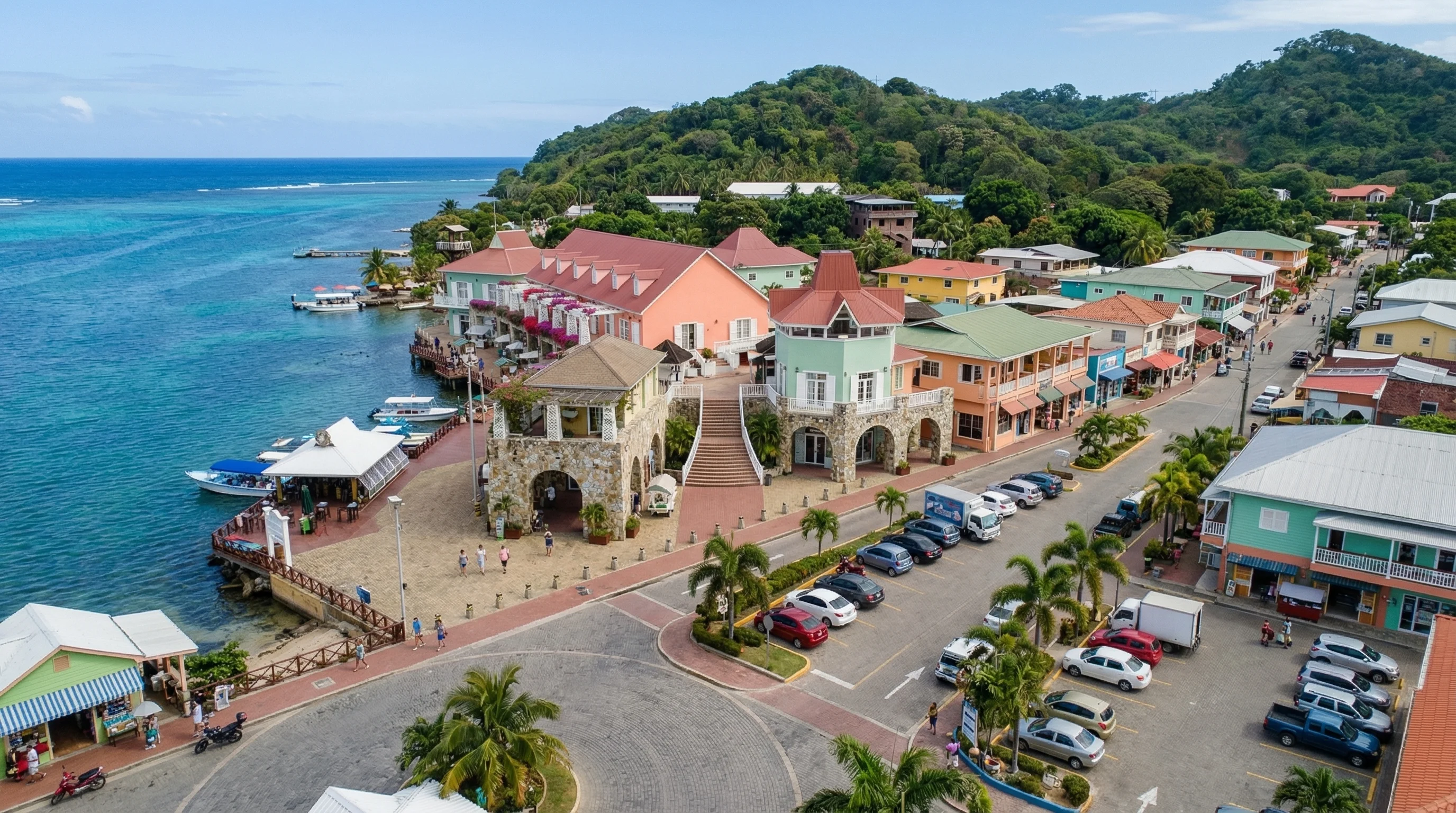
Roatán
Roatán, located in the Islas de la Bahía department of Honduras, is a strategic logistics hub in the western Caribbean. As one of the country's primary island destinations, it serves not only as a tourism center but also as a growing industrial and commercial zone. The island’s economy is driven by tourism, agriculture, aquaculture, and an expanding manufacturing sector that produces textiles and consumer goods for export. Its port and airport infrastructure support the movement of both passengers and cargo, making Roatán a key entry and exit point for regional trade. Highway connections through the Bay Islands and mainland Honduras link the island to major Central American trade corridors, facilitating the flow of goods toward North American markets.
 Destination
Montpelier
Montpelier, the capital of Vermont in the northeastern United States, is a strategic logistics destination for goods entering the New England region. Despite its small size, Montpelier is situated near major interstate highways including I-89, which connects the area to larger distribution centers in Boston, New York, and Montreal. The city and surrounding region support industries such as food processing, specialty manufacturing, technology, and government-related services. Vermont’s proximity to Canadian border crossings also enhances its role in cross-border trade. With access to well-maintained road infrastructure and a network of regional carriers, Montpelier serves as an efficient final destination for imported goods arriving from Central America.










