Roatán to Manzanillo
Manzanillo → RoatánFTL freight transportation service between Roatán and Manzanillo. Reliable logistics solutions for your business.
Route Description
Everything you need to know about the corridor Roatán - Manzanillo
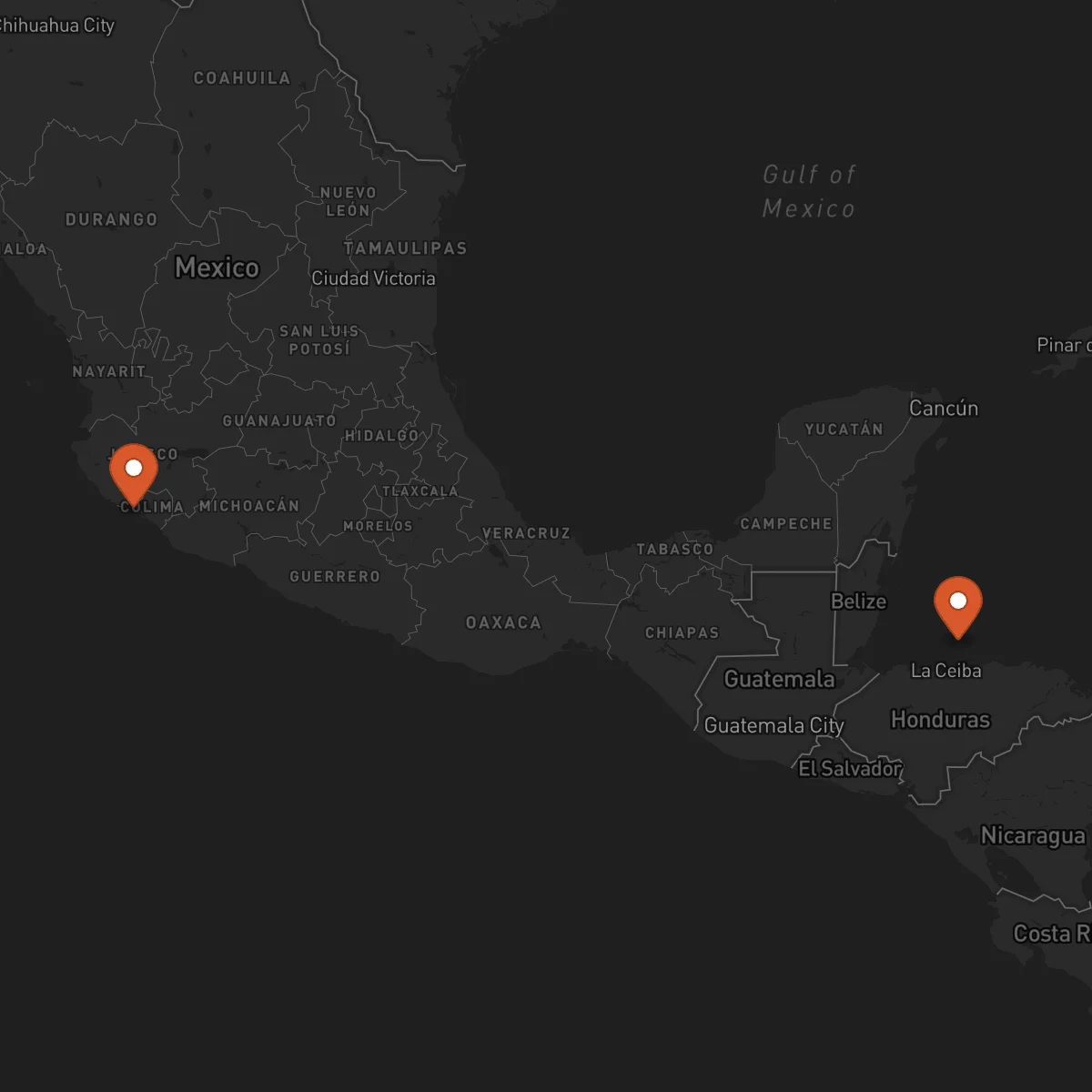
The logistics corridor connecting Roatán, Islas de la Bahía, Honduras, to Manzanillo, Colima, México, represents a critical cross-border artery linking the Caribbean coast of Central America with Mexico’s vital Pacific gateway. This approximately 1,908 km route is strategically essential for facilitating north-south trade, enabling the efficient movement of goods from the production centers of Honduras and neighboring countries to one of Mexico’s most significant port complexes. The corridor supports the broader economic integration of the region, allowing Honduran and Central American exports—particularly from the agricultural, seafood, and light manufacturing sectors—to access North American markets via Manzanillo’s deep-water facilities, while also serving the reverse flow of imported goods and raw materials.
Economically, the corridor serves a dynamic region. Honduras, and specifically the Bay Islands, are renowned for high-value seafood exports, while the mainland supports robust agriculture (coffee, bananas, palm oil) and a growing maquila (manufacturing) industry. Manzanillo, as a major Pacific port, is a hub for Mexico’s export-oriented manufacturing, particularly in the automotive and electronics sectors, as well as a key entry point for Asian imports and a distribution center for agricultural products like tropical fruits moving south. The primary industries utilizing this corridor include seafood processors, agricultural exporters, furniture and textile manufacturers, and companies engaged in regional distribution.
The transportation infrastructure relies on a sequence of major highways. Freight typically moves from Roatán via ferry to the Honduran mainland (La Ceiba/Puerto Cortés), then travels along the CA-5 highway south through Honduras to the border with Guatemala at Agua Caliente. After crossing into Guatemala, the route continues through the Guatemalan highlands to the Mexico-Guatemala border at Ciudad Hidalgo. Once in Mexico, the primary arteries are the Mexican Federal Highway 200 along the Pacific coast and connections to Federal Highway 15D, which leads directly to the port facilities of Manzanillo. Key border crossings like Agua Caliente/Honduras-Guatemala and Ciudad Hidalgo/Guatemala-Mexico are critical nodes where customs procedures, documentation, and compliance with programs like C-TPAT and FAST are paramount for efficient transit.
Control Terrestre facilitates seamless operations on this complex corridor by leveraging our alliance of certified and experienced transportation providers. Our partners hold essential credentials including C-TPAT, FAST, and BASC, which streamline customs processes and enhance security protocols at international borders. We exclusively provide Full Truckload (FTL) solutions—including dedicated, expedited, and specialized services for refrigerated or oversized cargo—ensuring a direct, secure, and efficient door-to-door connection between Roatán and Manzanillo. By managing the intricate multimodal transition from island to mainland and coordinating across three national jurisdictions, we offer our clients a single point of contact for optimized supply chain management on this strategic route.
Services for this Route
Available services for the corridor Roatán - Manzanillo
 Origin
Roatán
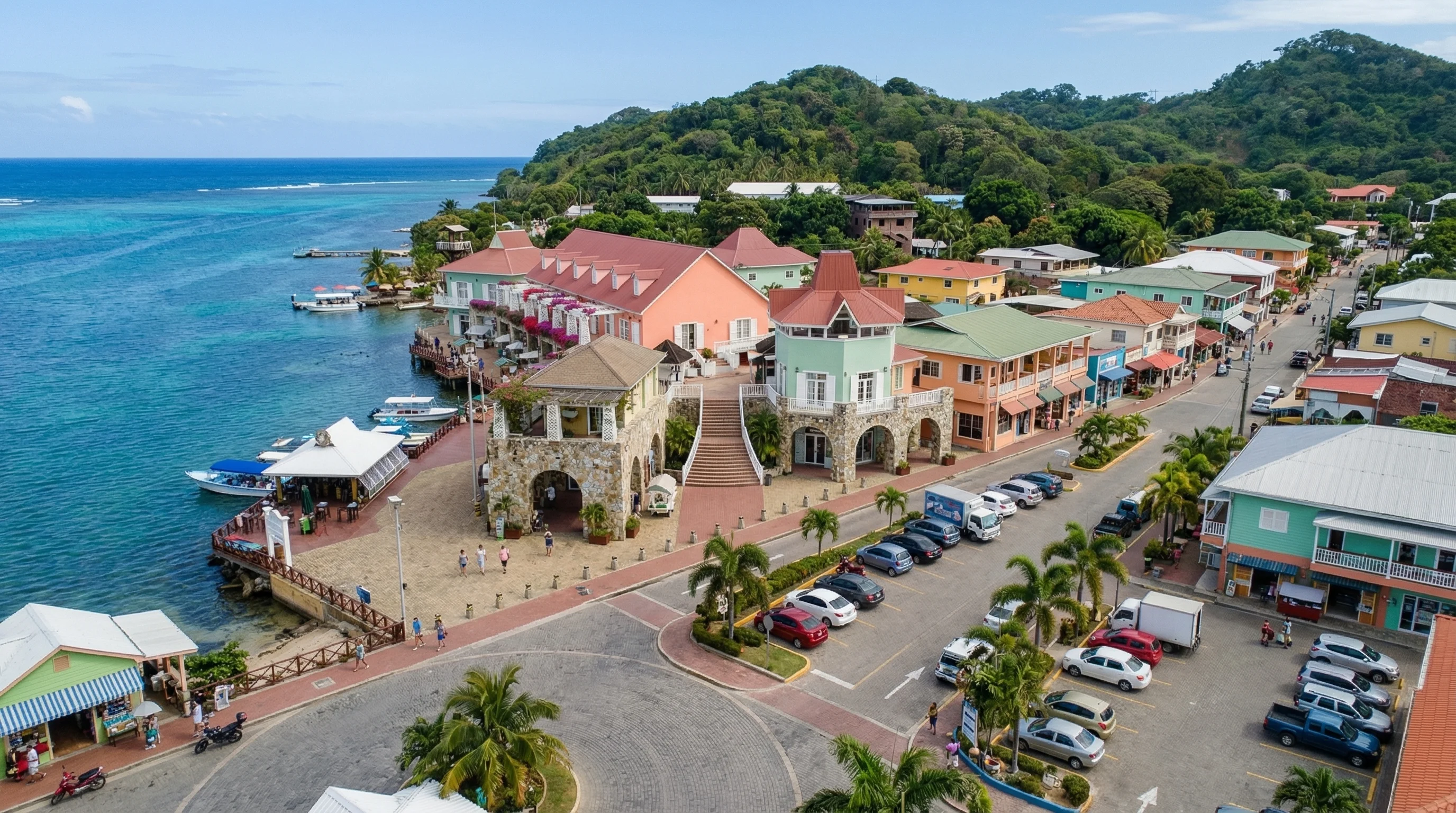
Roatán, the largest of the Islas de la Bahía, is strategically positioned in the Caribbean Sea, approximately 80 kilometers off the northern coast of Honduras. Its primary logistical advantage is its role as a key maritime gateway for the Bay Islands and a significant deep-water port for international shipping, particularly for cruise vessels and cargo destined for Central America's Caribbean coast. The island's economy is heavily driven by international tourism, but it also hosts vital economic sectors such as commercial fishing and seafood processing (notably lobster and shrimp), which are major export industries requiring efficient cold-chain logistics. Additionally, there is a presence of light manufacturing and construction materials supply to support the local and regional market.
In terms of transportation infrastructure, Roatán is served by the Juan Manuel Gálvez International Airport (RTB) and, critically for freight, the Port of Roatán. However, for land-based freight transport to the mainland, the infrastructure involves a well-established roll-on/roll-off (RoRo) ferry service connecting Roatán to the port city of La Ceiba on the Honduran mainland. From La Ceiba, the freight integrates into the national highway network, primarily the CA-5, which connects to the rest of Honduras and the subsequent corridor toward Guatemala and México. Therefore, the initial leg of any overland journey from Roatán inherently requires seamless coordination between island port operations, ferry scheduling, and mainland trucking, a complexity we manage for our clients.
 Destination
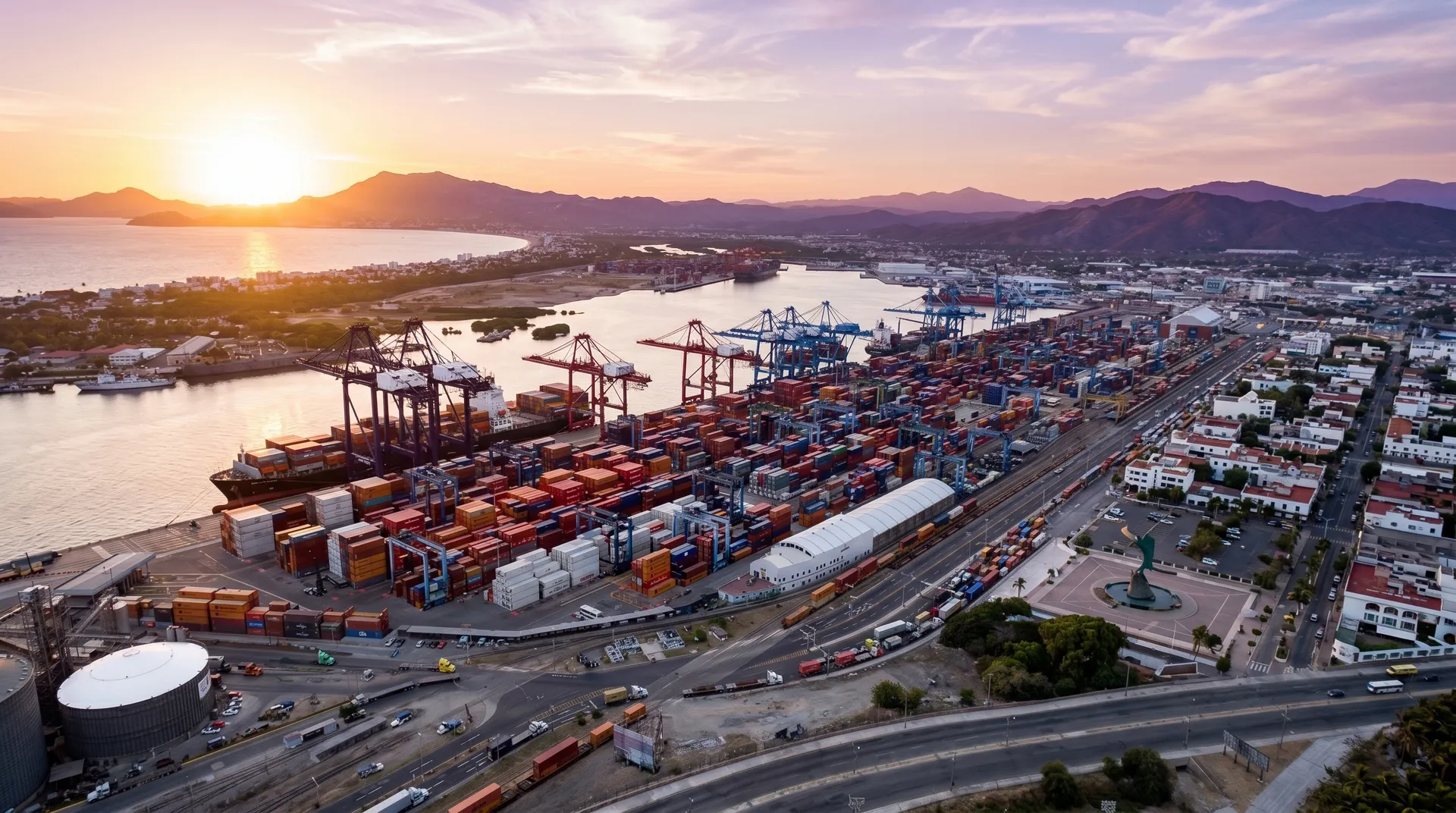
Manzanillo, located in the state of Colima on Mexico’s Pacific coast, is a strategically vital logistics and port city. Its paramount importance stems from the Manzanillo International Terminal, one of the busiest and most significant container ports in Latin America. This deep-water, multi-berth facility serves as Mexico’s primary Pacific gateway, handling a massive volume of imports from Asia and exports from Mexico’s industrial heartland. The port’s strategic location provides direct access to major shipping lanes connecting the Americas to the Asia-Pacific region.
The economic engine of Manzanillo is intrinsically linked to port-related activities and regional industry. Key sectors include international trade and logistics services, manufacturing (with a focus on automotive parts, electronics, and appliances for export), and agriculture—particularly the packing and shipping of tropical fruits like mangoes and papaya. The surrounding region of Colima and nearby Jalisco is a major agricultural and industrial zone, creating a constant flow of goods requiring both import and export solutions. The transportation infrastructure is world-class, centered on the port itself, which is directly connected to Mexico’s extensive highway network via the Mexican Federal Highway 200 and Federal Highway 15D. These highways provide efficient connections inland to Guadalajara, Mexico City, and the northern border with the United States, making Manzanillo a pivotal distribution hub for national and international supply chains.










