Rivas to Toluca
Toluca → RivasFTL freight transportation service between Rivas and Toluca. Reliable logistics solutions for your business.
Route Description
Everything you need to know about the corridor Rivas - Toluca
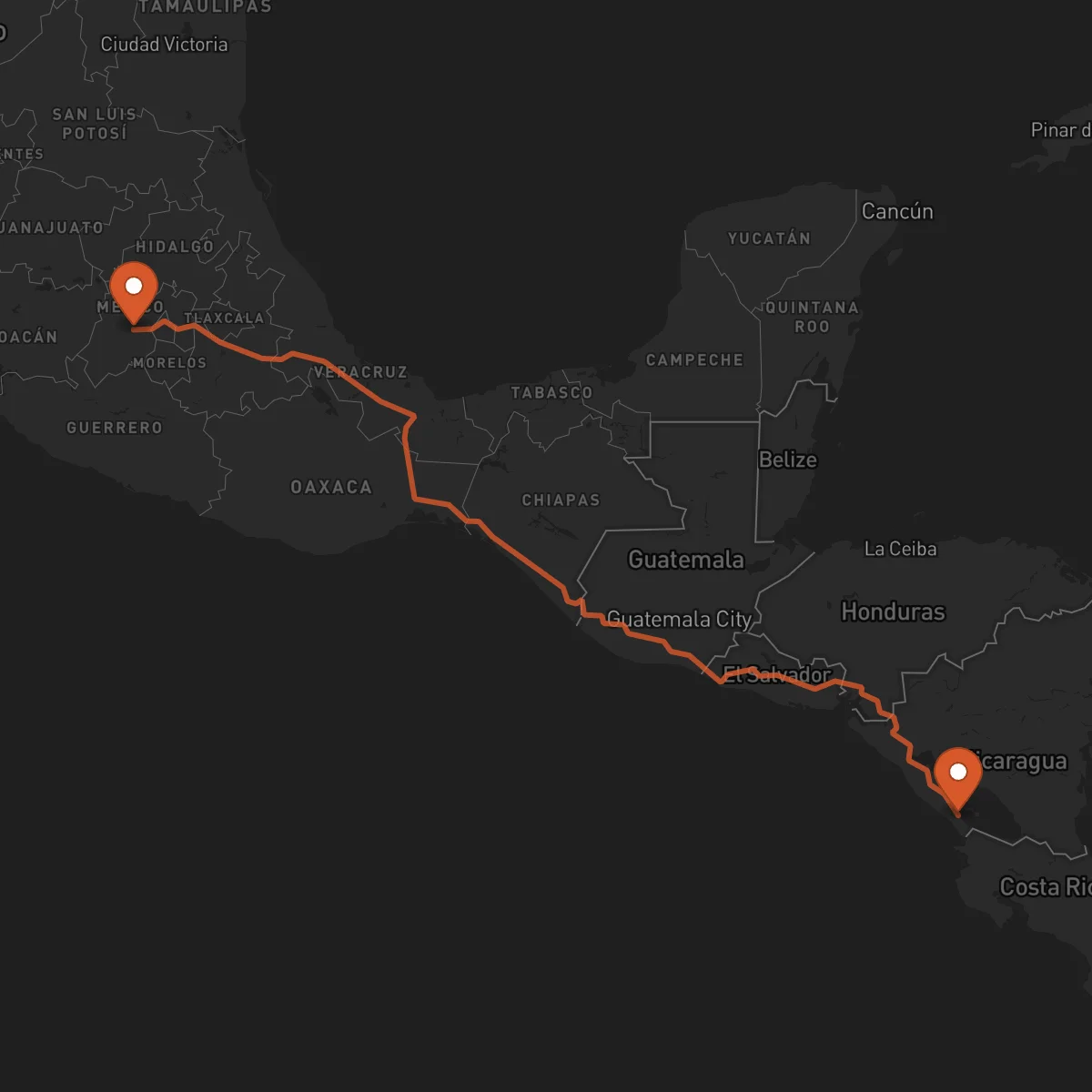
The Rivas to Toluca corridor is a strategic cross-border artery connecting Central America with Mexico's industrial heartland. This route facilitates the flow of goods between Nicaragua's key export regions and the Estado de México's manufacturing powerhouse, supporting regional economic integration and supply chain efficiency. Economically, Rivas serves as a vital agricultural and light manufacturing hub in southern Nicaragua, while Toluca is a major center for automotive, aerospace, and consumer goods production. Primary industries leveraging this corridor include agriculture (coffee, bananas, sugar), automotive parts, aerospace components, textiles, and processed foods. The transportation infrastructure relies on the Pan-American Highway (CA-1) through Central America, transitioning to Mexican Federal Highways 190 and 55. The principal border crossing is at Tecún Umán (Guatemala-Mexico), where customs procedures require meticulous documentation and compliance. Control Terrestre streamlines operations on this corridor through our alliance of certified providers, offering dedicated FTL solutions, specialized cargo handling (including hazmat and oversized), and expertise in cross-border compliance with programs like C-TPAT, FAST, and BASC. We ensure seamless door-to-door connectivity, leveraging our network to manage the complexities of international freight while maintaining our commitment to human-centric and sustainable logistics.
Services for this Route
Available services for the corridor Rivas - Toluca
 Origin
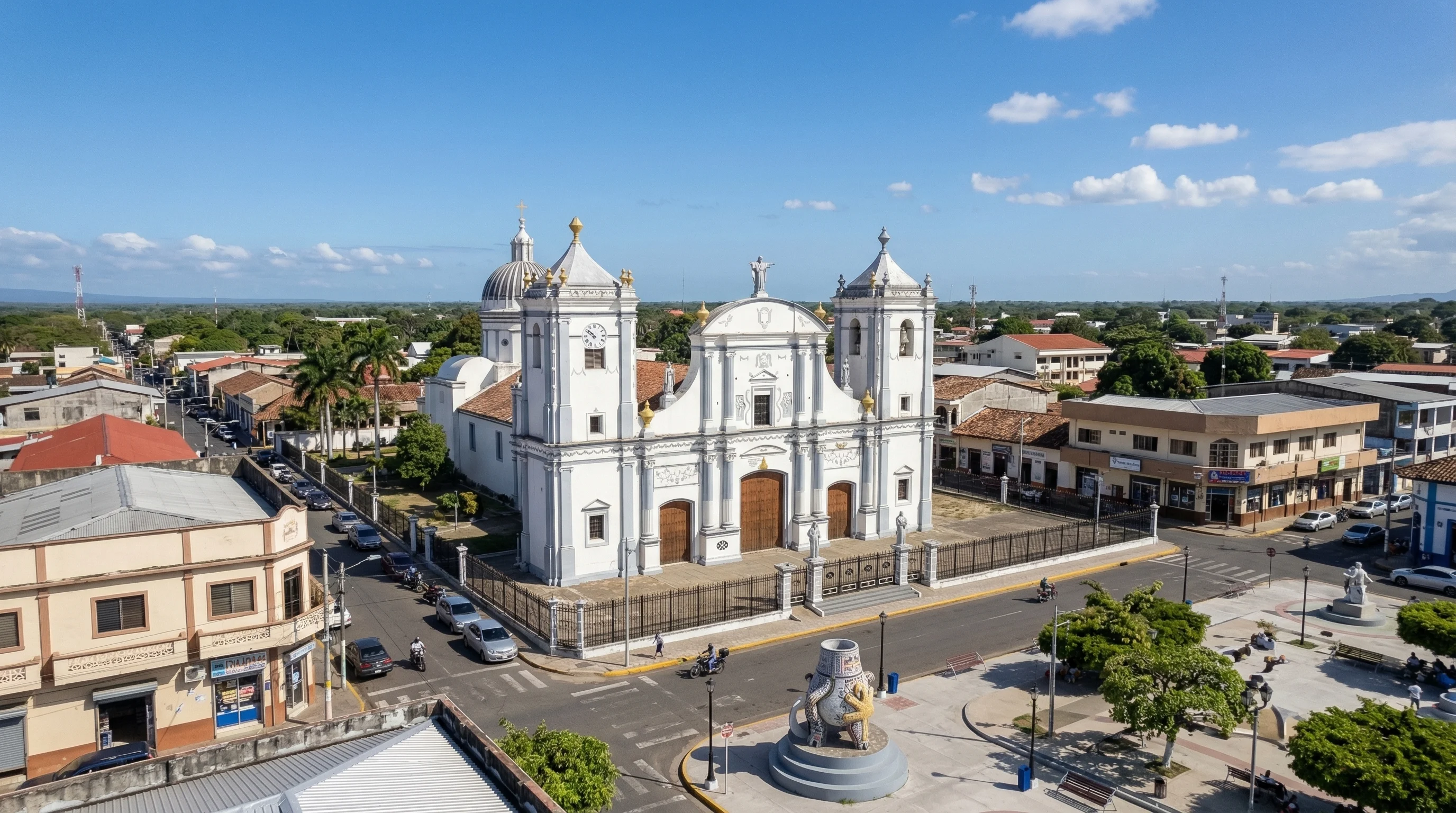
Rivas, Nicaragua, holds a strategic position as a southern gateway to Central America, bordering Costa Rica and providing direct access to Pacific ports like Corinto. This location makes it a critical logistics node for regional distribution and exports. The local economy is driven by agriculture—particularly coffee, bananas, and sugar—alongside growing textile and light manufacturing sectors. Transportation infrastructure is anchored by the Pan-American Highway (CA-1), which connects Rivas to the northern border at Peñas Blancas and onward through Honduras and Guatemala. This highway network supports efficient movement of goods to the Tecún Umán border crossing, enabling onward connectivity into Mexico. Rivas's role as an origin point is enhanced by its proximity to agricultural production zones and its integration into Central America's road corridor system, making it a reliable starting point for long-haul freight destined for Mexico.
 Destination
Toluca
Toluca, the capital of Estado de México, is a strategic industrial and logistics hub within the Mexico City metropolitan area. Its location offers unparalleled access to one of Latin America's largest consumer and manufacturing markets, as well as key northern border crossings. The city is a major center for automotive manufacturing (hosting plants for Nissan, General Motors, and others), aerospace, food processing, electronics, and furniture production. Transportation infrastructure is robust, featuring the Mexico City-Toluca toll road (Autopista México-Toluca), Federal Highways 15 and 55, and rail connections that facilitate distribution across central Mexico and to the U.S. border. Additionally, its proximity to the Felipe Ángeles International Airport (AIFA) supports multimodal logistics. Toluca's industrial density and connectivity make it a high-demand destination for full truckload freight, requiring efficient inbound supply chains to support its diverse manufacturing sectors.










