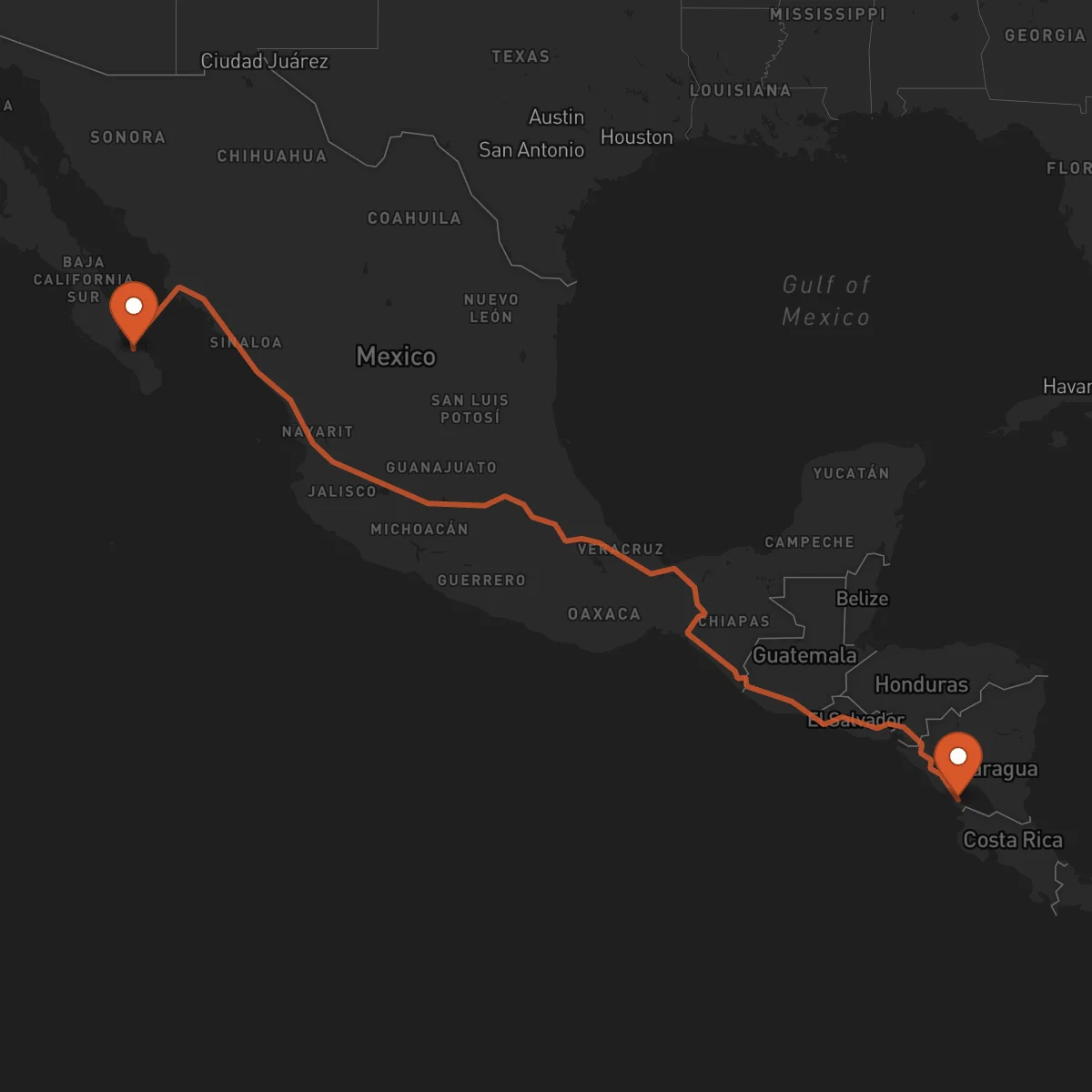
Rivas to La Paz
La Paz → RivasFTL freight transportation service between Rivas and La Paz. Reliable logistics solutions for your business.
Route Description
Everything you need to know about the corridor Rivas - La Paz
The Rivas to La Paz corridor represents a strategic logistics connection between Nicaragua and Mexico, spanning approximately 2945 kilometers through Central America and the Mexican Pacific. This cross-border route facilitates the movement of goods between two dynamic economies, connecting the industrial and agricultural regions of southern Nicaragua with the growing markets of Baja California Sur. The corridor traverses key Mexican states including Chiapas, Oaxaca, Guerrero, and Jalisco before reaching the Baja California peninsula, utilizing the well-developed Mexican Federal Highway system. Control Terrestre manages this complex cross-border operation through our network of certified carriers, ensuring seamless freight movement across multiple international borders. Our expertise in handling customs documentation and compliance requirements at both the Mexico-Guatemala and Mexico-United States borders makes us the ideal partner for companies seeking reliable full truckload (FTL) transportation along this route.
Services for this Route
Available services for the corridor Rivas - La Paz
 Origin
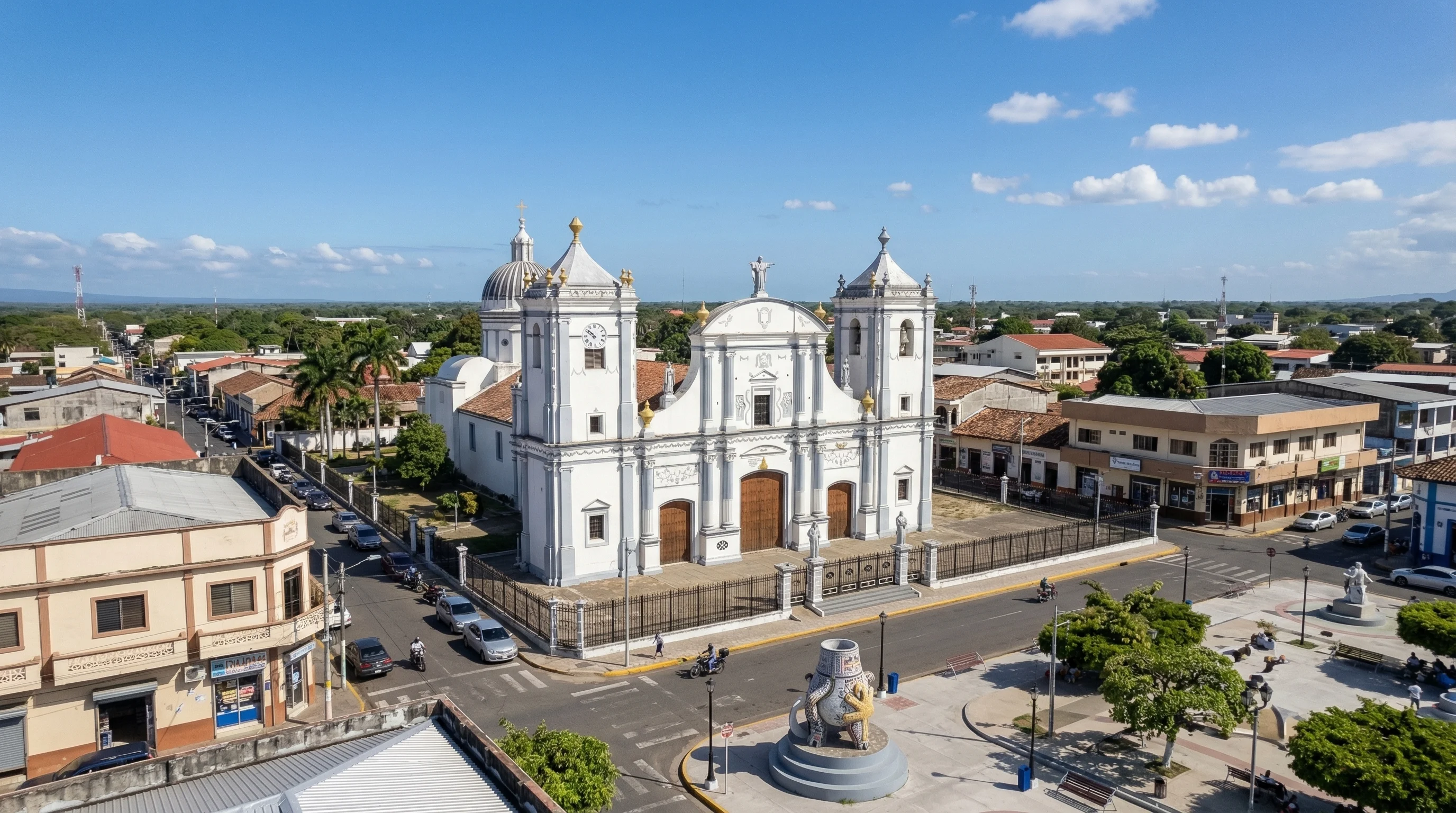
Rivas, located in southwestern Nicaragua, serves as a strategic logistics hub with its proximity to both the Pacific coast and the Costa Rican border. The region's economy is driven by agriculture, including coffee, tobacco, and tropical fruits, along with growing industrial manufacturing sectors. Rivas benefits from the Pan-American Highway connectivity and access to the Port of San Juan del Sur, providing multiple transportation options for freight movement. The city's location makes it an ideal starting point for cross-border shipments heading north through Central America and into Mexico.
 Destination
La Paz
La Paz, the capital of Baja California Sur, Mexico, is strategically positioned on the Gulf of California with significant economic importance for the region. The city serves as a major commercial center for mining, fishing, and tourism industries, with growing logistics and distribution activities. La Paz benefits from the Transpeninsular Highway (Mexican Federal Highway 1) and the Port of La Paz, providing essential infrastructure for both domestic and international freight movement. The city's location makes it a key destination for goods entering the Baja California peninsula from mainland Mexico and beyond.










