Richmond to Memphis
Memphis → RichmondFTL freight transportation service between Richmond and Memphis. Reliable logistics solutions for your business.
Route Description
Everything you need to know about the corridor Richmond - Memphis
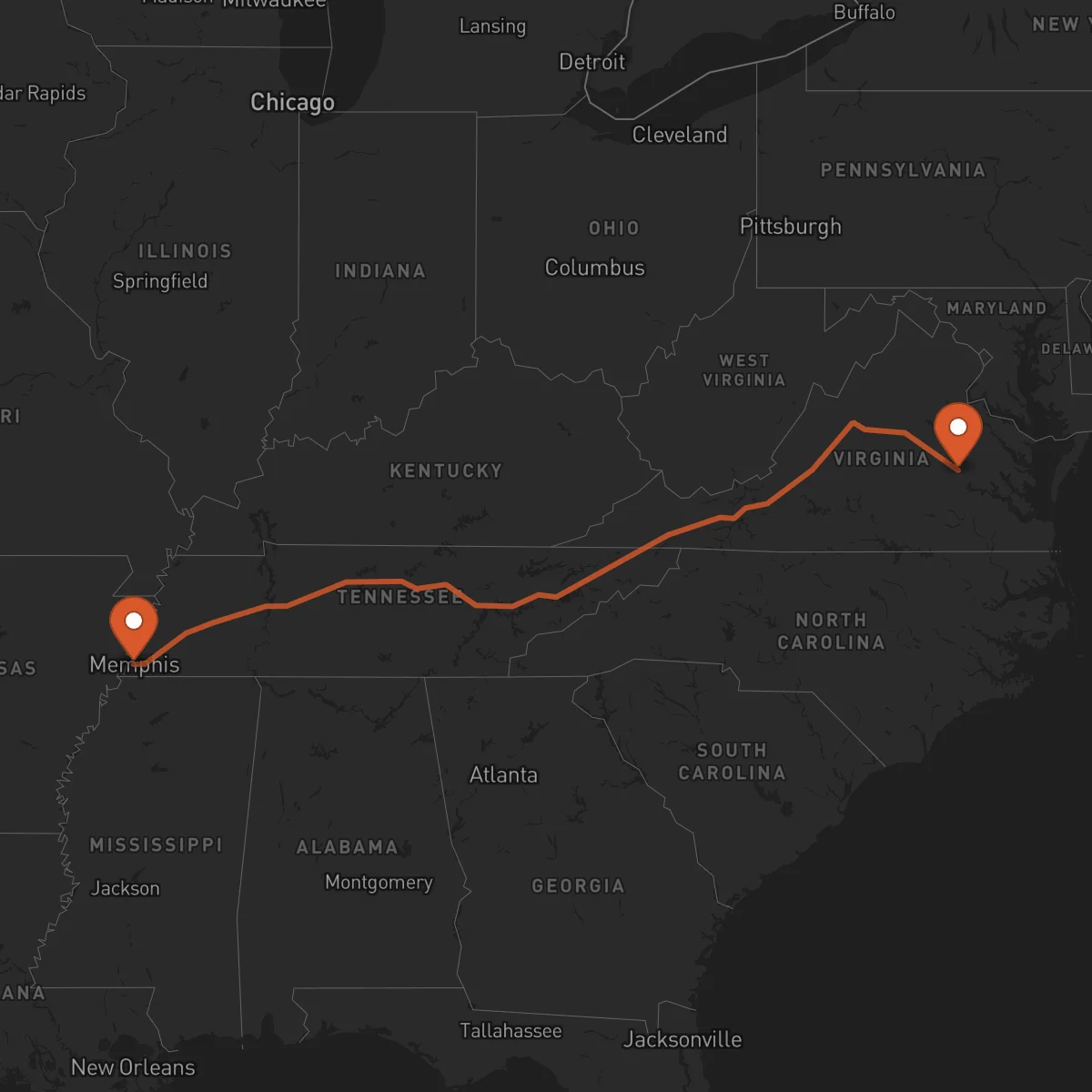
The Richmond to Memphis corridor represents a vital freight transportation route connecting the Mid-Atlantic region with the heart of the southeastern United States. Spanning approximately 1,160 kilometers, this domestic corridor facilitates the movement of goods between Virginia's capital and Tennessee's largest city, serving as a crucial link in the national supply chain network.
The economic significance of this corridor cannot be overstated, as it connects two major industrial and commercial hubs. Richmond serves as a key distribution center for the East Coast, while Memphis functions as a major logistics hub, home to the FedEx World Hub and numerous warehousing operations. The corridor passes through several important economic regions, including the Research Triangle in North Carolina and the Nashville metropolitan area in Tennessee.
This route primarily serves industries such as manufacturing, retail distribution, automotive parts, and consumer goods. The transportation infrastructure along this corridor is robust, with major highways including I-64, I-81, I-40, and I-55 providing efficient north-south and east-west connectivity. These interstate highways ensure reliable transit times and multiple routing options for freight carriers.
Control Terrestre optimizes operations on this corridor by leveraging our extensive network of certified transportation providers and strategic partnerships. Our dedicated full truckload services ensure that your cargo moves efficiently between Richmond and Memphis, with real-time tracking and professional handling throughout the journey. We understand the specific requirements of each industry using this corridor and tailor our services to meet those needs, whether you're shipping time-sensitive retail inventory or heavy industrial equipment.
Services for this Route
Available services for the corridor Richmond - Memphis
 Origin
Richmond
Richmond, Virginia serves as a strategic logistics hub for the East Coast, offering excellent connectivity to major markets along the Atlantic seaboard. The city's location provides access to the Port of Virginia, one of the largest container ports on the East Coast, making it an ideal gateway for both domestic and international freight. Richmond's proximity to Washington D.C., Baltimore, and other major metropolitan areas enhances its importance in the regional supply chain.
The region's economy is diverse, with strong presence in manufacturing, healthcare, technology, and government services. Richmond is home to several Fortune 500 companies and has a growing industrial base, particularly in advanced manufacturing and biotechnology. The city's infrastructure includes multiple interstate highways (I-95, I-64, I-295), rail connections through CSX Transportation, and a well-developed network of warehousing and distribution centers that support efficient freight operations.
 Destination
Memphis
Memphis, Tennessee stands as one of the most strategic logistics hubs in the United States, earning its reputation as America's Distribution Center. The city's central location provides access to over 75% of the U.S. population within a two-day truck drive, making it an ideal consolidation and distribution point for national freight movements. Memphis International Airport serves as the world's busiest cargo airport, while the city's extensive rail network and river port on the Mississippi River create multiple transportation options.
The Memphis economy is heavily influenced by logistics and distribution, with major employers including FedEx, International Paper, and numerous third-party logistics providers. The region has strong manufacturing sectors in automotive, aerospace, and food processing. Memphis's transportation infrastructure is exceptional, featuring six Class I railroads, major interstate highways (I-40, I-55, I-240, I-69), and over 60 million square feet of warehousing space, providing comprehensive support for freight operations of all types.










