Richmond to Durham
Durham → RichmondFTL freight transportation service between Richmond and Durham. Reliable logistics solutions for your business.
Route Description
Everything you need to know about the corridor Richmond - Durham
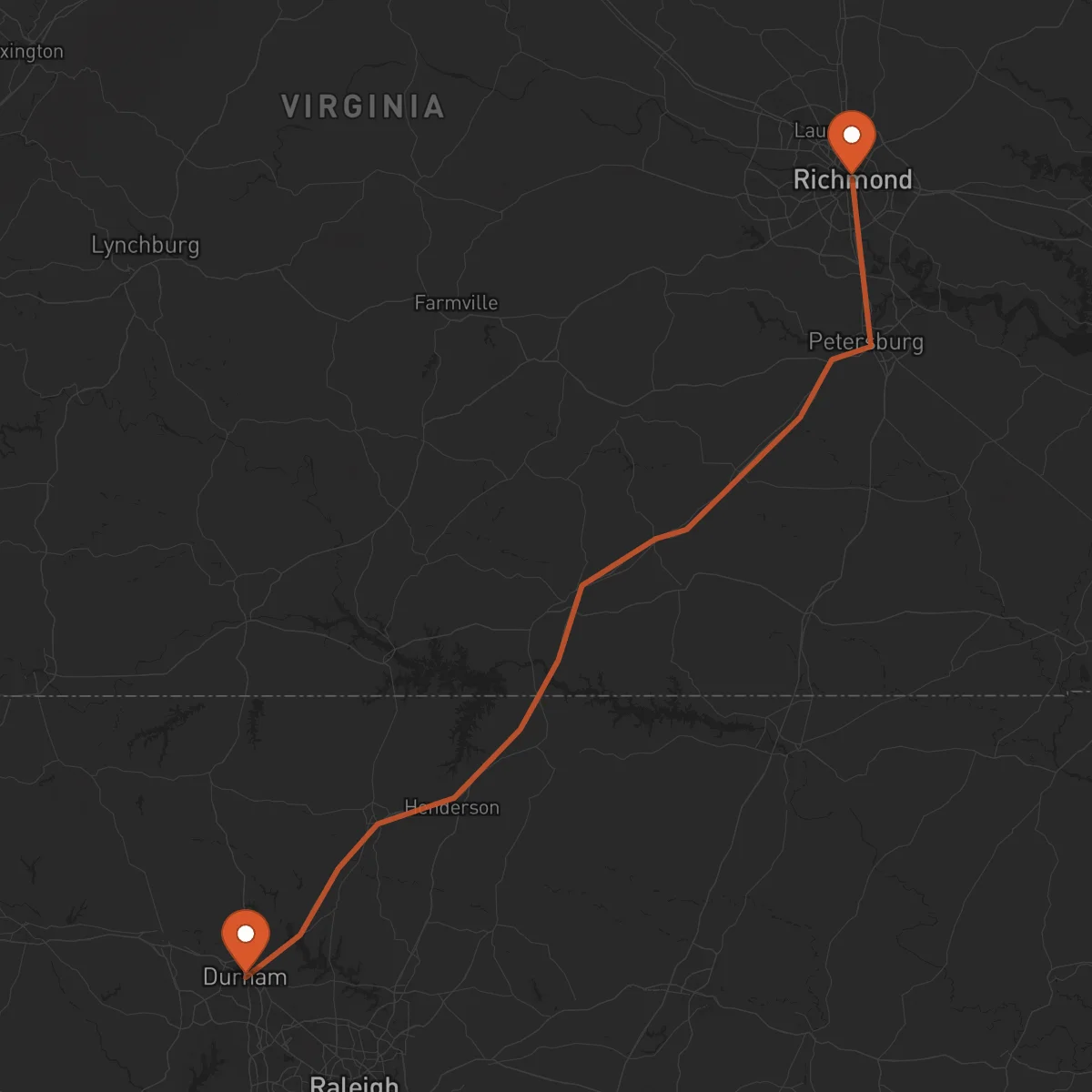
The logistics corridor connecting Richmond, Virginia, to Durham, North Carolina, represents a vital link in the East Coast freight network. This 216-kilometer route traverses through the heart of the Mid-Atlantic region, connecting two significant economic centers. The corridor serves as a crucial artery for freight movement between Virginia's capital region and North Carolina's Research Triangle, facilitating the flow of goods between these dynamic markets.
The region's economic landscape is characterized by diverse industrial sectors, with Richmond's financial services and government presence complementing Durham's research and technology-driven economy. This corridor has become increasingly important as both cities continue to grow as logistics hubs, supported by their proximity to major ports and transportation networks. The route benefits from the region's strong manufacturing base, particularly in automotive, pharmaceuticals, and advanced manufacturing sectors.
Transportation infrastructure along this corridor is well-developed, primarily utilizing I-85 South and I-95 North, which provide efficient north-south connectivity. These major interstate highways offer multiple lanes and modern facilities, ensuring reliable freight movement. The corridor also connects to several key distribution centers and logistics facilities that serve the broader East Coast market.
Control Terrestre leverages this strategic corridor to provide seamless FTL transportation services between Richmond and Durham. Our network of certified carriers ensures consistent, reliable service for time-sensitive shipments. We understand the specific requirements of this route, including optimal scheduling to avoid peak traffic periods and the coordination needed for cross-border documentation when required. Our dedicated services along this corridor help businesses maintain efficient supply chains between these two important economic centers.
Services for this Route
Available services for the corridor Richmond - Durham
 Origin
Richmond
Richmond, Virginia, serves as a strategic logistics hub in the Mid-Atlantic region, positioned at the intersection of major transportation routes. The city's location provides excellent access to both northern and southern markets, with proximity to the Port of Virginia enhancing its importance in freight distribution. Richmond's infrastructure includes multiple interstate highways, including I-95 and I-64, facilitating efficient movement of goods in all directions.
The city's economy is diverse, with strong presence in financial services, government operations, and manufacturing. Key industries include food processing, tobacco, chemicals, and paper products. The region's industrial parks and warehousing facilities make it an ideal origin point for freight shipments, particularly for companies serving the East Coast market. Richmond's transportation infrastructure includes Richmond International Airport and the Port of Richmond, providing multimodal shipping options.
 Destination
Durham
Durham, North Carolina, is a key logistics center within the Research Triangle, strategically positioned to serve both regional and national markets. The city's location provides excellent access to major transportation routes, including I-85 and I-40, connecting it to surrounding metropolitan areas and beyond. Durham's infrastructure supports efficient freight movement with well-developed highway systems and proximity to major distribution centers.
The city's economy is heavily influenced by research, technology, and education, with major employers in pharmaceuticals, biotechnology, and advanced manufacturing. This has created a robust demand for specialized freight services, particularly for time-sensitive and temperature-controlled shipments. Durham's growing industrial base and proximity to other major North Carolina cities make it an important destination for freight transportation, with numerous warehousing and distribution facilities supporting the region's logistics needs.










