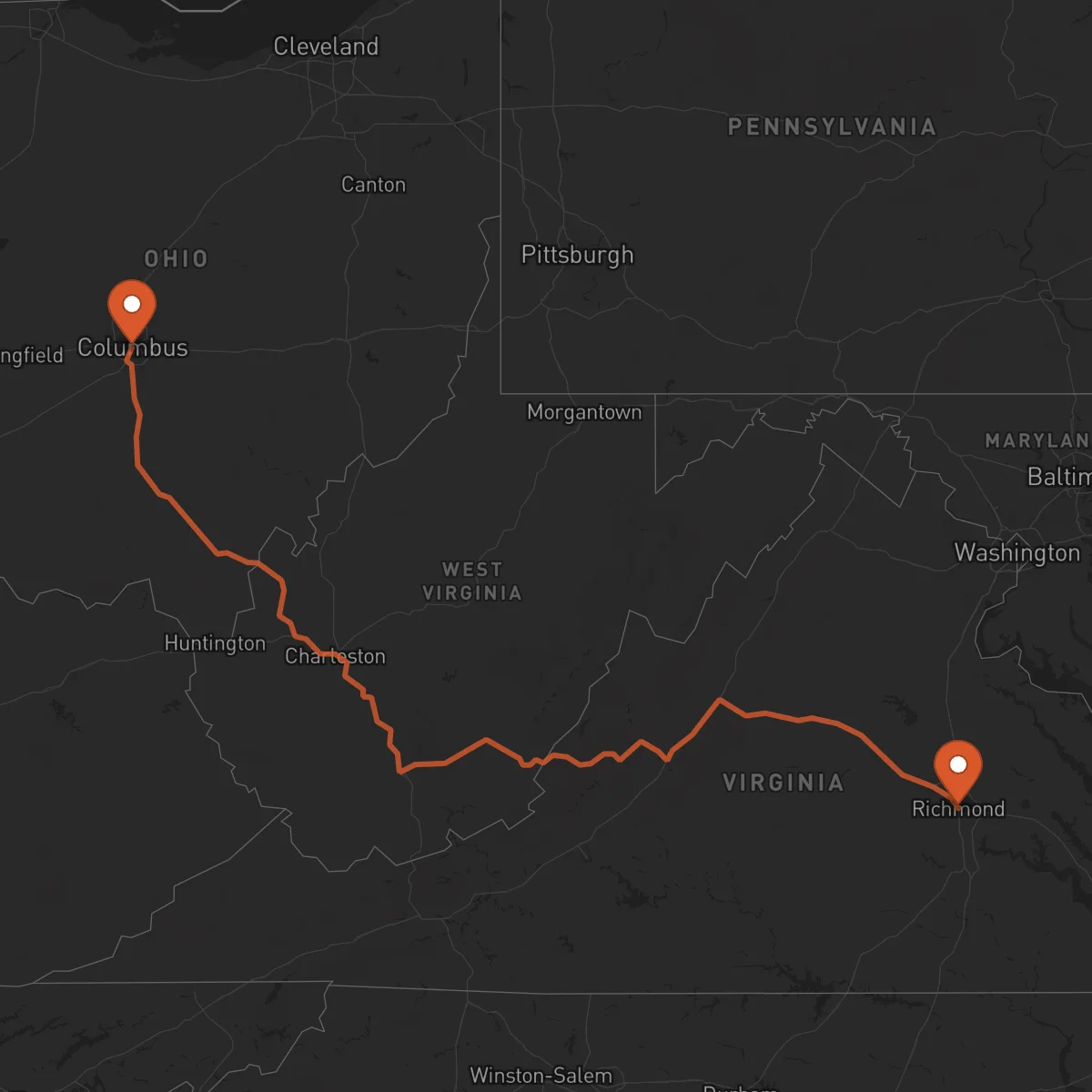
Richmond to Columbus
Columbus → RichmondFTL freight transportation service between Richmond and Columbus. Reliable logistics solutions for your business.
Route Description
Everything you need to know about the corridor Richmond - Columbus
The Richmond-Columbus corridor connects two key industrial hubs in the eastern United States, spanning approximately 553 kilometers through Virginia and Ohio. This route serves as a vital link between the Mid-Atlantic and Midwest regions, facilitating the movement of goods between major economic centers. The corridor primarily utilizes I-64 West and I-70 West, offering reliable transportation infrastructure that supports consistent freight movement across state lines.
The economic significance of this corridor is substantial, connecting Richmond's diverse industrial base with Columbus's growing logistics and manufacturing sectors. Both cities serve as important distribution points, with Richmond's port access complementing Columbus's central location within the Midwest. This combination creates a powerful logistics pathway that supports manufacturing, retail distribution, and industrial supply chains throughout the region.
Key industries utilizing this corridor include automotive parts manufacturing, consumer goods distribution, and agricultural products. The route also supports pharmaceutical and healthcare logistics, given both cities' growing presence in these sectors. Manufacturing facilities in both regions rely on this corridor for just-in-time inventory management and supply chain optimization.
Control Terrestre provides comprehensive FTL transportation solutions along this corridor, leveraging our network of certified carriers to ensure reliable, efficient freight movement. Our dedicated services and specialized equipment options support the diverse cargo needs of businesses operating between these strategic locations.
Services for this Route
Available services for the corridor Richmond - Columbus
 Origin
Richmond
Richmond, Virginia serves as a strategic logistics hub on the East Coast, offering excellent connectivity to major markets along the Atlantic seaboard. The city's location provides access to the Port of Richmond and proximity to the Port of Virginia in Norfolk, creating multimodal transportation opportunities. Richmond's central East Coast position makes it an ideal origin point for freight distribution throughout the eastern United States.
The city's economy is diverse, with strong sectors in advanced manufacturing, healthcare, and government services. Richmond hosts numerous corporate headquarters and distribution centers, particularly in the food and beverage, retail, and industrial equipment sectors. The presence of major universities and research institutions also supports specialized logistics needs in technology and healthcare.
Richmond's transportation infrastructure includes I-95, I-64, and I-295, providing multiple route options for freight movement. The city's rail connections through CSX Transportation and intermodal facilities support seamless cargo transfers. Richmond International Airport also offers air cargo services for time-sensitive shipments, complementing the city's ground transportation capabilities.
 Destination
Columbus
Columbus, Ohio stands as a central logistics powerhouse in the Midwest, strategically positioned to serve major markets across the Great Lakes region and beyond. The city's location at the intersection of several major interstate highways makes it a natural distribution hub for freight moving throughout the central United States. Columbus's central location provides excellent access to both East Coast and Midwest destinations.
The Columbus economy is characterized by strong growth in logistics, distribution, and advanced manufacturing sectors. The city hosts major distribution centers for national retailers and e-commerce companies, taking advantage of its central location and robust infrastructure. Columbus also has a significant presence in the insurance, healthcare, and technology industries, creating diverse freight transportation needs.
Columbus's transportation infrastructure is exceptional, with direct access to I-70, I-71, and I-270 providing multiple freight corridors. The city's extensive rail network through Norfolk Southern and CSX Transportation supports heavy industrial freight. Rickenbacker International Airport's cargo facilities and the nearby Rickenbacker Intermodal Facility further enhance Columbus's capabilities as a major logistics center.










