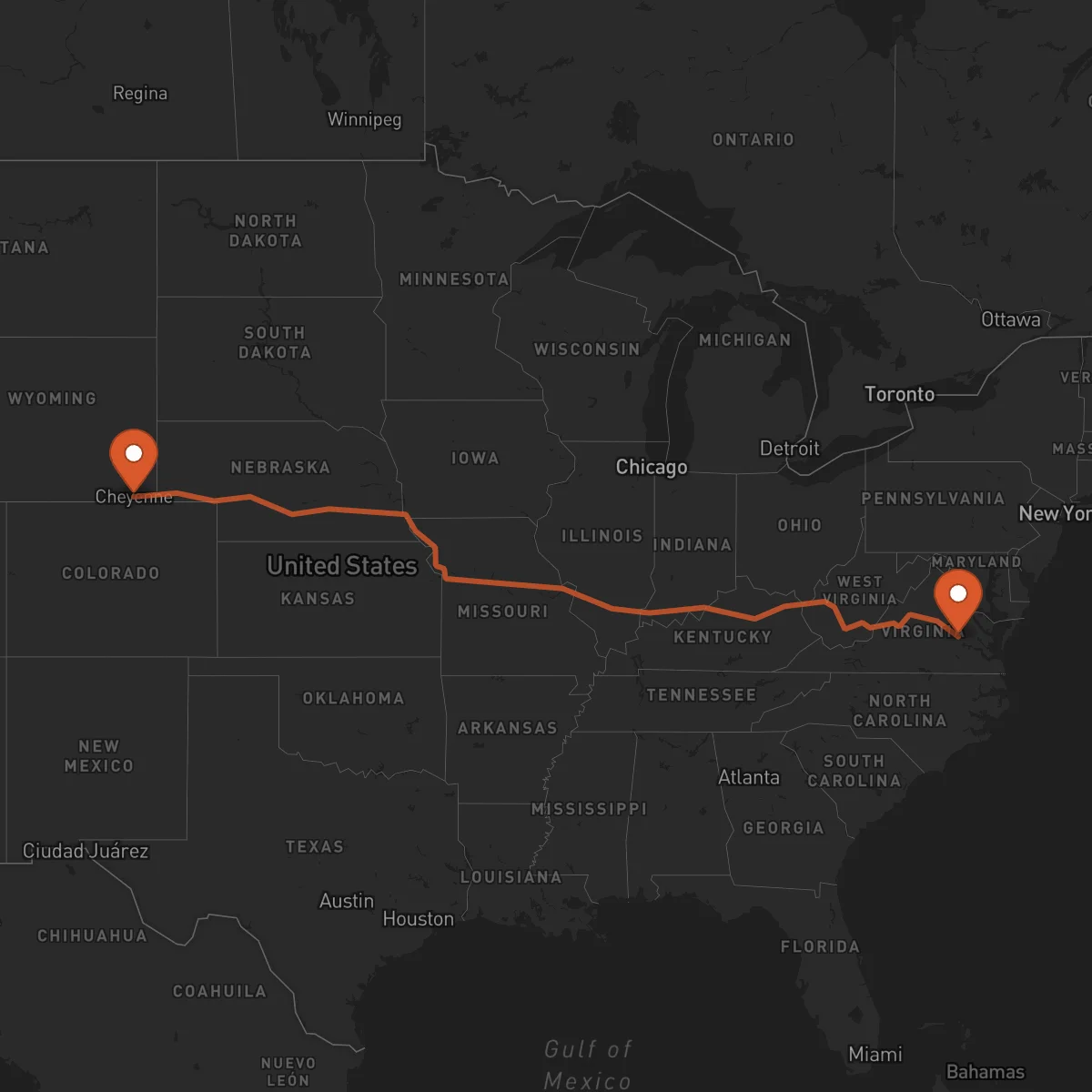
Richmond to Cheyenne
Cheyenne → RichmondFTL freight transportation service between Richmond and Cheyenne. Reliable logistics solutions for your business.
Route Description
Everything you need to know about the corridor Richmond - Cheyenne
The Richmond to Cheyenne corridor connects two key points in the United States, spanning approximately 2,379 kilometers across the East Coast to the Rocky Mountains. This route traverses diverse terrain and crosses multiple states, making it a vital link for freight transportation between Virginia's industrial centers and Wyoming's energy and agricultural regions.
The corridor serves as a crucial artery for industries requiring cross-country transportation of goods, particularly those involved in energy production, manufacturing, and agricultural supply chains. Richmond, with its strategic East Coast location and port access, complements Cheyenne's position as a gateway to the Mountain West and its significance in energy and mining sectors.
Major transportation infrastructure along this route includes Interstate 64 and Interstate 70, providing reliable highway connections across the continental United States. The route passes through key logistics hubs and industrial centers, facilitating the movement of diverse cargo types from manufacturing equipment to energy resources.
Control Terrestre provides comprehensive FTL (Full Truckload) transportation services along this corridor, offering dedicated truck capacity for shipments that require exclusive use of a vehicle. Our specialized carriers ensure secure, efficient transport of your cargo from origin to destination, with real-time tracking and professional handling throughout the journey.
Services for this Route
Available services for the corridor Richmond - Cheyenne
 Origin
Richmond
Richmond, Virginia serves as a strategic logistics hub on the East Coast, offering excellent connectivity through its port facilities, rail connections, and highway network. The city's location provides access to major East Coast markets within a day's drive, making it an ideal origin point for cross-country freight movements. Richmond's transportation infrastructure includes multiple interstate highways and proximity to major distribution centers.
The region's economy is diverse, with strong manufacturing, healthcare, and technology sectors. Richmond is home to numerous industrial facilities, food processing plants, and distribution centers that generate significant freight volume. The presence of educational institutions and government facilities also contributes to the city's logistics activity, creating consistent demand for reliable transportation services.
 Destination
Cheyenne
Cheyenne, Wyoming represents a strategic logistics gateway to the Rocky Mountain region and the broader Mountain West. Located at the intersection of major transcontinental highways, Cheyenne provides crucial access to energy resources, mining operations, and agricultural activities throughout Wyoming and neighboring states. The city's elevation and central location make it a natural distribution point for the region.
The local economy is anchored by government services, military installations, and transportation/distribution industries. Cheyenne's proximity to energy production sites, including oil, natural gas, and coal operations, creates substantial freight movement. The agricultural sector also contributes significantly to the local economy, with grain storage and livestock operations requiring reliable transportation connections to broader markets.










