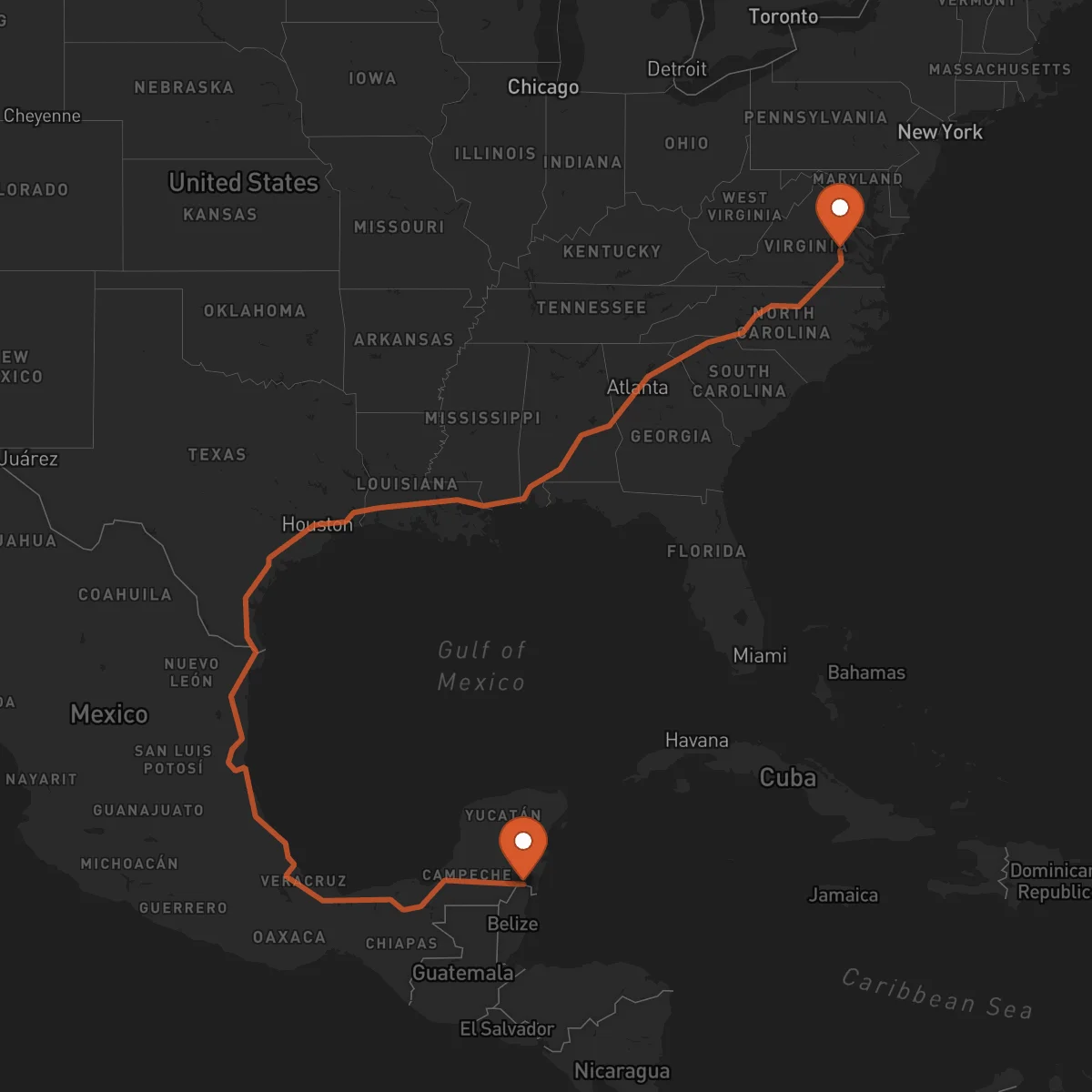
Richmond to Chetumal
Chetumal → RichmondFTL freight transportation service between Richmond and Chetumal. Reliable logistics solutions for your business.
Route Description
Everything you need to know about the corridor Richmond - Chetumal
The logistics corridor connecting Richmond, Virginia, to Chetumal, Quintana Roo, represents a vital cross-border transportation route spanning approximately 2,366 kilometers. This corridor links the industrial heartland of the southeastern United States with Mexico's emerging Caribbean gateway, facilitating the movement of goods between two dynamic economic regions. The route traverses multiple states and crosses the U.S.-Mexico border, requiring specialized knowledge of customs procedures and regulatory compliance.
The corridor serves a diverse range of industries, with Richmond's manufacturing, technology, and distribution sectors complementing Chetumal's growing tourism, agricultural, and energy industries. Major transportation infrastructure includes Interstate 95, I-85, and I-10 in the United States, transitioning to Mexican Federal Highways 180 and 307. The primary border crossing at Brownsville-Matamoros or Laredo-Nuevo Laredo provides access to Mexico's extensive road network, with the final leg connecting through Campeche and Quintana Roo.
Control Terrestre specializes in managing the complexities of this cross-border corridor, offering dedicated FTL services that ensure cargo security and timely delivery. Our C-TPAT and BASC certified partners provide seamless customs clearance and compliance with both U.S. and Mexican regulations. We coordinate every aspect of the journey, from origin pickup in Richmond to final delivery in Chetumal, utilizing our network of experienced carriers and strategic partnerships to optimize transit times and maintain cargo integrity throughout the entire route.
Services for this Route
Available services for the corridor Richmond - Chetumal
 Origin
Richmond
Richmond, Virginia serves as a strategic logistics hub on the East Coast, positioned at the intersection of major transportation corridors. The city's location along Interstate 95 provides direct access to the Northeast corridor and southern markets, while its proximity to the Port of Virginia enhances its role in international trade. Richmond's diversified economy includes advanced manufacturing, biotechnology, food processing, and distribution centers that generate substantial freight volume requiring reliable transportation solutions to Mexico and beyond.
The region boasts comprehensive transportation infrastructure, including Richmond International Airport for air cargo, multiple Class I rail lines, and an extensive highway network. The city's central location within Virginia's industrial triangle, combined with its skilled workforce and business-friendly environment, makes it an ideal origin point for cross-border freight movements. Local warehousing and distribution facilities provide consolidation opportunities for companies shipping to destinations throughout Mexico, including the growing market in Chetumal and the Yucatan Peninsula.
 Destination
Chetumal
Chetumal, Quintana Roo represents Mexico's strategic gateway to Central America and the Caribbean, located at the southeastern tip of the Yucatan Peninsula. As the capital of Quintana Roo, Chetumal serves as a critical logistics hub for the region's tourism industry, agricultural exports, and emerging energy sector. The city's proximity to Belize and its position along Mexico's Caribbean coast make it an essential connection point for cross-border trade and regional distribution networks extending throughout southern Mexico and Central America.
The transportation infrastructure in Chetumal includes Federal Highway 307 connecting to Cancun and the Riviera Maya, as well as access to maritime shipping through nearby ports. The region's growing economy, driven by tourism, fishing, and agricultural production, creates consistent demand for reliable freight services from the United States. Control Terrestre's expertise in navigating the unique challenges of this border region, including customs procedures and local regulations, ensures efficient delivery of goods to support Chetumal's continued economic development and integration with North American supply chains.










