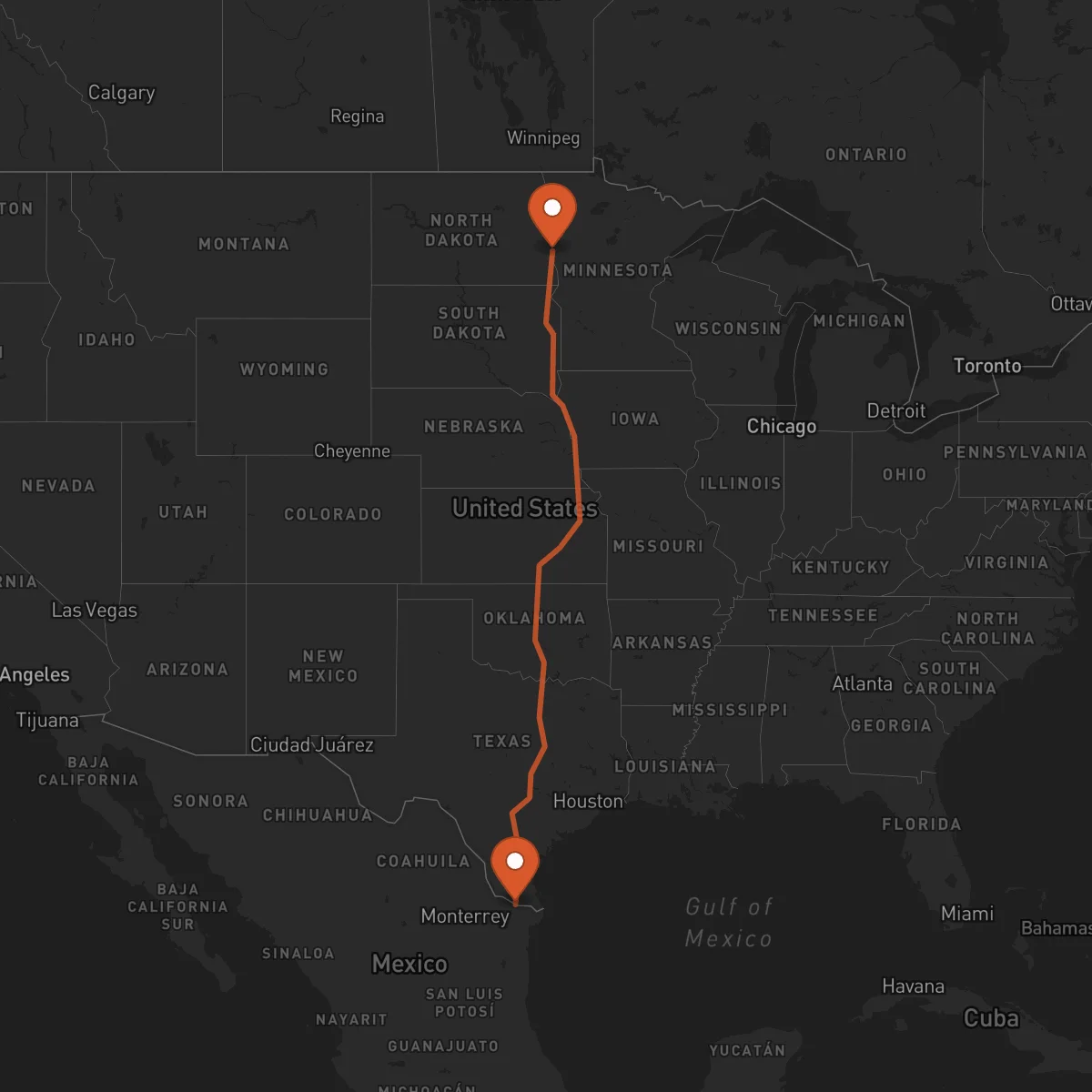
Reynosa to Fargo
Fargo → ReynosaFTL freight transportation service between Reynosa and Fargo. Reliable logistics solutions for your business.
Route Description
Everything you need to know about the corridor Reynosa - Fargo
The logistics corridor between Reynosa, Tamaulipas, and Fargo, North Dakota, represents a vital cross-border connection spanning approximately 2,315 kilometers. This route links Mexico's northeastern industrial hub with the thriving economic center of the Northern Plains, facilitating the movement of goods between two dynamic manufacturing and agricultural regions. The corridor traverses diverse terrain and crosses multiple states, connecting the maquiladora industry of northern Mexico with the manufacturing, technology, and agricultural sectors of the American Midwest.
The economic significance of this corridor is substantial, supporting industries ranging from automotive and electronics to agricultural equipment and food processing. Major transportation infrastructure along this route includes Mexico's Federal Highway 85 and the United States' I-29 and I-35 corridors, providing reliable connectivity for freight movement. The primary border crossing at Reynosa-Hidalgo allows for efficient customs processing, while the route passes through key logistics hubs including San Antonio and Minneapolis.
Control Terrestre specializes in managing the complexities of this cross-border corridor, ensuring seamless freight transportation from origin to destination. Our expertise in customs documentation, border crossing procedures, and regulatory compliance helps companies navigate the logistical challenges inherent in international shipping. With our network of certified carriers and commitment to timely delivery, we provide reliable full truckload services that keep supply chains moving efficiently across this critical North American trade route.
Services for this Route
Available services for the corridor Reynosa - Fargo
 Origin
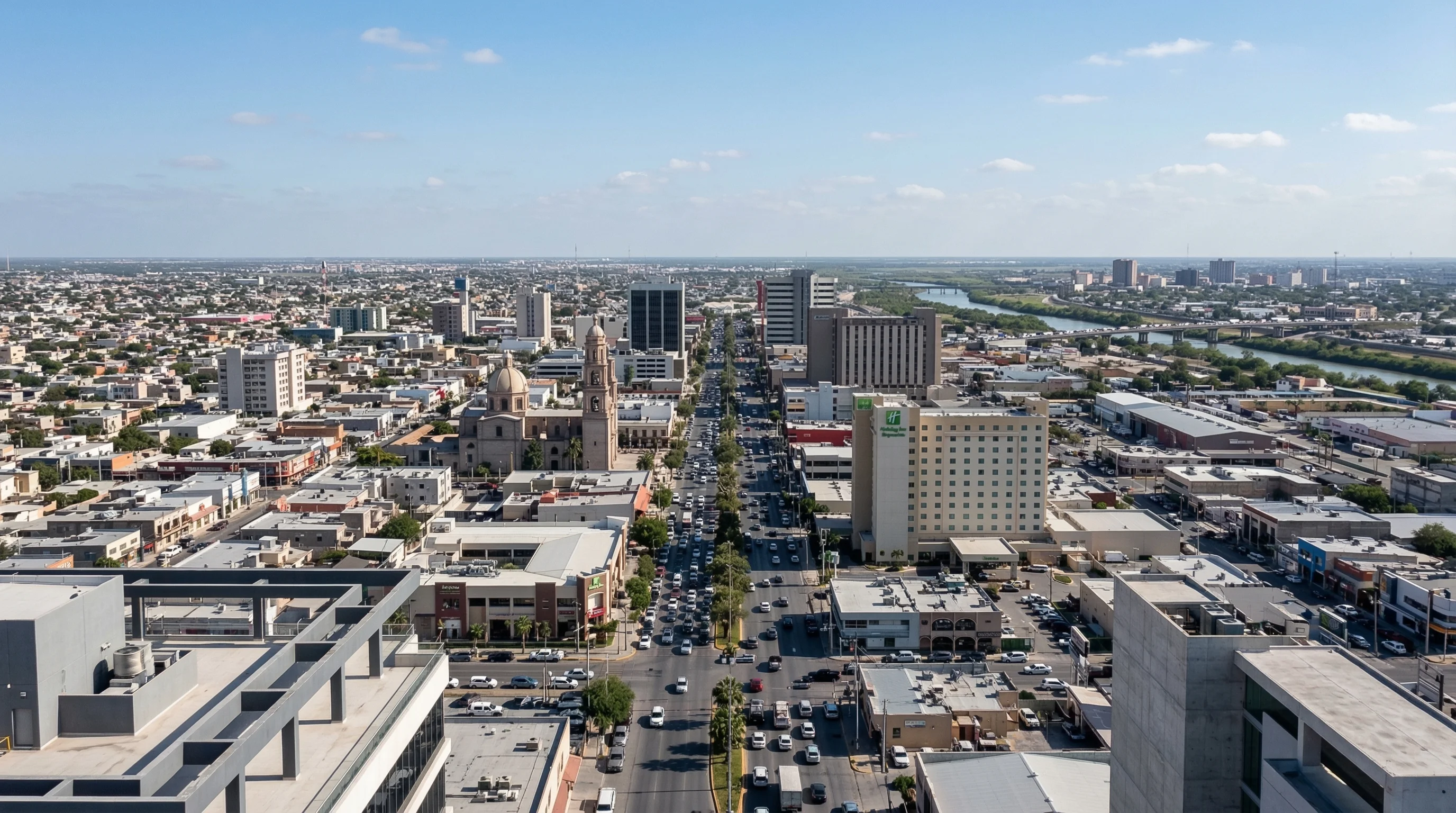
Reynosa
Reynosa, located in the state of Tamaulipas, serves as a strategic logistics gateway to northeastern Mexico. Positioned directly across from McAllen, Texas, this border city forms part of the important Reynosa-McAllen metropolitan area, creating a binational economic zone. The city's proximity to the Gulf of Mexico and its location along major transportation corridors make it an ideal distribution point for both domestic and international freight. Reynosa's industrial base is anchored by its strong maquiladora sector, particularly in electronics, automotive components, and medical devices, with numerous foreign manufacturing plants operating in the region.
The transportation infrastructure in Reynosa is robust, featuring direct access to Federal Highway 85, which connects to Monterrey and Mexico City to the south. The city is served by the Reynosa International Airport and benefits from its location near the Anzalduas International Bridge and Reynosa-Hidalgo Bridge, facilitating efficient cross-border operations. The presence of industrial parks and free trade zones further enhances Reynosa's appeal as a logistics hub, making it an ideal origin point for freight moving north into the United States.
 Destination
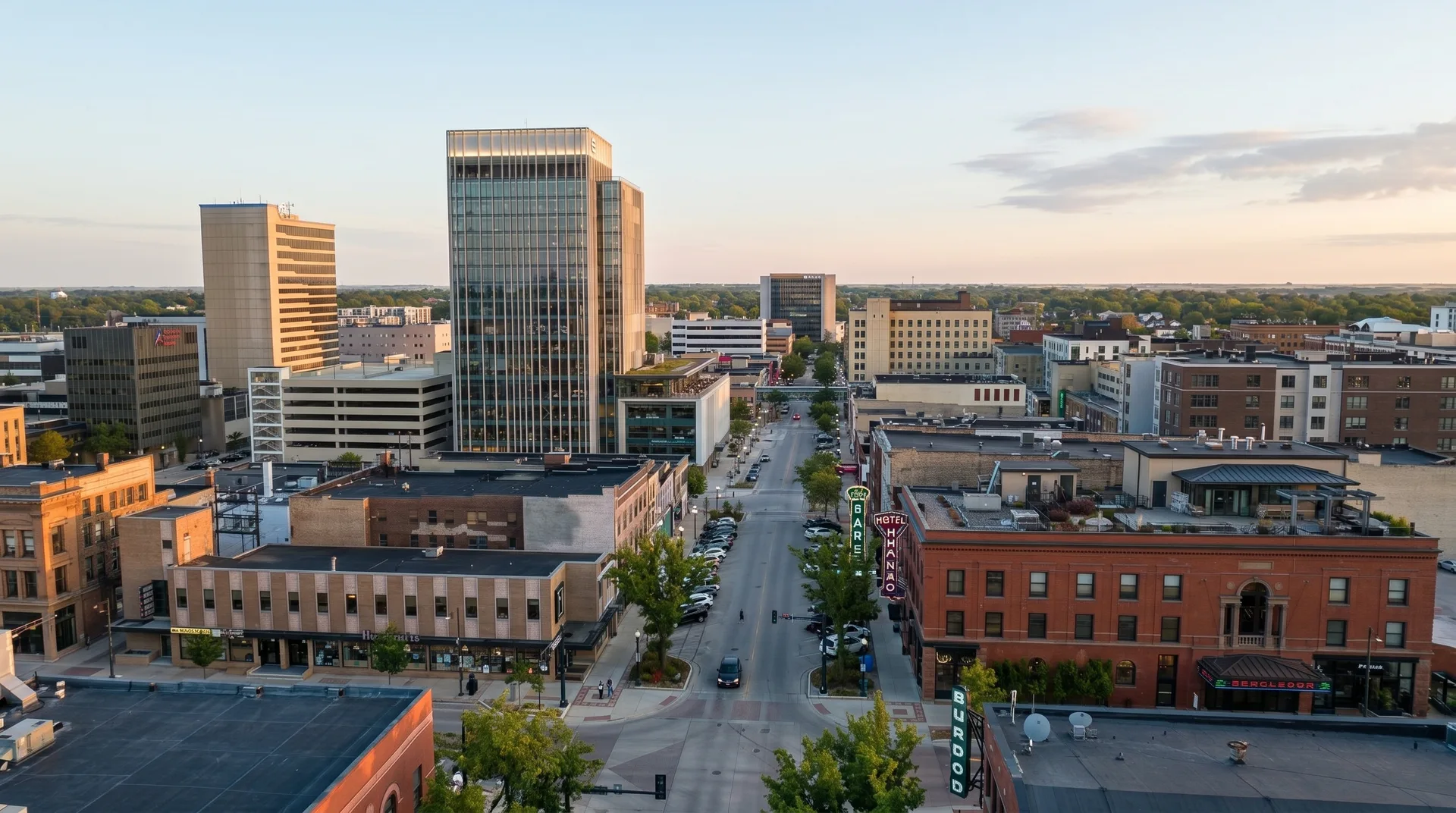
Fargo
Fargo, North Dakota, stands as a strategic logistics center in the Northern Plains region, offering unique advantages for freight distribution. Located along the Red River and serving as the economic hub of eastern North Dakota, Fargo provides excellent connectivity to major markets in the Midwest and beyond. The city's central continental location makes it an ideal consolidation point for goods destined for the surrounding agricultural states and Canadian provinces. Fargo's economy is diverse, with strong presence in technology, manufacturing, healthcare, and education sectors, complemented by its role as a regional distribution center.
The transportation infrastructure in Fargo is comprehensive, featuring excellent highway connections via I-29 and I-94, providing direct routes to Minneapolis, Winnipeg, and other major markets. The city is served by Hector International Airport and benefits from its proximity to the Canadian border, approximately 200 miles north. Fargo's location makes it particularly advantageous for companies requiring efficient distribution to the Upper Midwest, with access to rail services through BNSF and Canadian Pacific lines. The city's logistics ecosystem includes modern warehousing facilities and a skilled workforce, supporting its role as a key destination for cross-border freight movements.










