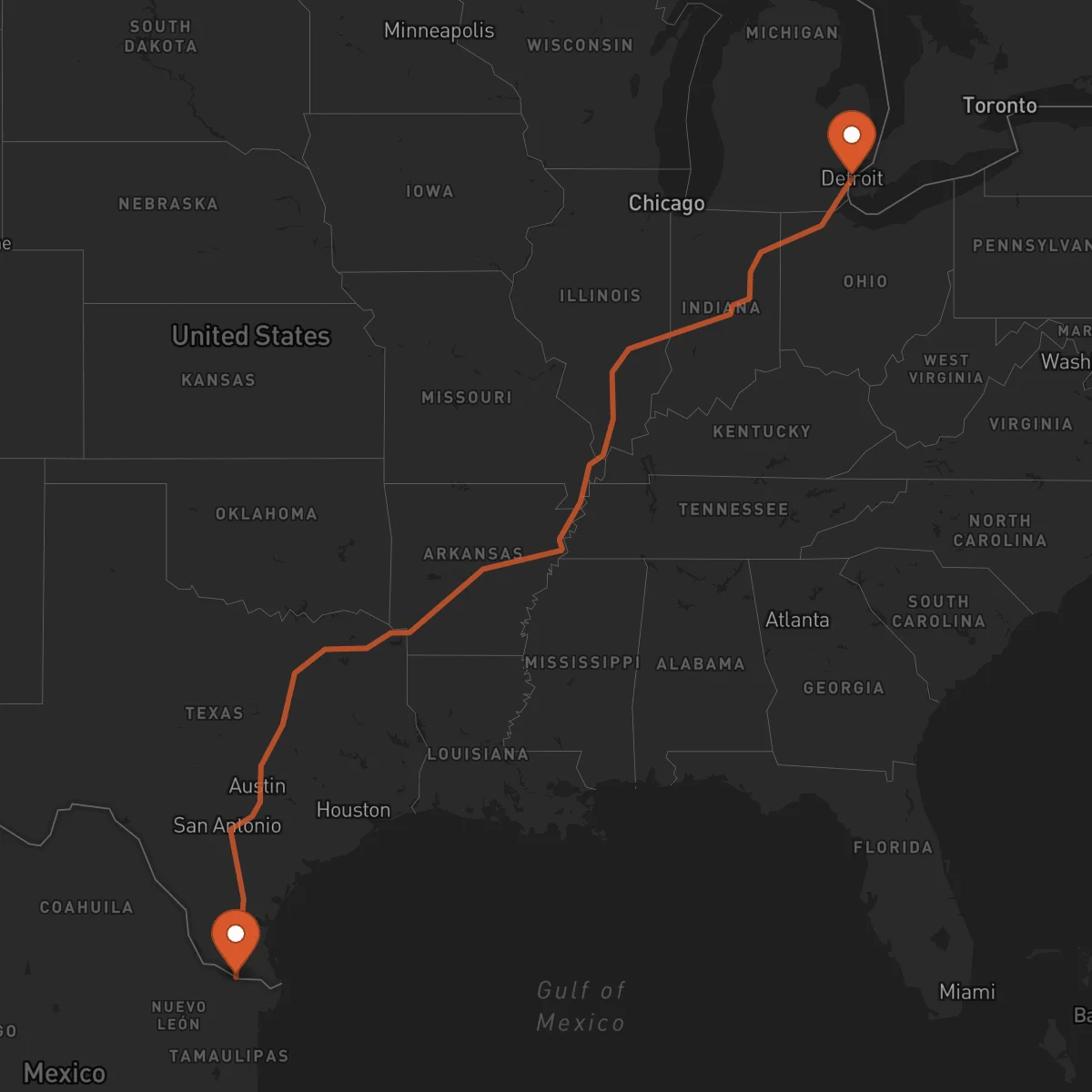
Reynosa to Detroit
Detroit → ReynosaFTL freight transportation service between Reynosa and Detroit. Reliable logistics solutions for your business.
Route Description
Everything you need to know about the corridor Reynosa - Detroit
The Reynosa-Detroit corridor represents a vital logistics artery connecting the industrial heart of northeastern Mexico with the automotive manufacturing hub of the American Midwest. This cross-border route spans approximately 2,278 kilometers and facilitates the movement of critical automotive components, manufacturing materials, and finished goods between two major economic regions. The corridor leverages the strategic location of Reynosa, a key border city in Tamaulipas, and connects it with Detroit, the historic center of the North American automotive industry.
The economic significance of this corridor is underscored by the strong trade relationship between Mexico and Michigan, particularly in the automotive sector. Michigan imports billions of dollars in automotive parts and vehicles from Mexico annually, while Mexico imports machinery, equipment, and specialized components from Michigan. This bidirectional trade flow creates a consistent demand for reliable full truckload (FTL) transportation services that can handle time-sensitive and high-value cargo.
Transportation along this corridor primarily utilizes major highways including Mexican Federal Highway 85 and Interstate 69 in the United States. The route crosses at the Pharr International Bridge, one of the busiest commercial crossings between Mexico and the United States, before continuing north through key logistics hubs in Texas, Oklahoma, and Michigan. Control Terrestre facilitates seamless operations on this corridor by providing dedicated FTL services with experienced drivers familiar with cross-border documentation, customs procedures, and the specific requirements of automotive and manufacturing industries.
Services for this Route
Available services for the corridor Reynosa - Detroit
 Origin
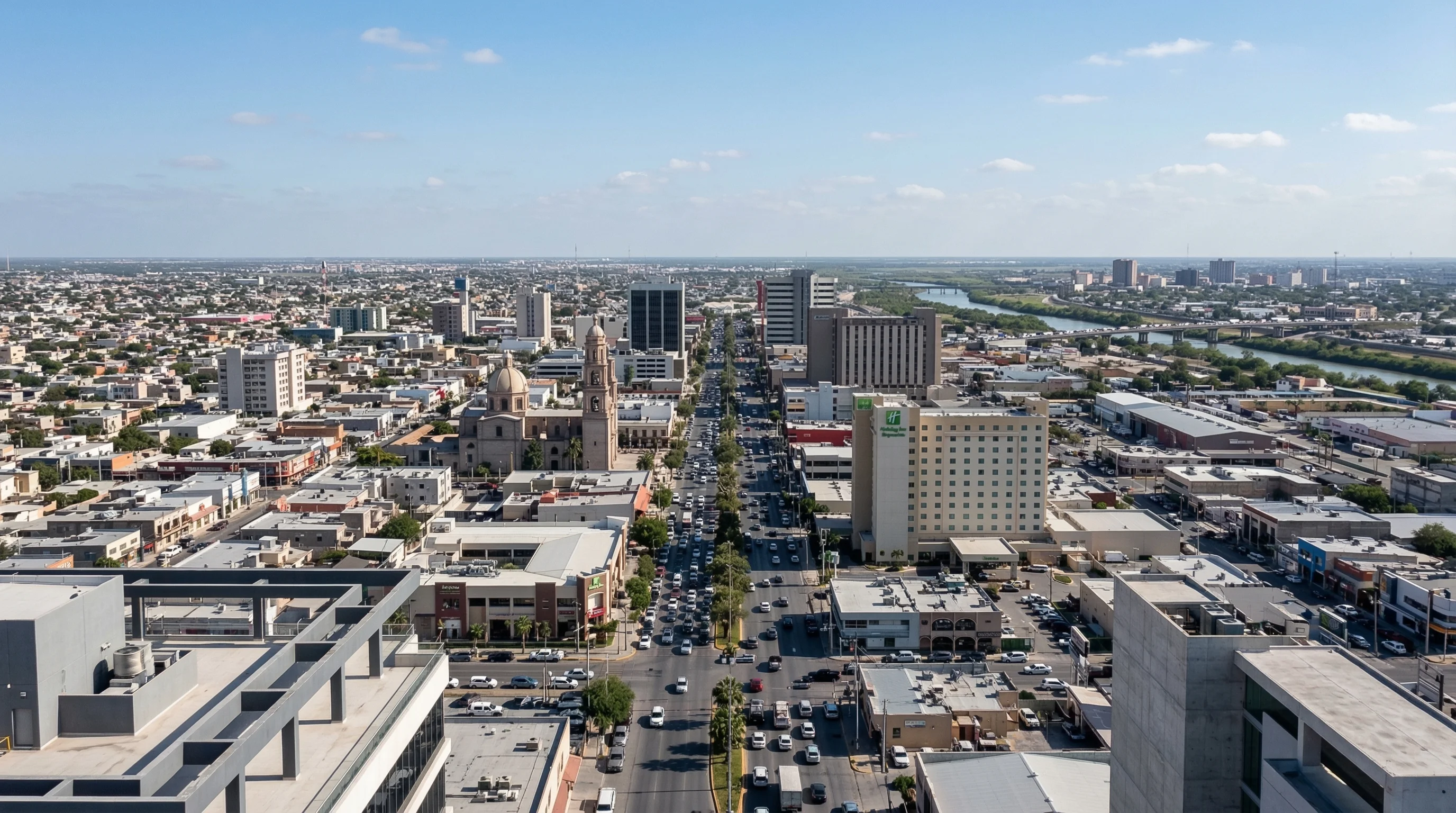
Reynosa
Reynosa, located in the state of Tamaulipas, serves as a strategic logistics gateway to northeastern Mexico. The city benefits from its proximity to the U.S. border, situated just across from McAllen, Texas, which provides access to the North American supply chain network. Reynosa's industrial sector is dominated by maquiladoras (manufacturing plants), particularly in the automotive, electronics, and aerospace industries. The city has developed robust transportation infrastructure including the Reynosa International Airport, multiple industrial parks, and direct access to major border crossings. The presence of industrial clusters focused on automotive parts manufacturing and assembly makes Reynosa a critical origin point for components destined for assembly plants across the United States and Canada.
 Destination
Detroit
Detroit, Michigan, stands as the epicenter of the North American automotive industry, earning its reputation as the "Motor City." The metropolitan area hosts the headquarters and major manufacturing facilities of the "Big Three" automakers - General Motors, Ford, and Stellantis (formerly Chrysler) - along with hundreds of tier-one and tier-two automotive suppliers. Detroit's strategic location in the Great Lakes region provides excellent connectivity through a network of interstate highways, including I-75, I-94, and I-96, facilitating distribution throughout the Midwest and beyond. The city's extensive port facilities on the Detroit River and its international airport complement the ground transportation network, creating a multimodal logistics hub that processes billions of dollars in automotive and manufacturing trade annually.










