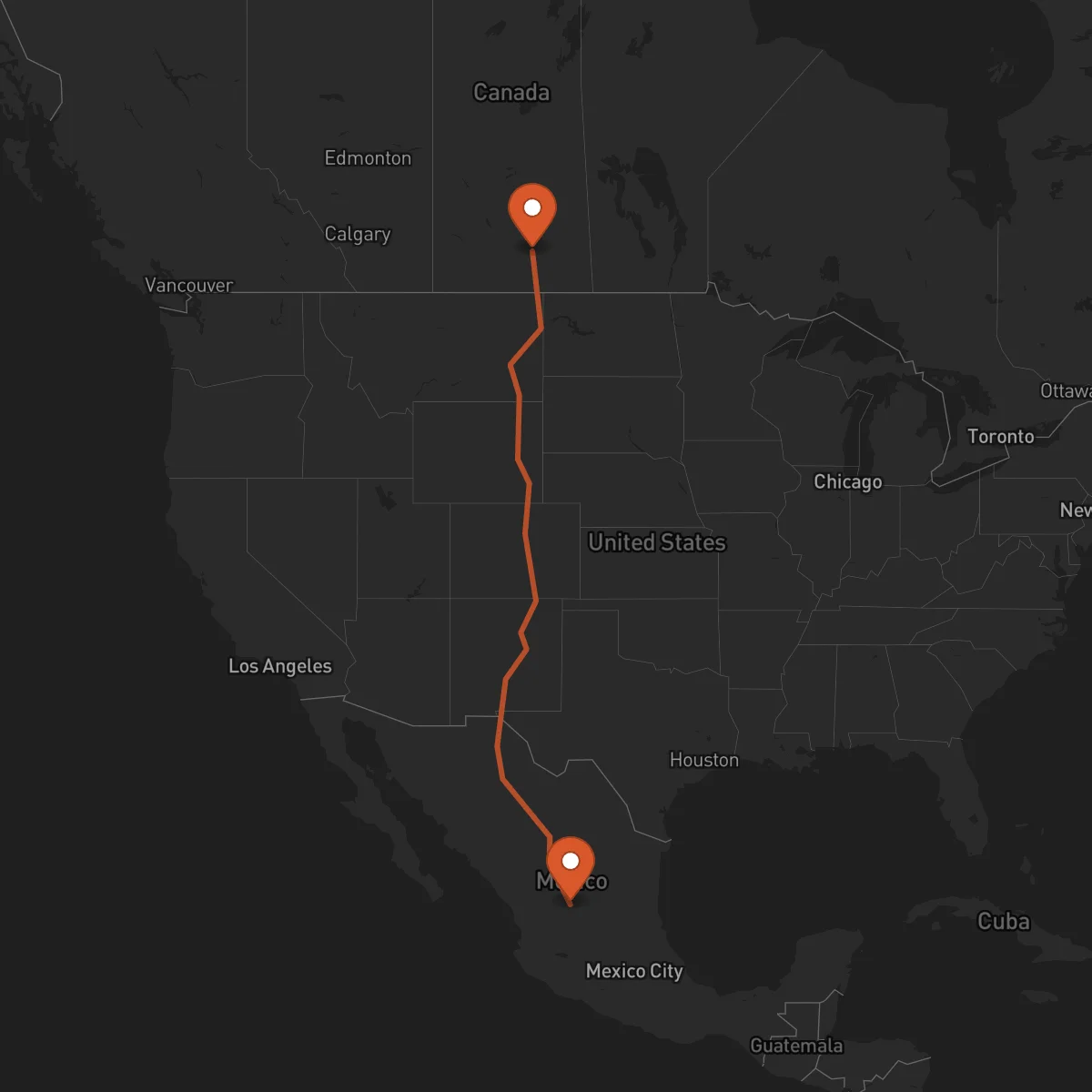
Regina to Zacatecas
Zacatecas → ReginaFTL freight transportation service between Regina and Zacatecas. Reliable logistics solutions for your business.
Route Description
Everything you need to know about the corridor Regina - Zacatecas
The logistics corridor connecting Regina, Saskatchewan to Zacatecas, Mexico represents a vital cross-border trade route spanning approximately 3,082 kilometers. This corridor facilitates the movement of goods between Canada's agricultural heartland and Mexico's industrial centers, creating essential supply chain connections for North American commerce. The route traverses diverse terrains and crosses international borders, requiring specialized expertise in cross-border logistics and customs compliance.
The economic significance of this corridor extends beyond simple transportation, serving as a lifeline for industries on both ends. Regina's agricultural and manufacturing sectors rely on efficient export capabilities to Mexican markets, while Zacatecas's growing automotive, mining, and aerospace industries depend on timely imports of Canadian raw materials and specialized equipment. This bidirectional trade flow creates opportunities for businesses to optimize their supply chains through dedicated full truckload services that ensure cargo security and timely delivery.
Key transportation infrastructure along this corridor includes major highways such as Highway 1 in Canada, connecting through U.S. Interstate systems, and Mexican Federal Highways. The primary border crossing at Laredo/Nuevo Laredo serves as the main gateway, where our C-TPAT and FAST certified partners ensure expedited processing. Control Terrestre's expertise in managing cross-border documentation, regulatory compliance, and temperature-controlled transportation when needed makes us the ideal partner for companies seeking reliable FTL services on this strategic route.
Services for this Route
Available services for the corridor Regina - Zacatecas
 Origin
Regina
Regina, the capital city of Saskatchewan, serves as a strategic logistics hub in Western Canada's prairie region. Located in the heart of Canada's agricultural belt, Regina provides excellent connectivity through major transportation networks including the Trans-Canada Highway and extensive rail connections. The city's central location makes it an ideal origin point for distributing goods throughout North America, with proximity to major manufacturing centers and agricultural production areas. Regina's well-developed infrastructure includes the Regina International Airport and comprehensive warehousing facilities that support efficient freight operations.
The local economy is anchored by agriculture, mining, and manufacturing sectors, with significant production of grains, potash, and industrial equipment. These industries generate substantial freight volumes requiring reliable transportation to international markets. Regina's strategic position allows for cost-effective consolidation of shipments and access to specialized carriers equipped for handling various cargo types, from refrigerated agricultural products to heavy industrial equipment.
 Destination
Zacatecas, located in north-central Mexico, represents a crucial industrial and logistics center with growing importance in North American supply chains. The state's strategic location provides access to major Mexican markets while maintaining proximity to U.S. border crossings. Zacatecas benefits from a developing transportation infrastructure that includes modern highways connecting to major industrial centers and the Port of Mazatlán for international maritime access. The region's logistics capabilities continue to expand with new warehousing and distribution facilities supporting increased trade volumes.
The local economy thrives on diverse sectors including mining, automotive manufacturing, aerospace, and agriculture. Zacatecas has become particularly significant in automotive parts production and assembly, attracting substantial foreign investment and creating demand for reliable inbound logistics. The state's skilled workforce and competitive operating costs make it an attractive destination for manufacturing operations, while its agricultural sector produces high-value crops requiring specialized transportation solutions for export markets.










