Regina to Tepic
Tepic → ReginaFTL freight transportation service between Regina and Tepic. Reliable logistics solutions for your business.
Route Description
Everything you need to know about the corridor Regina - Tepic
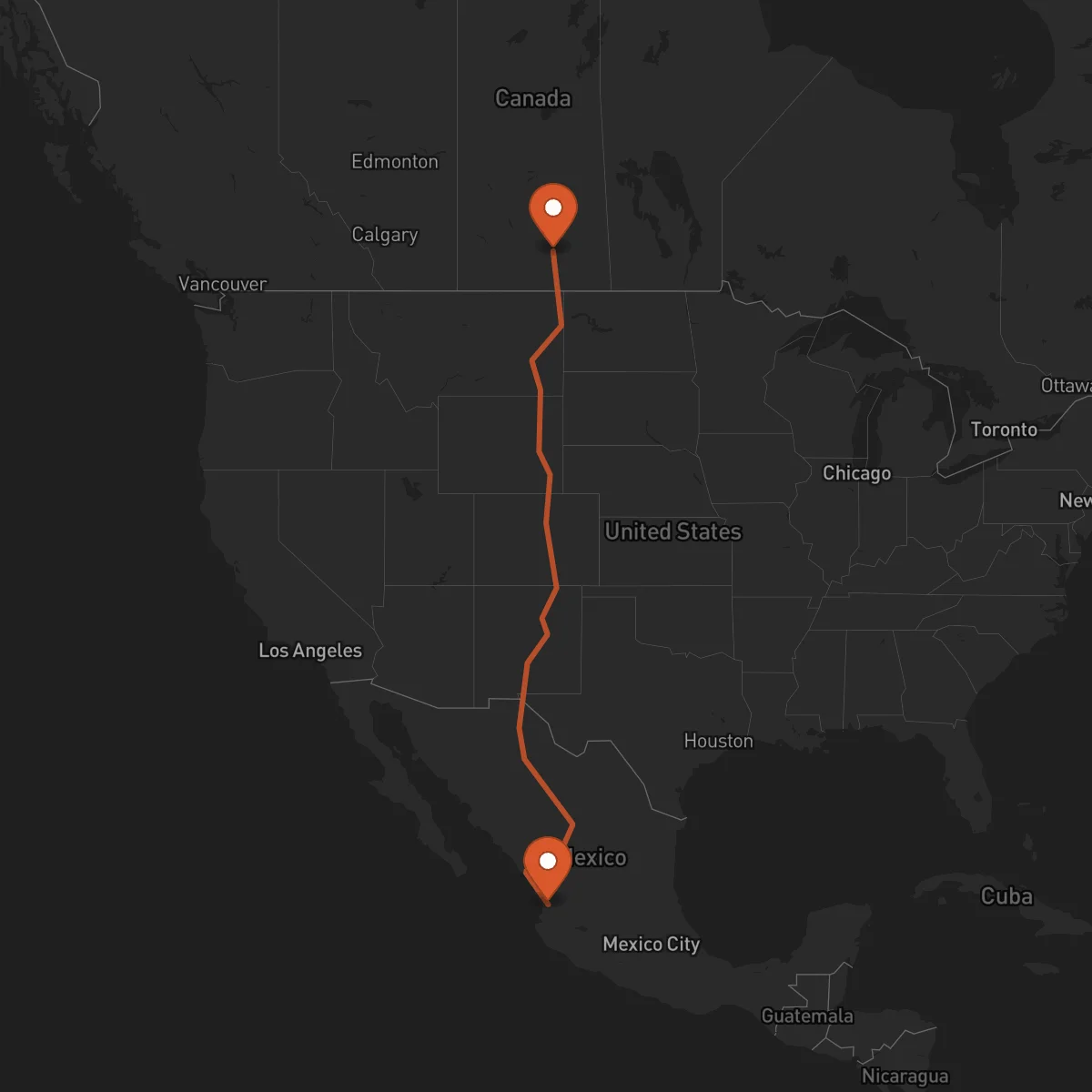
The logistics corridor connecting Regina, Saskatchewan, Canada to Tepic, Nayarit, Mexico represents a vital cross-border freight transportation route spanning approximately 3,218 kilometers. This corridor serves as a crucial link between Canada's prairie provinces and Mexico's Pacific coast, facilitating the movement of diverse cargo types across North America. The route traverses multiple jurisdictions and requires expertise in cross-border logistics, customs clearance, and regulatory compliance.
The economic significance of this corridor cannot be overstated, as it connects major industrial centers in both countries. Regina serves as a key distribution hub for agricultural products, mining equipment, and manufactured goods from Canada's central provinces, while Tepic represents an important manufacturing and agricultural center in western Mexico. The corridor supports industries including automotive parts, electronics, agricultural products, and general manufacturing.
Transportation infrastructure along this route includes major highways such as the Trans-Canada Highway (Highway 1), Interstate 29, Interstate 35, and Mexican Federal Highways. Key border crossings include those at Laredo/Nuevo Laredo and El Paso/Ciudad Juárez, depending on the specific routing chosen. Control Terrestre provides specialized cross-border transportation services with certified carriers who understand the complexities of customs documentation, duty payments, and regulatory requirements for both Canadian and Mexican authorities.
Our expertise in managing this corridor includes handling temperature-controlled shipments, oversized cargo, and time-sensitive freight. We ensure seamless transitions between different transportation networks and provide real-time tracking capabilities throughout the journey. Our C-TPAT and FAST certified partners facilitate expedited customs processing, reducing transit times and ensuring reliable delivery schedules for our clients' critical freight needs.
Services for this Route
Available services for the corridor Regina - Tepic
 Origin
Regina
Regina, the capital city of Saskatchewan, Canada, serves as a strategic logistics hub in the prairie provinces. Located in the heart of Canada's agricultural belt, Regina provides excellent access to major transportation networks including the Trans-Canada Highway, railways, and an international airport. The city's central location makes it an ideal origin point for freight distribution across Western Canada and into the United States.
The economic base of Regina includes agriculture, mining, and manufacturing sectors. The region is known for producing wheat, canola, and other grains, as well as potash mining operations that require specialized transportation solutions. Regina's industrial parks house numerous manufacturing facilities producing machinery, equipment, and consumer goods that require reliable transportation to international markets. The city's infrastructure includes modern warehousing facilities, intermodal yards, and a well-maintained highway system that supports efficient freight movement.
 Destination
Tepic, the capital city of Nayarit, Mexico, occupies a strategic position on Mexico's Pacific coast with excellent connectivity to major markets. Located in western Mexico, Tepic serves as a gateway to both the Pacific coast and central Mexican industrial centers. The city benefits from proximity to major ports and its position along key transportation corridors linking northern and southern Mexico.
The economic landscape of Tepic includes significant agricultural production, particularly in tropical fruits, vegetables, and flowers. The region has also developed strong manufacturing capabilities, especially in electronics assembly and automotive components. Tepic's industrial parks host numerous maquiladora operations that require consistent inbound and outbound freight transportation. The city's transportation infrastructure includes access to Mexican Federal Highways, rail connections, and proximity to Puerto Vallarta's international airport, facilitating multimodal logistics solutions for businesses operating in the region.










