Providence to Tucson
Tucson → ProvidenceFTL freight transportation service between Providence and Tucson. Reliable logistics solutions for your business.
Route Description
Everything you need to know about the corridor Providence - Tucson
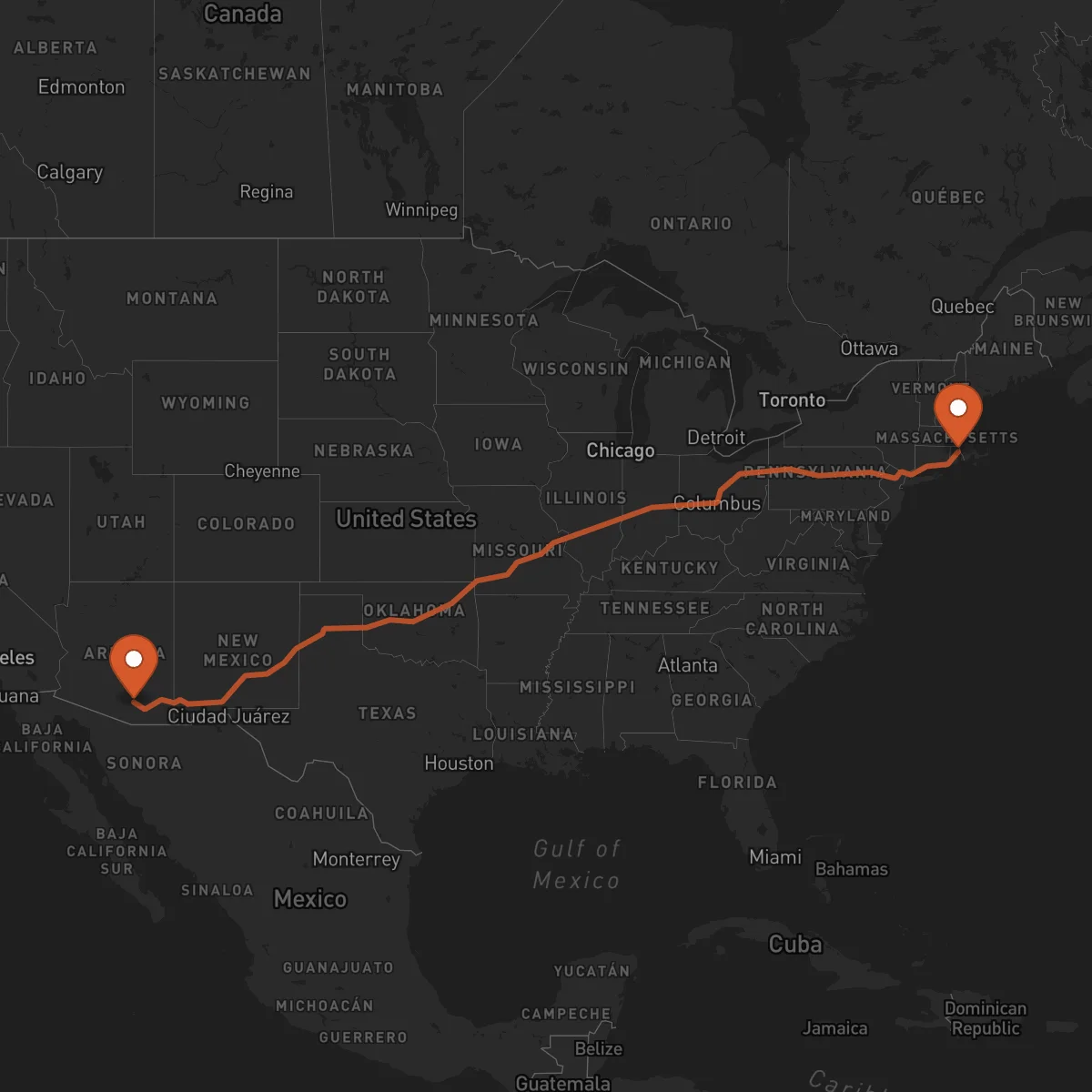
The logistics corridor connecting Providence, Rhode Island to Tucson, Arizona represents a vital transportation route spanning approximately 3,633 kilometers across the United States. This East-to-West corridor traverses diverse landscapes and connects two distinct economic regions, facilitating the movement of goods between the Northeast's industrial centers and the Southwest's growing markets. The route serves as a crucial link in the national supply chain, enabling businesses to efficiently transport full truckload freight across multiple states and time zones.
The corridor's strategic importance is underscored by its passage through major economic hubs including New York, Pennsylvania, Ohio, Indiana, Illinois, Missouri, Oklahoma, Texas, New Mexico, and finally Arizona. This extensive route enables companies to access key manufacturing centers, distribution hubs, and consumer markets throughout the Midwest and Southwest. The transportation infrastructure along this corridor includes major interstate highways such as I-95, I-70, I-44, I-40, and I-10, providing reliable and efficient freight movement capabilities.
Control Terrestre specializes in managing full truckload (FTL) operations along this corridor, offering dedicated transportation solutions that ensure your cargo moves seamlessly from origin to destination. Our experienced network of certified carriers and strategic partnerships enable us to provide consistent, reliable service across the entire route. We understand the unique challenges of long-haul transportation and implement best practices to maintain cargo integrity, optimize transit times, and provide real-time visibility throughout the journey. Whether you're shipping industrial equipment, consumer goods, or specialized cargo, our team coordinates every aspect of the transportation process to meet your specific requirements.
Our comprehensive approach to this corridor includes careful route planning, carrier selection based on performance and reliability, and continuous monitoring of shipments. We leverage our extensive experience in cross-country freight transportation to navigate potential challenges such as weather conditions, traffic patterns, and regulatory requirements. By choosing Control Terrestre for your Providence to Tucson transportation needs, you gain a trusted partner committed to delivering your freight safely, efficiently, and on schedule, allowing you to focus on your core business operations while we handle the complexities of long-distance logistics.
Services for this Route
Available services for the corridor Providence - Tucson
 Origin
Providence
Providence, Rhode Island serves as a strategic gateway for freight movement along the East Coast, offering excellent connectivity to major Northeast markets. Located in the heart of New England, Providence benefits from its proximity to Boston, New York City, and other significant economic centers. The city's port facilities, combined with extensive highway networks including I-95, provide multiple transportation options for businesses. Providence's economy is diverse, with strong presence in education, healthcare, manufacturing, and technology sectors. The region's industrial base includes jewelry manufacturing, electronics, and maritime industries, all requiring reliable freight transportation services to move products both regionally and nationally.
 Destination
Tucson
Tucson, Arizona represents a strategic logistics hub in the Southwest, offering unique advantages for freight distribution. Located in southern Arizona near the Mexican border, Tucson serves as a critical point for cross-border trade and regional distribution. The city's economy is driven by aerospace and defense, technology, healthcare, and tourism industries. Tucson benefits from its position along major transportation corridors, including I-10, which connects the West Coast with the Southwest and Gulf Coast regions. The city's infrastructure includes Tucson International Airport and rail connections through Union Pacific, providing multimodal transportation options. Tucson's growing population and business environment create consistent demand for freight services moving in and out of the region.










