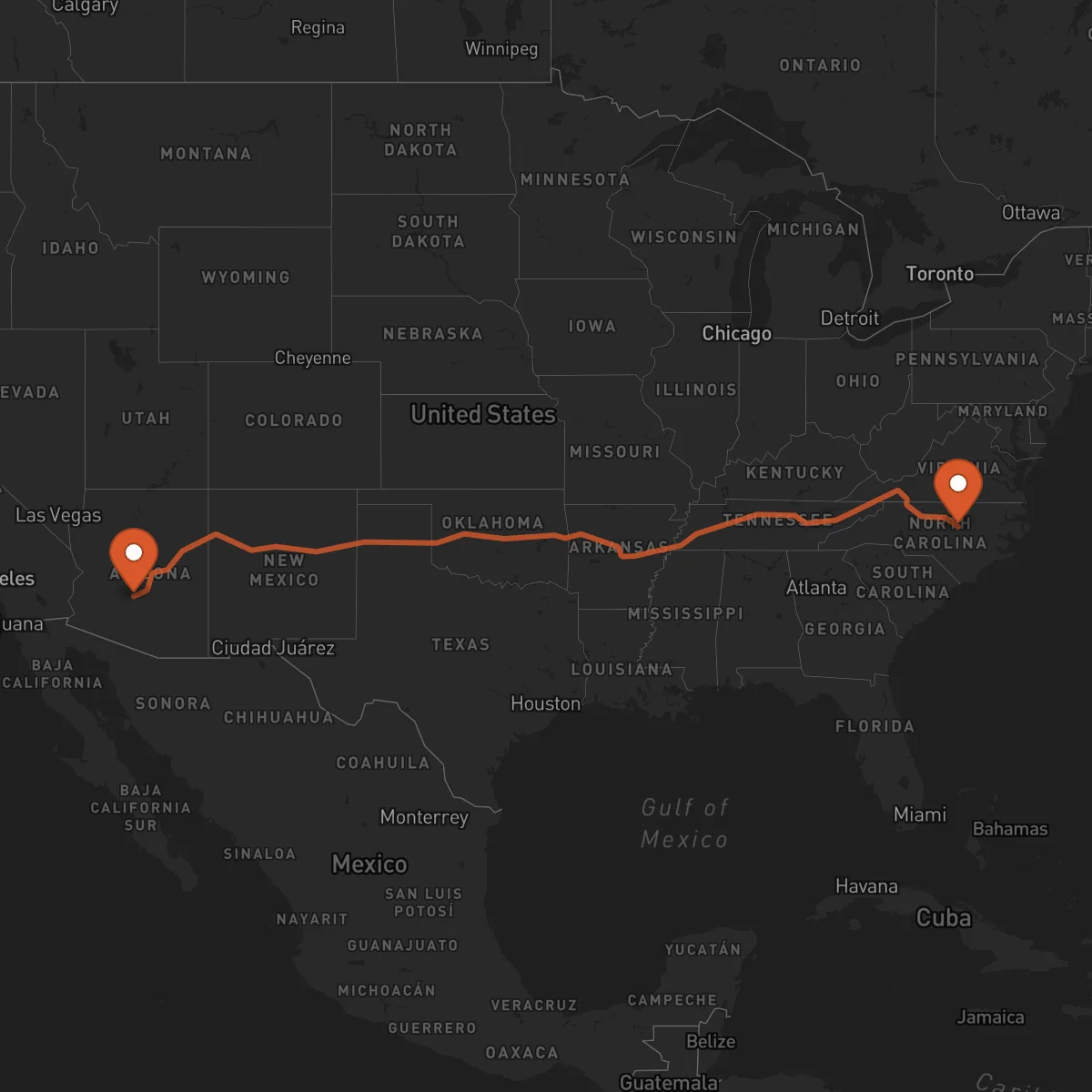
Phoenix to Raleigh
Raleigh → PhoenixFTL freight transportation service between Phoenix and Raleigh. Reliable logistics solutions for your business.
Route Description
Everything you need to know about the corridor Phoenix - Raleigh
The Phoenix to Raleigh corridor represents a vital domestic freight route connecting the Southwest with the Southeast United States. This approximately 3,056-kilometer journey traverses diverse terrain and crosses multiple state lines, creating essential links between two dynamic economic regions. The route serves as a critical artery for goods movement between Arizona's growing industrial base and North Carolina's manufacturing and technology hubs.
The economic significance of this corridor extends beyond simple point-to-point transportation. Phoenix, situated in the heart of Arizona's logistics network, serves as a gateway to the Southwest, while Raleigh anchors North Carolina's Research Triangle, a major center for technology, research, and advanced manufacturing. The corridor facilitates the movement of goods between these complementary economic ecosystems, supporting industries ranging from aerospace and electronics to pharmaceuticals and automotive components.
This route primarily utilizes major interstate highways including I-10 East, I-20 East, and I-85 North, providing reliable and efficient transportation infrastructure. The journey crosses through key logistics hubs in Texas, Louisiana, Mississippi, Alabama, and Georgia before reaching North Carolina. Control Terrestre's extensive network of certified carriers ensures seamless operations along this entire corridor, providing dedicated full truckload services that meet the specific needs of businesses requiring reliable, point-to-point transportation between these strategic locations.
Services for this Route
Available services for the corridor Phoenix - Raleigh
 Origin
Phoenix
Phoenix, Arizona serves as a strategic logistics hub in the Southwest United States, benefiting from its central location in the Sonoran Desert and proximity to major transportation networks. The city's economy is anchored by advanced manufacturing, aerospace, electronics, and healthcare sectors, with a growing presence of technology companies and data centers. Phoenix's logistics infrastructure includes multiple interstate highways (I-10, I-17, and Loop 101), Phoenix Sky Harbor International Airport, and the Union Pacific Railroad intermodal facility, providing multimodal connectivity for freight movement across the region and beyond.
 Destination
Raleigh
Raleigh, North Carolina stands as a key logistics and economic center in the Southeast United States, forming part of the renowned Research Triangle alongside Durham and Chapel Hill. The city's economy is driven by technology, research and development, biotechnology, and advanced manufacturing sectors, with major employers in pharmaceuticals, telecommunications, and higher education. Raleigh's transportation infrastructure includes access to I-40, I-440, and I-540, Raleigh-Durham International Airport, and proximity to the Port of Wilmington, creating efficient connections for domestic and international freight movement throughout the Eastern Seaboard and beyond.










