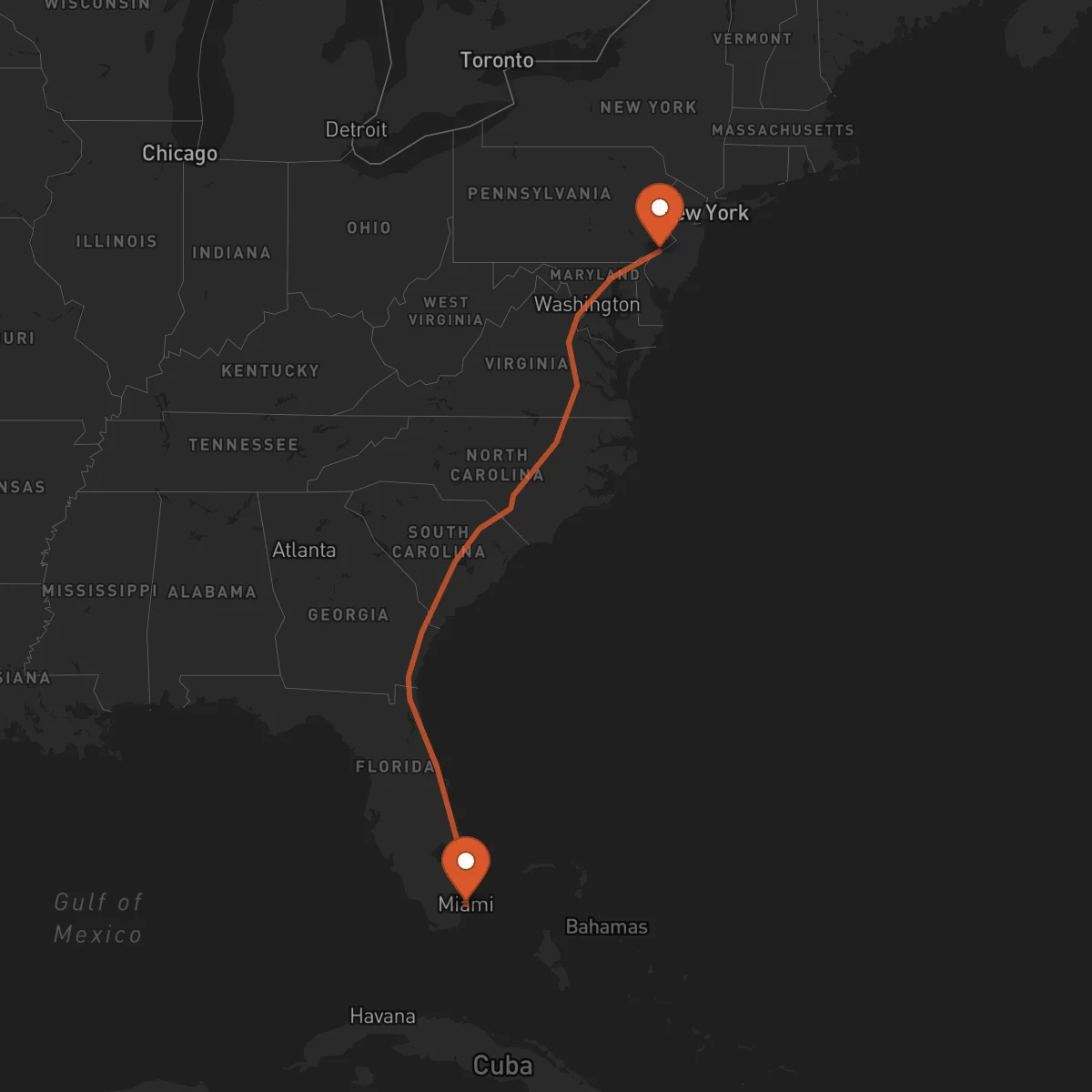
Philadelphia to Miami
Miami → PhiladelphiaFTL freight transportation service between Philadelphia and Miami. Reliable logistics solutions for your business.
Route Description
Everything you need to know about the corridor Philadelphia - Miami
The logistics corridor between Philadelphia and Miami represents a vital artery for freight transportation along the U.S. East Coast, connecting two major economic hubs separated by approximately 1,646 kilometers. This route traverses diverse landscapes and economic regions, facilitating the movement of goods between the Northeast's industrial base and the Southeast's growing markets. The corridor serves as a critical link in the national supply chain, supporting both regional commerce and international trade flows through the Port of Miami.
The economic significance of this corridor is underscored by the complementary industrial profiles of Philadelphia and Miami. Philadelphia's economy is anchored in manufacturing, pharmaceuticals, and professional services, while Miami serves as a gateway to Latin American markets and a hub for international trade, tourism, and logistics. This complementary relationship drives substantial freight volumes along the route, with goods flowing in both directions to meet the demands of these distinct but interconnected markets.
Key industries utilizing this corridor include automotive parts, pharmaceuticals, consumer goods, and agricultural products. The route is primarily served by major interstate highways including I-95, which provides a direct north-south connection, and I-76/I-295 for alternative routing around Philadelphia. These well-maintained highways ensure reliable transit times and support the high-volume freight traffic characteristic of this corridor.
Control Terrestre specializes in full truckload (FTL) transportation services along this critical route, offering dedicated capacity and reliable service for businesses moving freight between Philadelphia and Miami. Our strategic partnerships with certified carriers ensure that your cargo moves efficiently and securely, whether you're shipping temperature-sensitive pharmaceuticals, time-critical automotive components, or general freight. We understand the unique demands of this corridor and provide the expertise and resources needed to keep your supply chain moving smoothly.
Services for this Route
Available services for the corridor Philadelphia - Miami
 Origin
Philadelphia
Philadelphia serves as a strategic logistics hub on the East Coast, positioned at the intersection of major transportation networks. The city's location provides excellent access to both domestic markets and international ports, with the Port of Philadelphia offering maritime connections to global trade routes. Philadelphia's extensive transportation infrastructure includes Interstate 95, Interstate 76, and a comprehensive network of state highways that facilitate efficient distribution throughout the Northeast corridor.
The city's economy is diverse, with strong representation in manufacturing, particularly in the pharmaceutical and biotechnology sectors. Philadelphia is home to numerous corporate headquarters and research facilities, creating consistent demand for logistics services. The region's industrial base includes food processing, chemicals, and advanced manufacturing, all of which require reliable transportation solutions. Additionally, Philadelphia's proximity to major consumer markets in the Northeast ensures steady freight volumes and diverse shipping needs.
 Destination
Miami
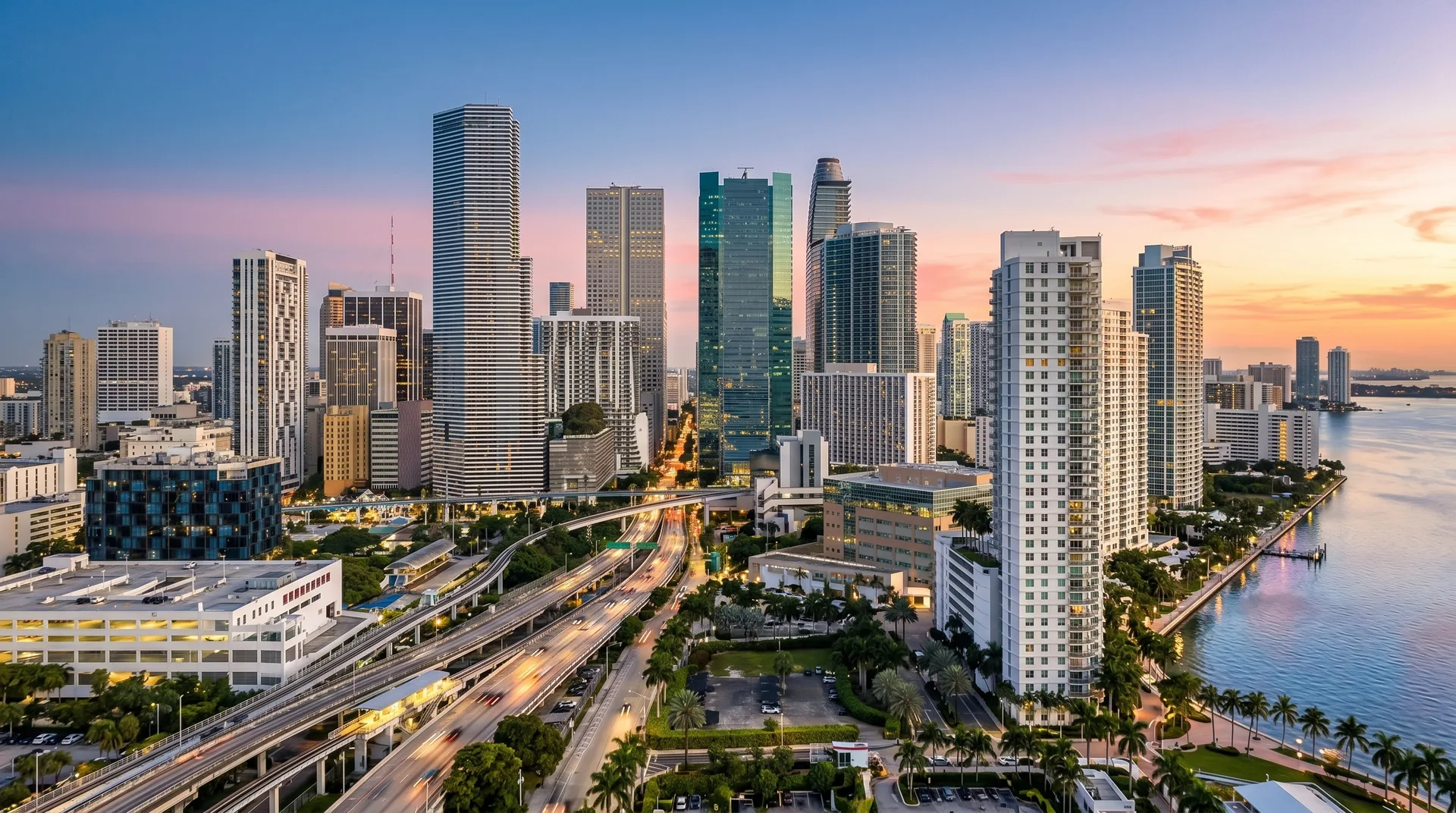
Miami stands as a critical logistics gateway, uniquely positioned as the closest major U.S. city to Latin America and the Caribbean. The city's strategic location makes it an essential hub for international trade, with the Port of Miami and Miami International Airport serving as major entry points for goods entering the United States from South and Central America. The region's transportation infrastructure includes extensive highway networks, with Interstate 95 providing direct connections to the Northeast and Interstate 75 linking to the Gulf Coast and Midwest.
The Miami metropolitan area's economy is driven by international trade, tourism, and logistics services. The region's status as a cultural and economic bridge between the U.S. and Latin America creates unique shipping patterns, with high volumes of both imports and exports moving through the area. Key industries include international banking, cruise tourism, and distribution centers that serve as consolidation points for goods destined throughout the Americas. Miami's year-round warm climate also supports specialized logistics needs, particularly for temperature-sensitive cargo and seasonal goods.










