Ottawa to Mesa
Mesa → OttawaFTL freight transportation service between Ottawa and Mesa. Reliable logistics solutions for your business.
Route Description
Everything you need to know about the corridor Ottawa - Mesa
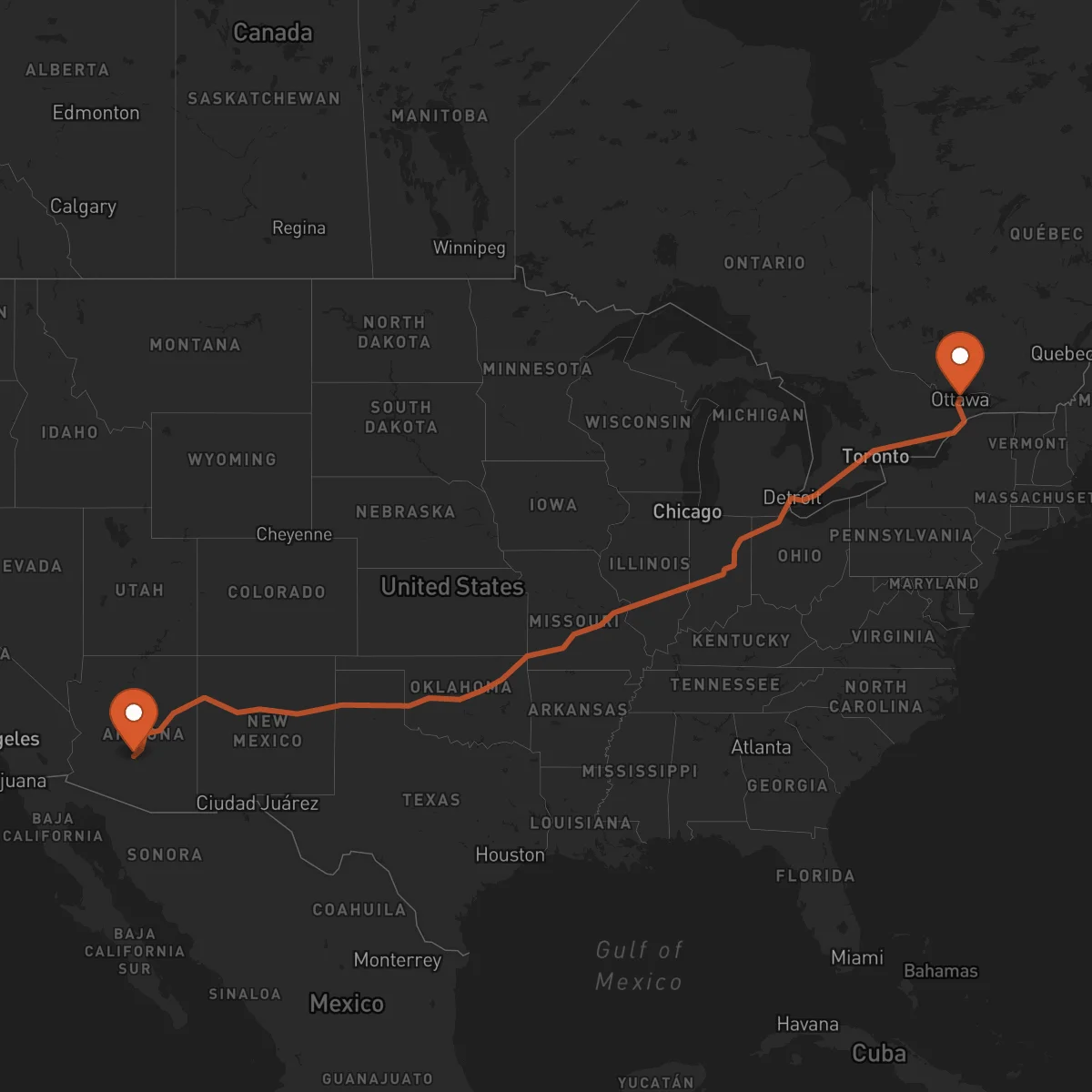
The logistics corridor connecting Ottawa, Ontario, Canada to Mesa, Arizona, United States represents a vital cross-border transportation route spanning approximately 3,343 kilometers. This corridor traverses the North American continent, linking Canada's capital region with the dynamic industrial hub of the American Southwest. The route crosses multiple state and provincial boundaries, requiring expertise in cross-border logistics and customs compliance to ensure seamless freight movement between nations.
The corridor serves as a critical link between the economic powerhouses of Eastern Canada and the rapidly growing Southwestern United States. Ottawa's position as a governmental and technological center complements Mesa's role as an emerging logistics and manufacturing destination. The route facilitates the movement of high-value goods, advanced technology products, and specialized equipment between these regions, supporting the integrated North American supply chain.
Key transportation infrastructure along this corridor includes major highways such as Ontario's Highway 401, the I-75 through Michigan and Ohio, the I-70 through Indiana and Illinois, and finally the I-40 and I-17 connecting to Mesa. The primary border crossing at the Ambassador Bridge between Windsor, Ontario, and Detroit, Michigan, serves as a crucial gateway for freight moving between the two countries. Control Terrestre's expertise in managing cross-border documentation, customs clearance, and regulatory compliance ensures that shipments move efficiently through these critical transition points.
Services for this Route
Available services for the corridor Ottawa - Mesa
 Origin
Ottawa, the capital city of Canada, stands as a strategic logistics hub in Eastern Ontario. Located at the confluence of the Ottawa, Gatineau, and Rideau rivers, the city benefits from its position within the National Capital Region, which includes neighboring Gatineau, Quebec. Ottawa's transportation infrastructure includes extensive highway networks connecting to major Canadian cities, rail connections through Via Rail and freight services, and proximity to Ottawa International Airport. The city's location provides efficient access to both Ontario and Quebec markets, making it an ideal origin point for cross-border freight movements.
The region's economy is diverse, with strong presence in technology (earning it the nickname 'Silicon Valley North'), government services, healthcare, education, and tourism. Ottawa hosts numerous federal government departments and agencies, along with a growing tech sector featuring companies specializing in software development, telecommunications, and aerospace. The city's industrial base includes advanced manufacturing, particularly in telecommunications equipment, and a robust service sector. These industries generate significant freight volumes requiring reliable transportation solutions to destinations across North America.
 Destination
Mesa
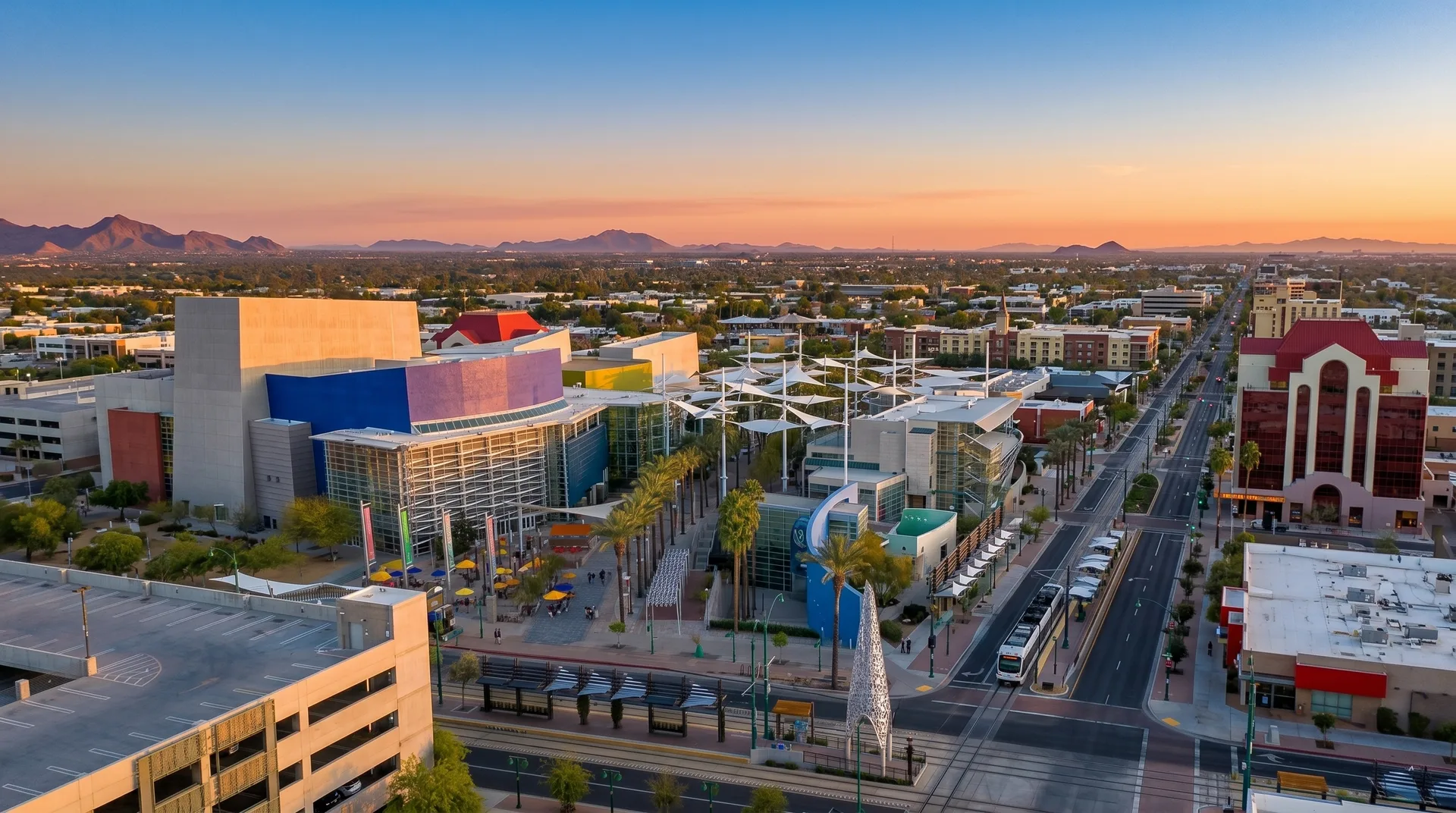
Mesa, Arizona, serves as a strategic logistics destination in the Phoenix metropolitan area, offering exceptional connectivity and economic opportunity in the American Southwest. Located in Maricopa County, Mesa benefits from its position within the Salt River Valley, providing access to major transportation arteries including the I-10, I-17, and Loop 202 freeways. The city's infrastructure includes Phoenix-Mesa Gateway Airport, a growing cargo facility, and extensive rail connections through the Union Pacific and BNSF rail networks. Mesa's proximity to Phoenix and its integration into the larger Valley of the Sun logistics network make it an ideal destination for freight distribution and manufacturing operations.
The local economy has diversified significantly, with strong growth in aerospace and aviation, healthcare, tourism, and advanced manufacturing. Mesa is home to Boeing's Apache helicopter facility and numerous aerospace suppliers, along with a growing technology sector. The city's manufacturing base includes electronics, medical devices, and industrial equipment production. These industries, combined with Mesa's role as a distribution center for the Southwestern United States, create substantial demand for reliable freight transportation services connecting the region to Canadian and other North American markets.










