Ottawa to La Paz
La Paz → OttawaFTL freight transportation service between Ottawa and La Paz. Reliable logistics solutions for your business.
Route Description
Everything you need to know about the corridor Ottawa - La Paz
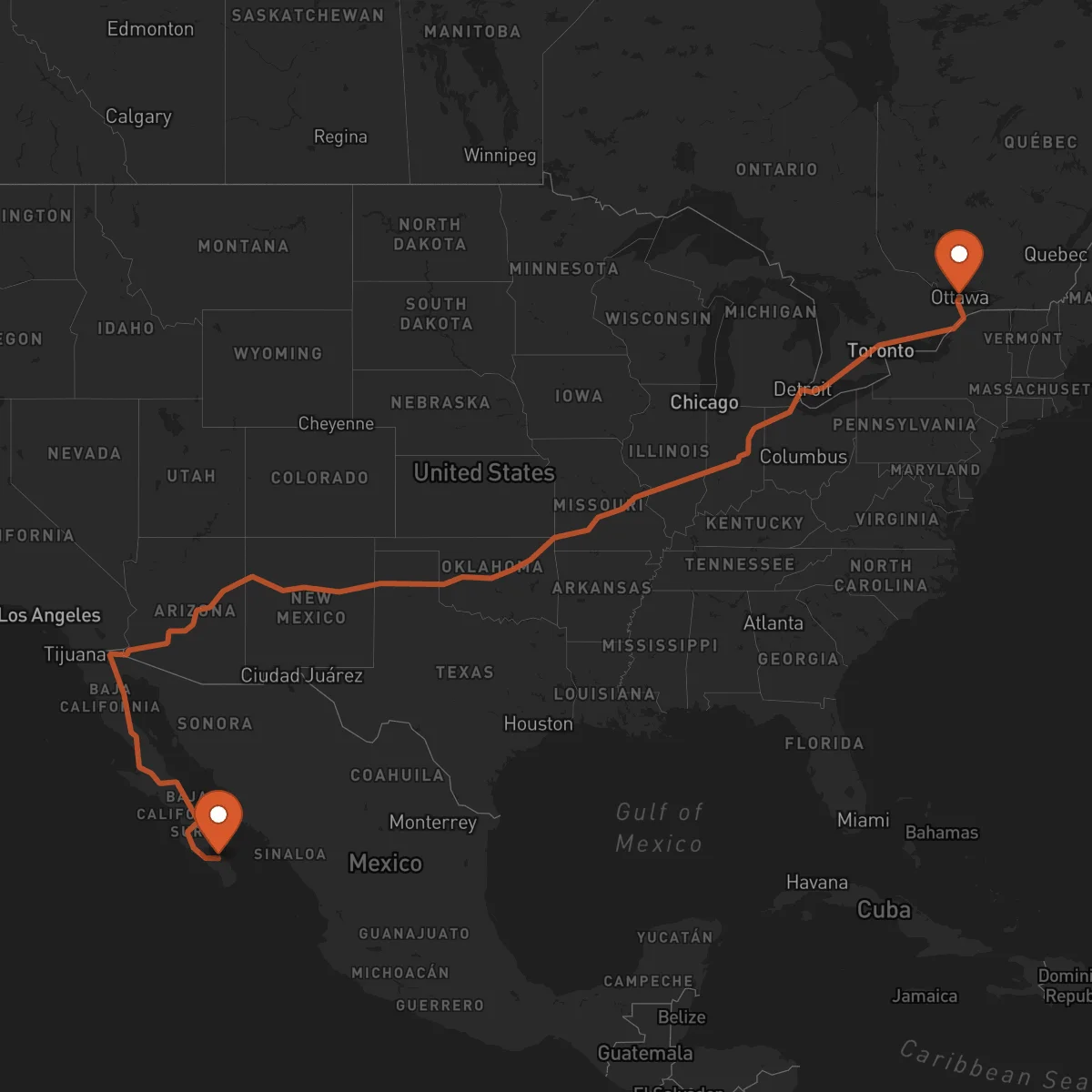
The logistics corridor between Ottawa and La Paz represents a vital cross-border connection linking Canada's capital with Mexico's Baja California Sur. This 3,899 km route traverses diverse terrains and crosses multiple international borders, creating a strategic pathway for freight transportation between North American nations. The corridor serves as a critical link for companies operating in both the northern and southern regions of the continent, facilitating the movement of goods across diverse economic zones and industrial hubs.
The economic significance of this corridor extends beyond simple transportation, connecting Ottawa's government and technology sectors with La Paz's growing tourism and service industries. Along the route, numerous industrial centers contribute to the corridor's importance, including manufacturing zones in the Midwest United States and agricultural regions in northern Mexico. This creates a dynamic supply chain network that supports various industries from automotive to agricultural products, electronics, and consumer goods.
Key transportation infrastructure along this corridor includes major highways such as I-35, I-25, and Mexican Federal Highways 45 and 1. The route requires careful navigation of border crossings, particularly at major points like Laredo/Nuevo Laredo and Tijuana/San Diego. Control Terrestre's expertise in cross-border operations ensures seamless customs clearance and compliance with all regulatory requirements, minimizing delays and optimizing transit times. Our dedicated FTL services provide the reliability and security that companies need when shipping high-value or time-sensitive cargo across this extensive international route.
Services for this Route
Available services for the corridor Ottawa - La Paz
 Origin
Ottawa, Canada's capital city, serves as a strategic logistics hub in eastern Ontario. Located at the confluence of the Ottawa, Rideau, and Gatineau rivers, the city benefits from excellent connectivity through major highways including the Trans-Canada Highway (Highway 417) and proximity to key transportation nodes. Ottawa's economy is diverse, with strong government presence, advanced technology sector (earning it the nickname 'Silicon Valley North'), and growing aerospace and defense industries. The city's logistics infrastructure includes Ottawa International Airport, intermodal facilities, and well-developed road networks that connect to major Canadian and U.S. markets. The presence of numerous government agencies and tech companies creates consistent demand for reliable freight transportation services, particularly for specialized and high-value cargo.
 Destination
La Paz
La Paz, the capital city of Baja California Sur, Mexico, occupies a strategic position on the Gulf of California coast. This coastal city serves as a vital logistics gateway for the entire Baja California peninsula, with its port facilities and road connections to the mainland via the Transpeninsular Highway (Mexico 1). La Paz's economy is anchored by tourism, fishing, and increasingly, aerospace and renewable energy sectors. The city's growing industrial park and free trade zone make it an attractive destination for manufacturing and assembly operations. Transportation infrastructure includes Manuel Márquez de León International Airport and a developing port system that handles both commercial and industrial cargo. The city's location makes it a key endpoint for cross-border freight moving from northern markets, with particular importance for industries serving the tourism sector and the growing technology manufacturing presence in the region.










