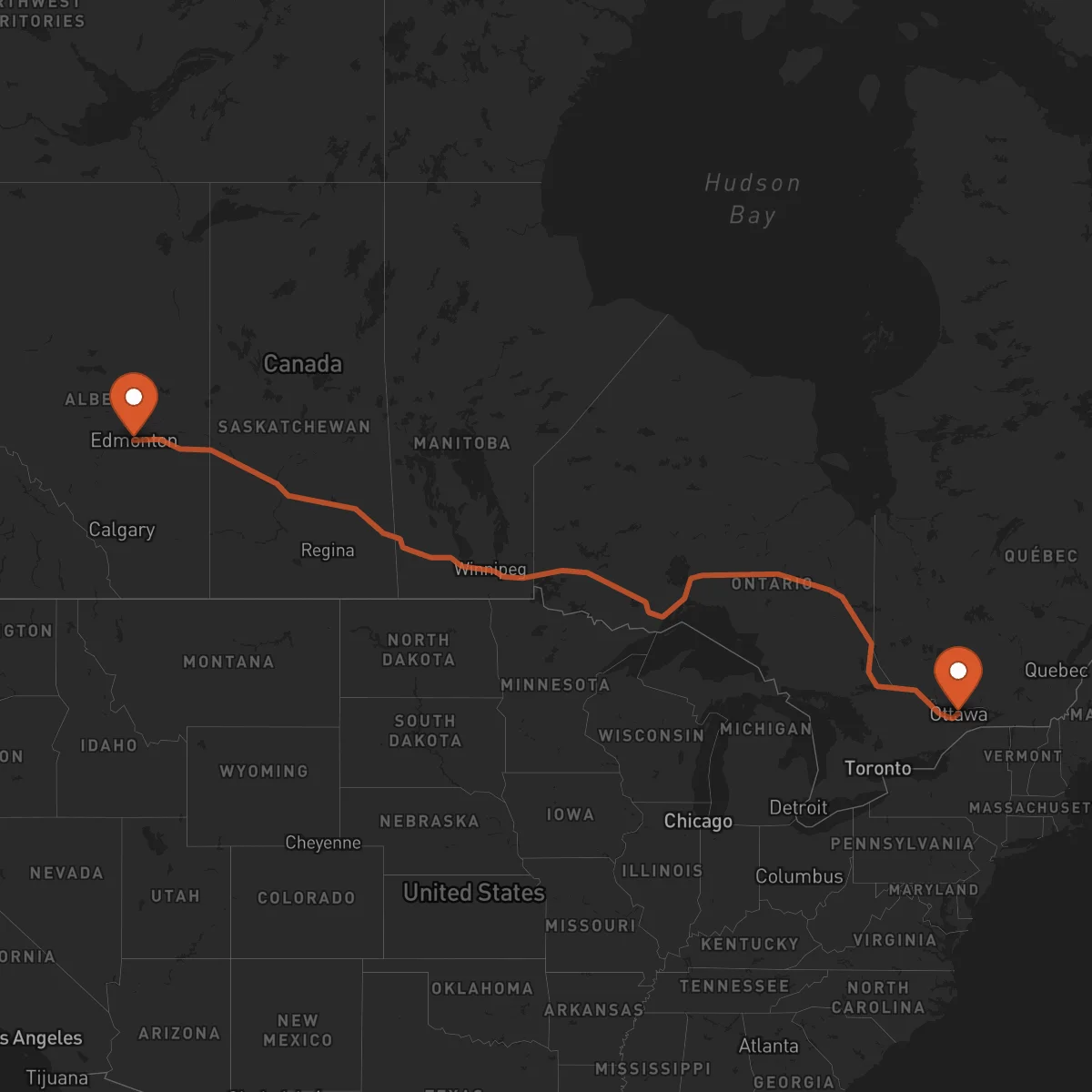
Ottawa to Edmonton
Edmonton → OttawaFTL freight transportation service between Ottawa and Edmonton. Reliable logistics solutions for your business.
Route Description
Everything you need to know about the corridor Ottawa - Edmonton
The Ottawa to Edmonton corridor represents one of Canada's most significant domestic freight routes, spanning approximately 2,837 kilometers across the country's diverse landscape. This east-west transportation artery connects Canada's capital region with Alberta's economic powerhouse, facilitating the movement of goods that drive our national economy. The route traverses multiple provinces, crossing through Ontario, Manitoba, Saskatchewan, and Alberta, making it a critical link in Canada's integrated supply chain network.
The economic importance of this corridor cannot be overstated. Ottawa serves as a major government and technology hub, while Edmonton functions as a key center for energy, manufacturing, and logistics in Western Canada. Industries ranging from aerospace and defense to oil and gas, agriculture, and retail depend on reliable freight transportation between these two cities. The corridor supports just-in-time manufacturing operations, retail distribution networks, and the movement of specialized equipment and materials essential to Canada's industrial base.
Control Terrestre provides comprehensive full truckload (FTL) transportation services along this vital corridor. Our strategic alliance with certified carriers ensures consistent capacity and reliable service across the entire route. We understand the unique challenges of cross-country transportation in Canada, including weather considerations, regulatory compliance, and the need for specialized equipment. Our dedicated team coordinates every shipment to maintain the highest standards of safety, efficiency, and on-time delivery, making us the trusted partner for companies moving freight between Ottawa and Edmonton.
Services for this Route
Available services for the corridor Ottawa - Edmonton
 Origin
Ottawa, Canada's capital city, serves as a strategic logistics hub with its advantageous location in Eastern Ontario. The city benefits from excellent transportation infrastructure, including proximity to major highways such as the Trans-Canada Highway (Highway 417), which provides direct connections to other major Canadian cities. Ottawa's Macdonald-Cartier International Airport and VIA Rail connections complement the road network, creating a multimodal transportation ecosystem. The city's position along the Ottawa River and near the U.S. border enhances its role as a distribution center for both domestic and international freight.
The Ottawa region is home to diverse economic sectors that drive freight demand. Government operations, technology companies (earning it the nickname 'Silicon Valley North'), advanced manufacturing, and research institutions create consistent shipping requirements. The presence of numerous federal agencies and high-tech firms means regular movement of specialized equipment, electronics, and sensitive materials. Ottawa's growing population and status as a political center also generate substantial retail and consumer goods distribution needs, making it a dynamic origin point for freight shipments across Canada.
 Destination
Edmonton, located in Alberta's geographic center, stands as a crucial logistics and distribution hub for Western Canada. The city's strategic position provides access to major transportation routes, including the Yellowhead Highway (Highway 16) and proximity to the CANAMEX Corridor, which connects Canada, the United States, and Mexico. Edmonton International Airport and the city's extensive rail connections through Canadian National Railway and Canadian Pacific Railway create a robust multimodal freight infrastructure. The city's location also provides relatively quick access to northern Alberta's oil sands and other resource extraction areas.
The Edmonton region's economy is heavily influenced by the energy sector, with oil and gas companies requiring regular transportation of equipment, supplies, and products. Manufacturing, agriculture, and construction industries also contribute significantly to freight volumes. The city serves as a major distribution center for goods destined for northern Canada and the Prairie provinces. Edmonton's role as a wholesale and retail distribution center, combined with its manufacturing base, creates consistent demand for full truckload services. The city's logistics infrastructure, including numerous warehousing and distribution facilities, supports efficient freight handling and onward distribution throughout Western Canada.










