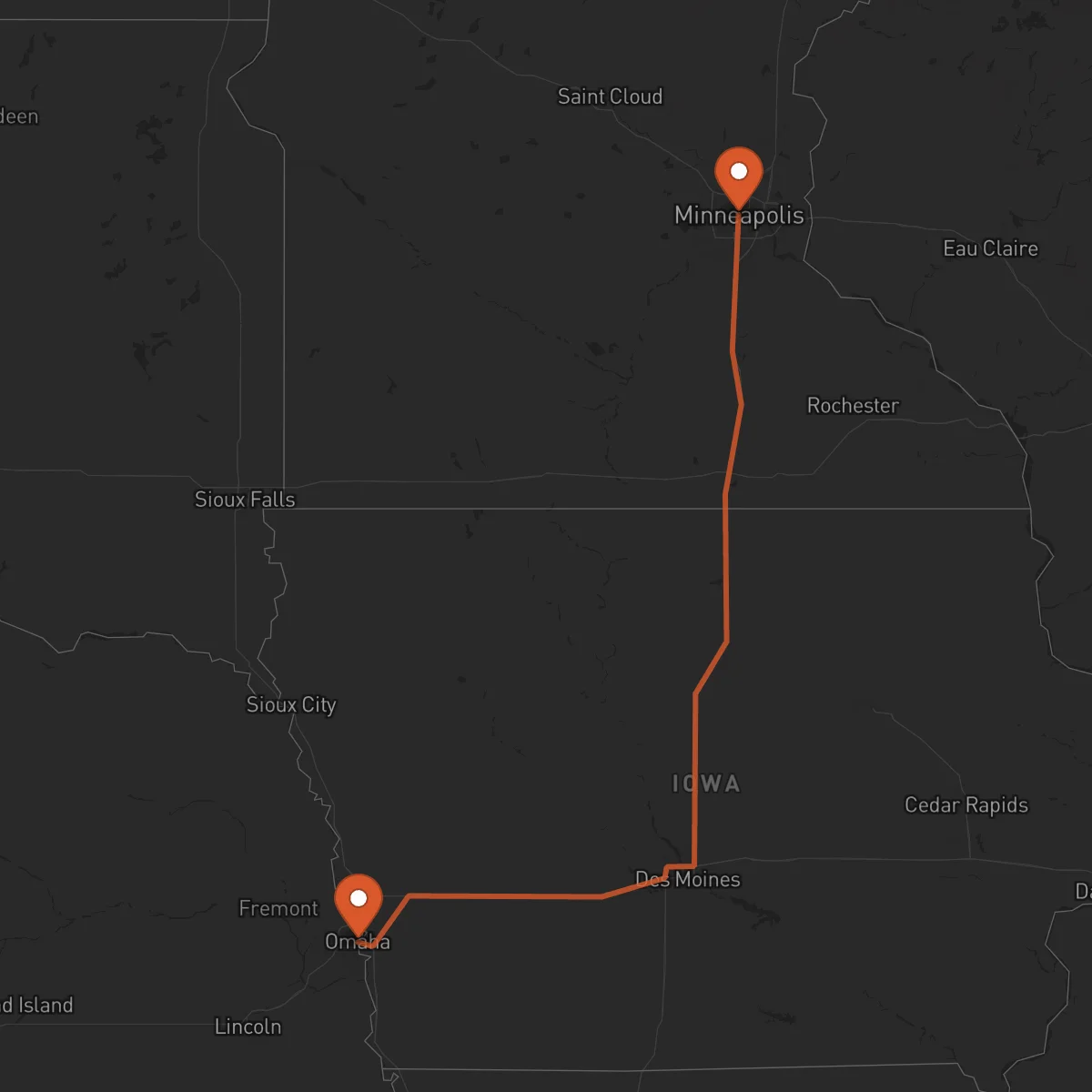
Omaha to Minneapolis
Minneapolis → OmahaFTL freight transportation service between Omaha and Minneapolis. Reliable logistics solutions for your business.
Route Description
Everything you need to know about the corridor Omaha - Minneapolis
The Omaha to Minneapolis corridor represents a vital freight transportation route in the Midwest, connecting two major economic hubs across approximately 467 kilometers. This domestic corridor serves as a critical link in the North American supply chain, facilitating the movement of goods between Nebraska and Minnesota. The route traverses diverse terrain and crosses state lines, requiring expert coordination and reliable transportation services to ensure seamless cargo movement.
The economic significance of this corridor is underscored by the strong industrial presence in both cities. Omaha serves as a major transportation and distribution center, while Minneapolis is known for its robust manufacturing, healthcare, and technology sectors. Together, these cities form a powerful economic axis that drives regional commerce and trade. The corridor supports various industries including agriculture, manufacturing, retail, and technology, making it a versatile and high-demand freight route.
Key highways serving this corridor include I-29 and I-35, providing efficient north-south connectivity. These major interstate routes offer multiple lanes and modern infrastructure, enabling reliable freight movement throughout the year. The transportation network along this corridor is well-developed, with numerous truck stops, distribution centers, and logistics facilities strategically positioned to support freight operations.
Control Terrestre specializes in providing comprehensive FTL transportation solutions along this corridor, leveraging our network of certified carriers and strategic partnerships. Our expertise in navigating this route ensures that your cargo moves efficiently and securely between Omaha and Minneapolis. We understand the unique requirements of this corridor and offer tailored solutions to meet the specific needs of businesses operating in these markets.
Services for this Route
Available services for the corridor Omaha - Minneapolis
 Origin
Omaha
Omaha, Nebraska stands as a strategic logistics hub in the Midwest, offering exceptional connectivity and infrastructure for freight transportation. The city's central location makes it an ideal distribution point, with easy access to major highways including I-80, I-29, and I-680. Omaha's transportation network includes the Union Pacific Railroad, Eppley Airfield, and the Port of Omaha, creating a multimodal logistics ecosystem that supports efficient cargo movement in all directions.
The city's economy is diverse and robust, with key industries including insurance, telecommunications, transportation, and manufacturing. Omaha is home to several Fortune 500 companies and serves as a regional headquarters for many national corporations. The presence of major distribution centers and warehousing facilities further enhances Omaha's position as a critical node in the national supply chain. The city's pro-business environment and skilled workforce make it an attractive location for companies seeking reliable logistics operations.
 Destination
Minneapolis
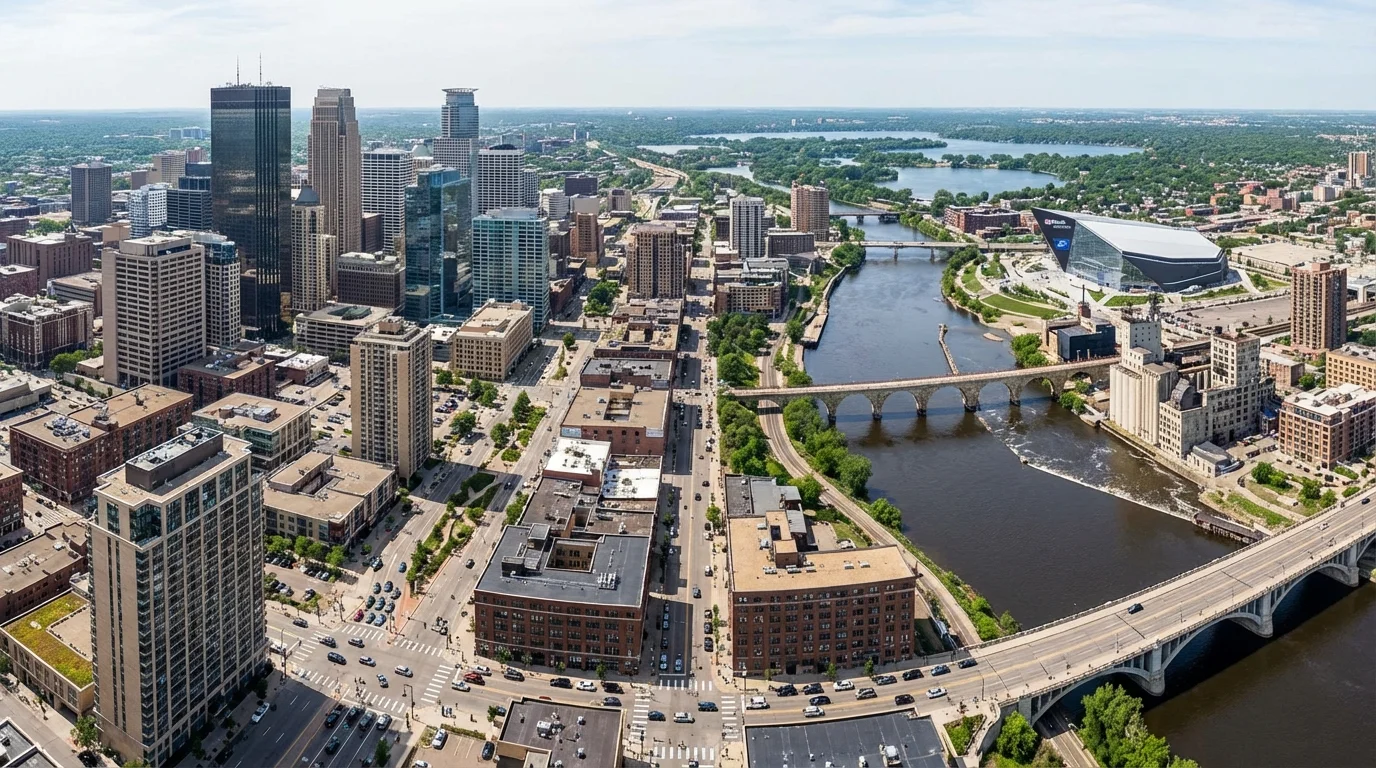
Minneapolis, Minnesota represents a major economic powerhouse in the Upper Midwest, with a well-developed infrastructure that supports extensive freight transportation operations. The city's strategic location at the intersection of major highways including I-35, I-94, and I-494 provides excellent connectivity to regional and national markets. Minneapolis benefits from its proximity to the Port of Duluth and access to the Mississippi River, creating a comprehensive multimodal transportation network.
The Minneapolis metropolitan area is known for its strong presence in industries such as medical technology, retail, finance, and manufacturing. The region hosts numerous corporate headquarters and distribution centers, driving consistent demand for freight transportation services. Minneapolis's cold climate and seasonal weather patterns require specialized logistics expertise, particularly for temperature-sensitive cargo and winter operations. The city's commitment to infrastructure development and logistics innovation ensures reliable freight movement throughout the year.










