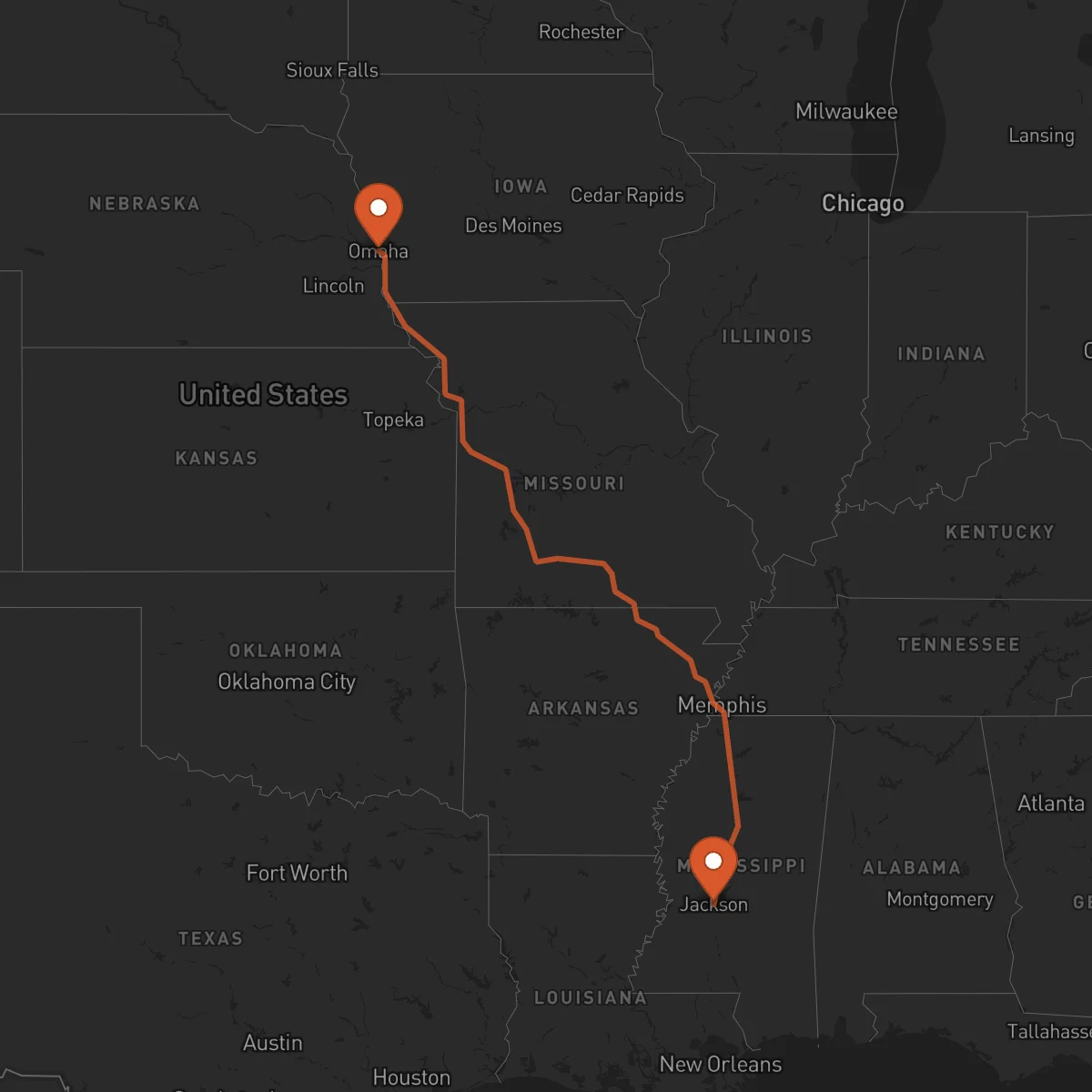
Omaha to Jackson
Jackson → OmahaFTL freight transportation service between Omaha and Jackson. Reliable logistics solutions for your business.
Route Description
Everything you need to know about the corridor Omaha - Jackson
The logistics corridor connecting Omaha, Nebraska to Jackson, Mississippi represents a vital transportation link across the American Midwest and South. This 1,120-kilometer route traverses diverse terrain and connects major industrial centers, facilitating the movement of goods between the agricultural heartland and the manufacturing hubs of the southeastern United States. The corridor's strategic importance lies in its ability to link the robust economic activities of the Midwest with the growing industrial base of Mississippi and surrounding states.
The route primarily follows major interstate highways, including I-29 and I-55, providing reliable and efficient transportation infrastructure. This corridor serves as a critical supply chain artery for industries such as agriculture, automotive manufacturing, food processing, and consumer goods distribution. The transportation infrastructure along this route is well-developed, with numerous rest areas, truck stops, and maintenance facilities ensuring smooth operations for freight carriers.
Control Terrestre specializes in providing full truckload (FTL) services along this corridor, offering dedicated transportation solutions for businesses moving freight between Omaha and Jackson. Our extensive network of certified carriers and strategic partnerships ensures reliable, timely delivery of your cargo. We understand the unique requirements of this route and provide customized logistics solutions to meet the specific needs of our clients, whether they're shipping agricultural products, industrial equipment, or consumer goods.
Services for this Route
Available services for the corridor Omaha - Jackson
 Origin
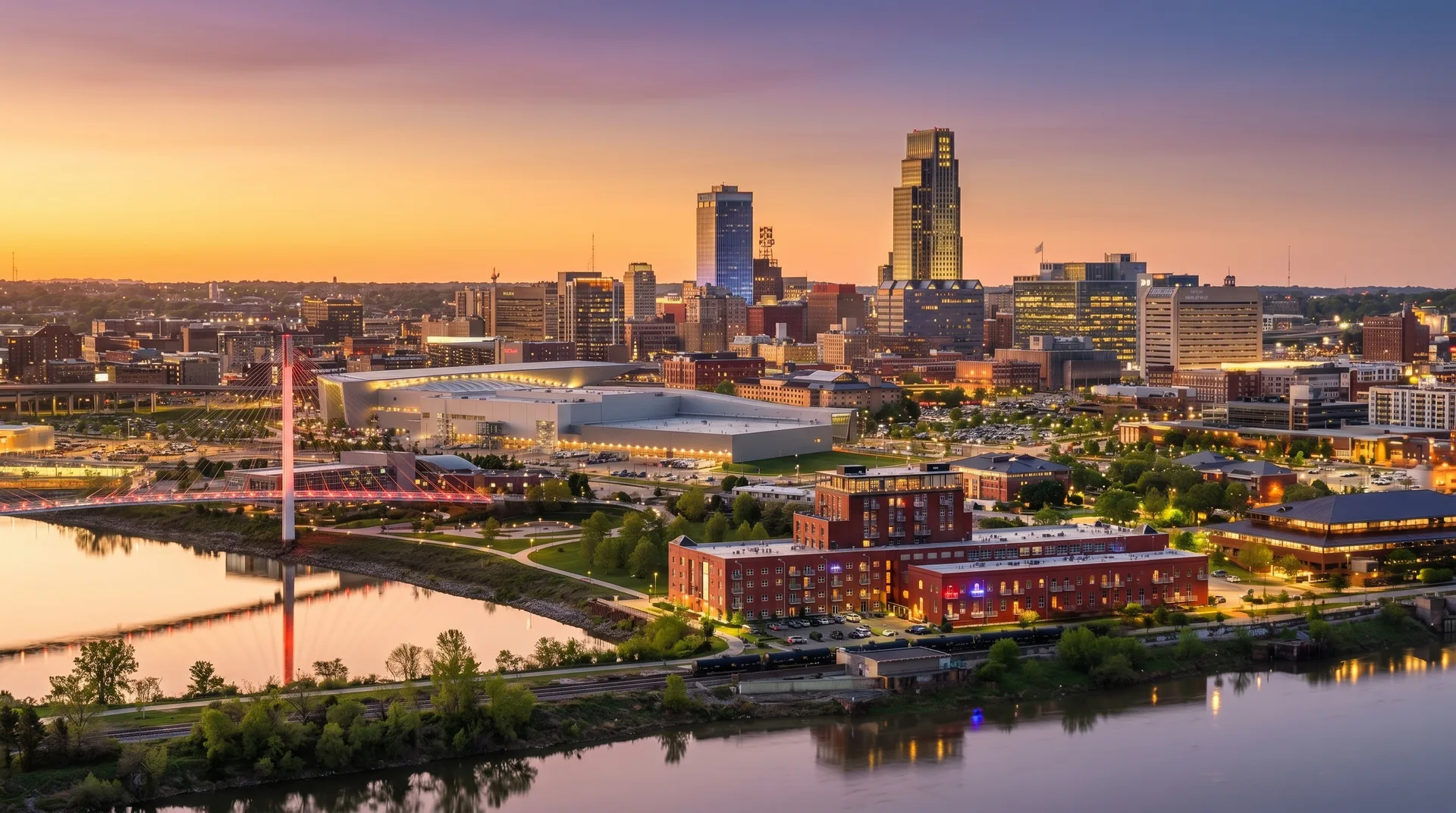
Omaha
Omaha, Nebraska serves as a strategic logistics hub in the American Midwest, positioned at the crossroads of major transportation networks. The city's location along the Missouri River and its proximity to key interstate highways make it an ideal starting point for freight movements across the central United States. Omaha's economy is diverse, with strong sectors in agriculture, food processing, insurance, and financial services. The city is home to several Fortune 500 companies and boasts a robust manufacturing sector, particularly in food production and agricultural equipment.
The transportation infrastructure in Omaha is extensive, featuring multiple interstate highways including I-80, which runs east-west across the country. The city also has a major rail hub operated by Union Pacific Railroad, one of the largest freight rail networks in North America. Omaha's Eppley Airfield provides air cargo services, complementing the ground transportation options. The Port of Omaha, a river port on the Missouri River, adds another dimension to the city's logistics capabilities, facilitating barge transportation for bulk goods.
 Destination
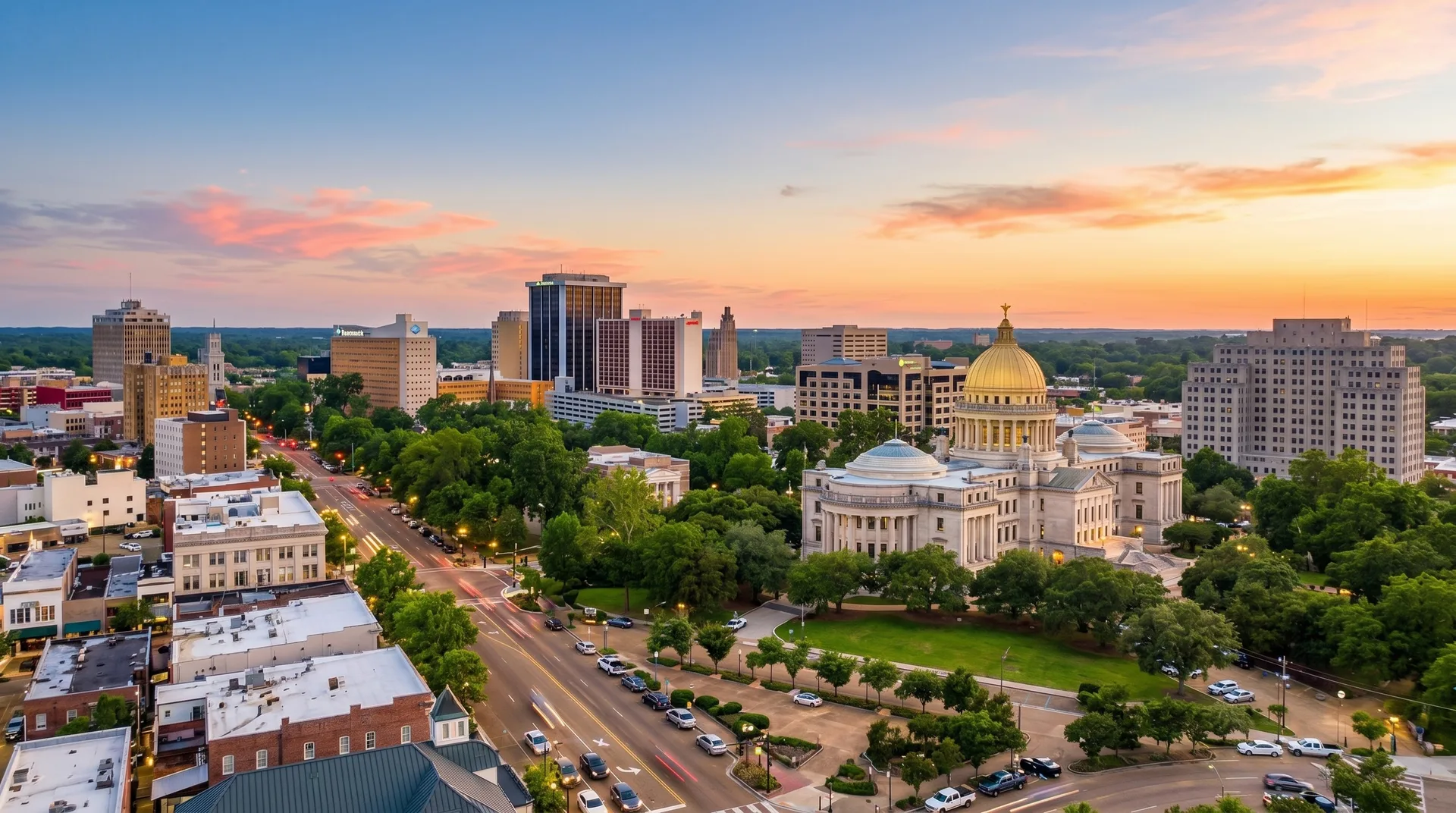
Jackson
Jackson, Mississippi, as the state capital and largest urban center, plays a crucial role in the logistics landscape of the southeastern United States. The city's strategic location in the central part of Mississippi makes it a natural distribution point for goods moving throughout the region. Jackson's economy is anchored by government services, healthcare, and manufacturing, with a growing presence in automotive and advanced manufacturing sectors. The city is part of the Mississippi Automotive Manufacturing Association, reflecting its importance in the automotive supply chain.
The transportation infrastructure in Jackson is well-developed, centered around major highways including I-55 and I-20, which intersect near the city. Jackson-Evers International Airport provides air cargo services, while the Canadian National Railway operates a significant rail presence in the area. The city's location also allows for efficient distribution to other major southern markets such as Memphis, New Orleans, and Birmingham. Jackson's port on the Tennessee-Tombigbee Waterway, while not directly on the ocean, provides inland waterway access, adding another layer to the city's logistics capabilities.










