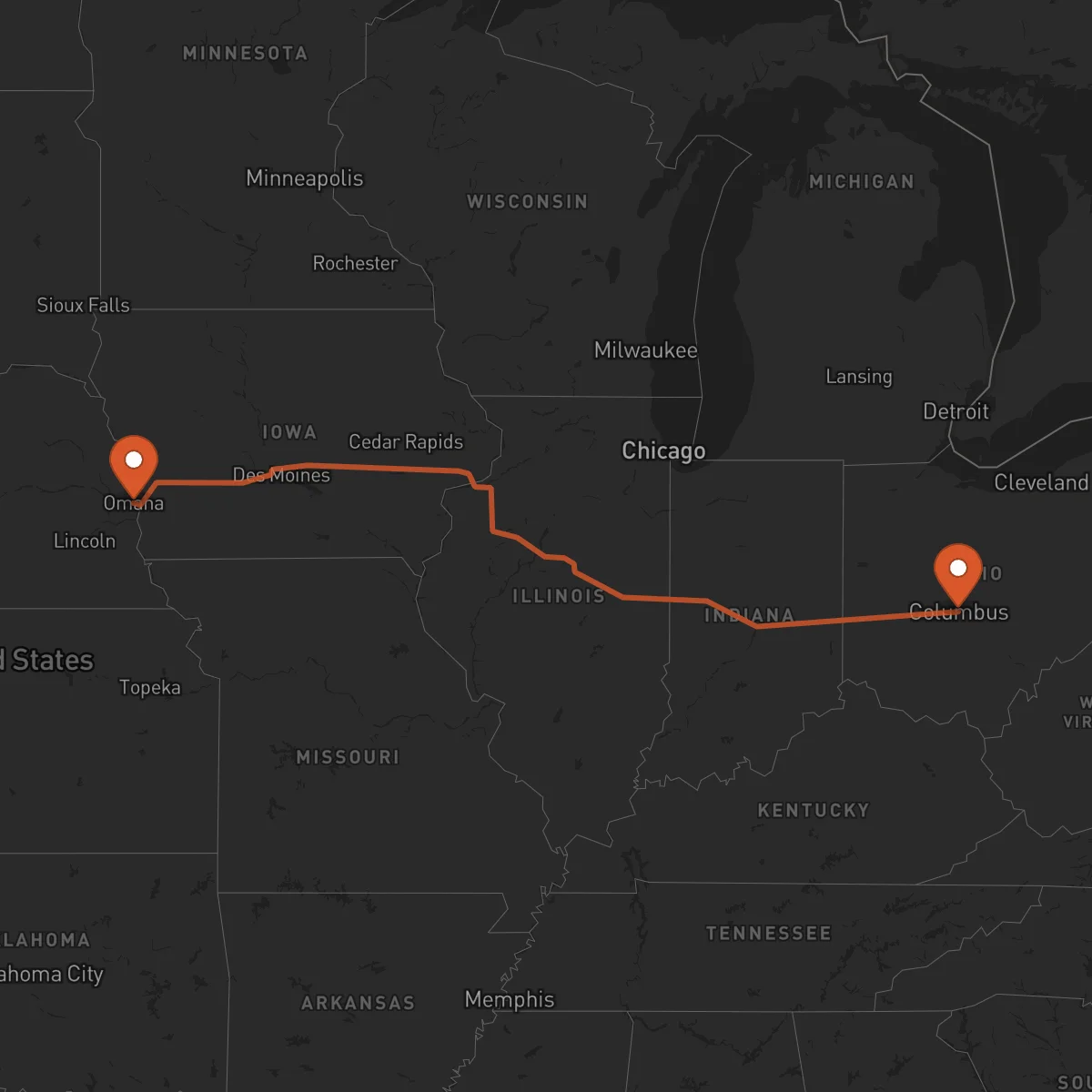
Omaha to Columbus
Columbus → OmahaFTL freight transportation service between Omaha and Columbus. Reliable logistics solutions for your business.
Route Description
Everything you need to know about the corridor Omaha - Columbus
The corridor connecting Omaha, Nebraska to Columbus, Ohio represents one of the most important domestic freight transportation routes in the Midwest United States. Spanning approximately 1,100 kilometers, this strategic route links the agricultural heartland of the Great Plains with the industrial and technological hub of Ohio. The corridor traverses through key states including Iowa, Illinois, Indiana, and Ohio, crossing major economic regions that contribute significantly to the national supply chain.
The economic importance of this corridor is substantial, connecting Omaha's strong agricultural and financial services sector with Columbus's diverse economy that includes advanced manufacturing, logistics, and technology industries. Major companies in food processing, agricultural equipment, automotive parts, and consumer goods regularly utilize this route for their freight movements. The corridor benefits from excellent transportation infrastructure, primarily following Interstate 80 and I-70, two of the most heavily traveled freight corridors in the United States.
Control Terrestre provides specialized full truckload (FTL) services along this corridor, ensuring reliable and efficient transportation for businesses moving goods between these two strategic cities. Our experienced network of carriers and advanced logistics management systems allow us to optimize routes, ensure timely deliveries, and provide real-time tracking for all shipments. Whether you're transporting agricultural products from Omaha's grain elevators or manufacturing components to Columbus's industrial parks, our dedicated FTL services offer the capacity and reliability your business requires.
Services for this Route
Available services for the corridor Omaha - Columbus
 Origin
Omaha
Omaha, Nebraska serves as a critical logistics hub in the Midwest, strategically positioned at the crossroads of major freight corridors. The city's location along the Missouri River and its proximity to the agricultural heartland of America make it an ideal origin point for freight transportation. Omaha's economy is anchored by strong agricultural, financial services, and manufacturing sectors, with companies like Berkshire Hathaway, Union Pacific Railroad, and several Fortune 500 companies maintaining significant operations in the area.
The city boasts excellent transportation infrastructure, including the Omaha International Airport, multiple rail yards operated by Union Pacific, and direct access to Interstate 80, which provides seamless connectivity to both coasts. The Port of Omaha offers barge transportation capabilities on the Missouri River, while the city's extensive network of highways and distribution centers makes it an efficient origin for full truckload shipments heading east to destinations like Columbus.
 Destination
Columbus
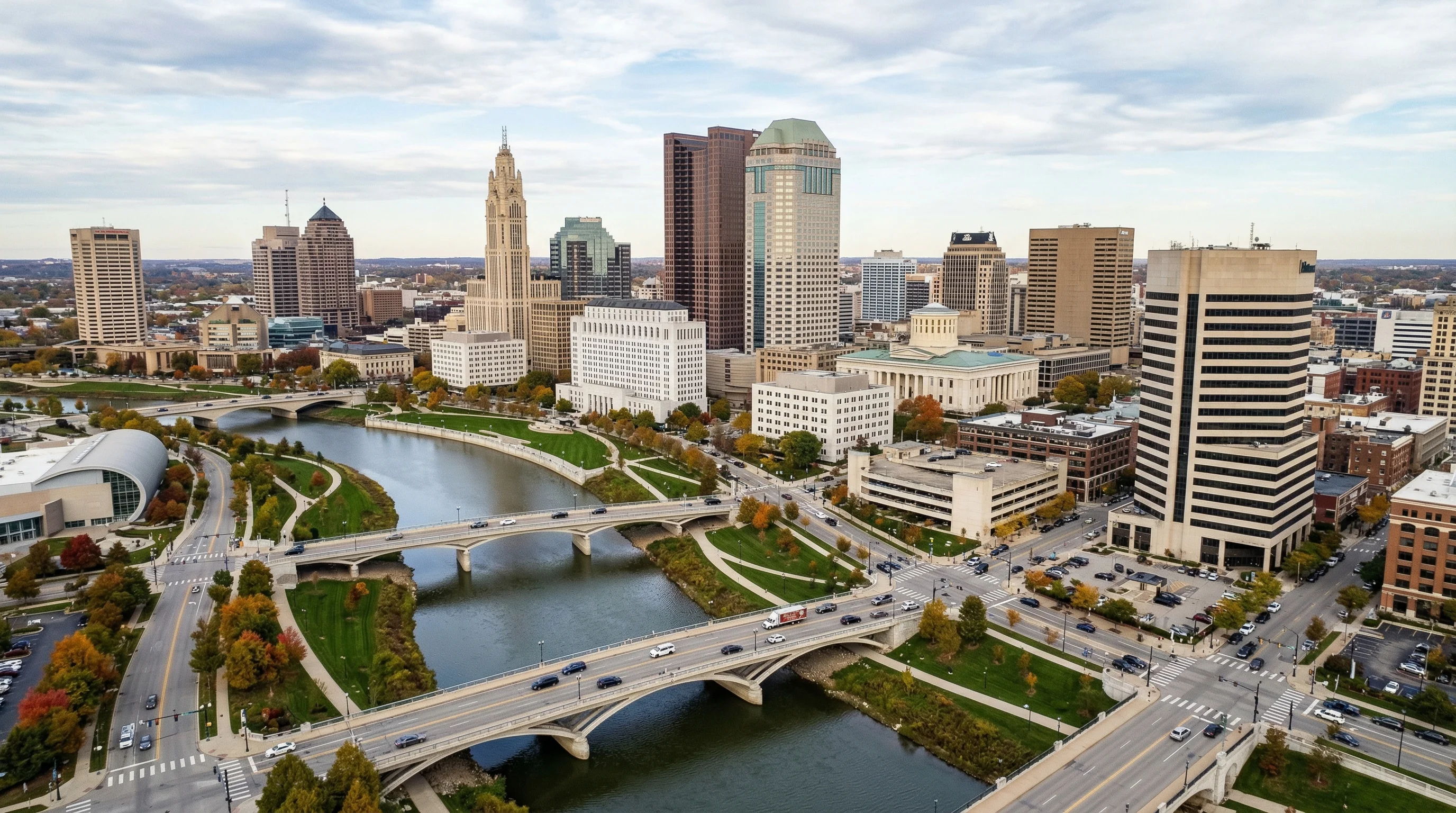
Columbus, Ohio stands as one of the fastest-growing metropolitan areas in the Midwest, offering exceptional strategic advantages for logistics and distribution operations. Located within 500 miles of nearly half the U.S. population, Columbus serves as a natural distribution hub for companies seeking to reach major markets efficiently. The city's economy is diverse and robust, with strengths in advanced manufacturing, healthcare, education, logistics, and technology, anchored by institutions like The Ohio State University and companies such as Nationwide Insurance and Honda of America.
The transportation infrastructure in Columbus is world-class, featuring the Rickenbacker International Airport with dedicated cargo facilities, direct access to major interstates including I-70 and I-71, and the nearby CSX and Norfolk Southern rail lines. The city's central location in Ohio and its extensive network of highways make it an ideal destination for full truckload freight coming from western states like Nebraska. Columbus's growing logistics and distribution sector, including numerous warehousing and fulfillment centers, creates consistent demand for reliable freight transportation services.










