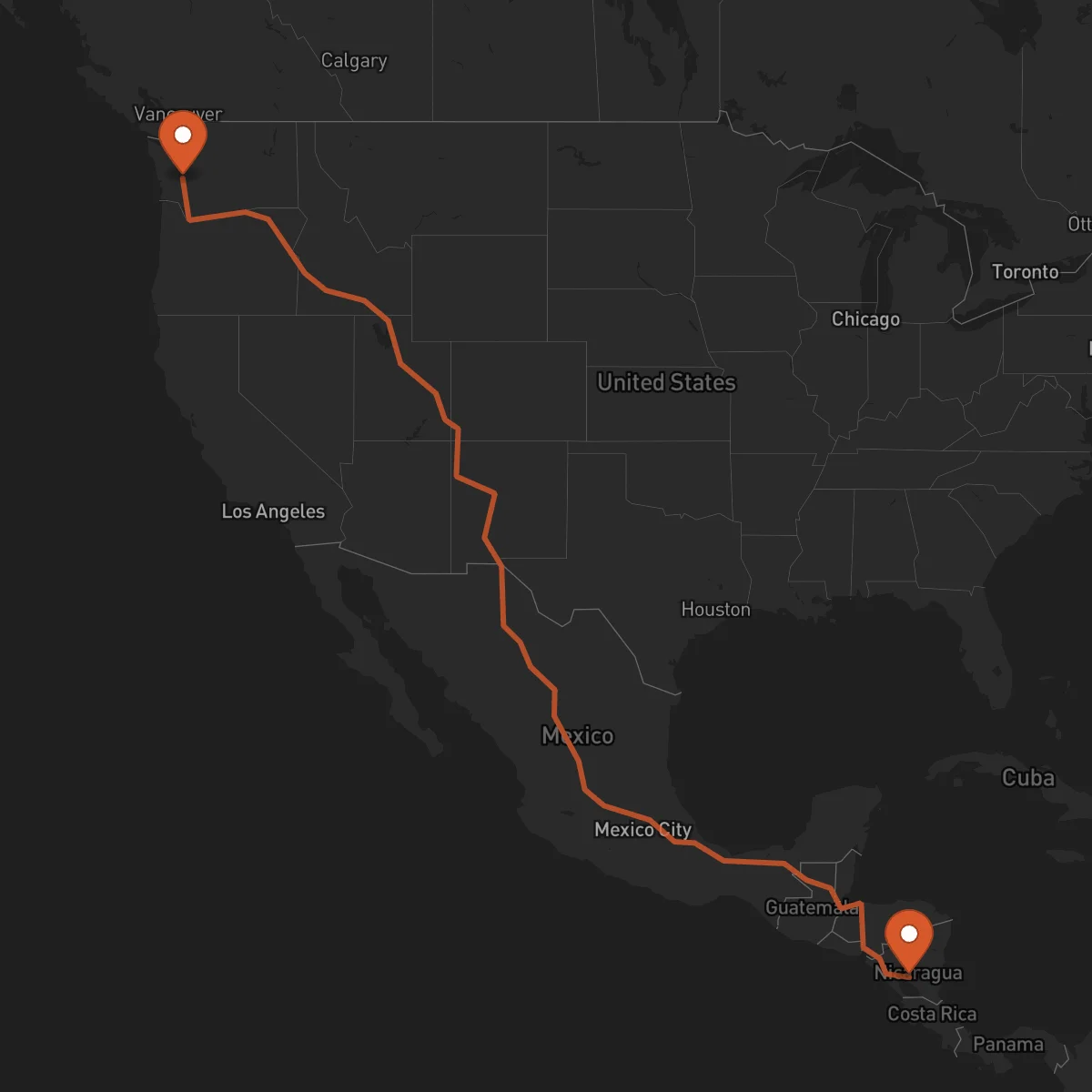
Olympia to Juigalpa
Juigalpa → OlympiaFTL freight transportation service between Olympia and Juigalpa. Reliable logistics solutions for your business.
Route Description
Everything you need to know about the corridor Olympia - Juigalpa
The Olympia, WA to Juigalpa, Nicaragua corridor represents a critical north-south logistics artery connecting the Pacific Northwest of the United States with Central America's agricultural heartland. This cross-border route is strategically vital for moving goods efficiently between major U.S. production and consumption zones and the growing markets of Nicaragua and its neighbors. The corridor supports the flow of essential commodities, manufactured goods, and specialized cargo, underpinning regional economic integration and supply chain resilience.
Economically, the corridor bridges the industrial and agricultural economies of Washington State with Nicaragua's primarily agricultural and livestock-based sectors. Key industries leveraging this route include agriculture (moving Pacific Northwest produce, grains, and inputs southward, and Nicaraguan beef, dairy, and coffee northward), manufacturing (appliances, auto parts, and textiles), and construction materials. The route facilitates essential import/export trade, with U.S. finished goods heading south and raw materials and commodities moving north to feed manufacturing supply chains.
Infrastructure along the corridor is a multi-national mosaic. The journey begins on the U.S. Interstate Highway System, primarily utilizing I-5 south through Washington and Oregon, connecting to I-10 east through California, Arizona, and New Mexico. It then crosses into Mexico via a major port like El Paso/Ciudad Juárez or Laredo, proceeding south on Mexico's Federal Highway 45 and 150, linking to the crucial CA-1 (the Mexican segment of the Pan-American Highway). Through Central America, the route follows the Pan-American Highway (CA-1) through Guatemala, Honduras, and into Nicaragua, where it connects to Nicaragua's national highway network leading to Juigalpa. Critical border crossings include the U.S.-Mexico border (requiring C-TPAT/FAST facilitation), the Mexico-Guatemala border (Ciudad Hidalgo/Tecún Umán), and the Honduras-Nicaragua border (Las Manos). Each crossing presents unique customs and documentation requirements that demand expert management.
Control Terrestre facilitates seamless operations on this complex corridor through our robust alliance of experienced carriers and our suite of cross-border certifications. We provide dedicated Full Truckload (FTL) solutions, leveraging providers certified with C-TPAT and FAST for expedited U.S. border clearance, and BASC for security standards in Latin America. Our expertise in customs documentation, cross-border compliance, and dedicated equipment—including dry vans, reefers, and flatbeds—ensures your cargo moves efficiently from Olympia's industrial yards to Juigalpa's distribution centers. We manage the entire spectrum of cross-border challenges, from customs brokerage coordination to carrier vetting, offering a single point of contact for your entire North American and Central American supply chain.
Services for this Route
Available services for the corridor Olympia - Juigalpa
 Origin
Olympia
Olympia, Washington, serves as a strategic logistics gateway from the Pacific Northwest, benefiting from its location within a region defined by robust intermodal connections and diverse economic output. As the state capital, it is centrally positioned within the I-5 corridor, the primary north-south artery on the West Coast, providing direct highway access to major ports (Seattle, Tacoma), rail networks, and international airports. This infrastructure makes it an ideal origin point for freight destined for the southern United States, Mexico, and beyond.
The economic engine around Olympia is diversified. Key sectors include government and education (anchored by state agencies and The Evergreen State College), advanced manufacturing (aerospace, shipbuilding, and precision equipment), agriculture (a significant producer of berries, apples, dairy, and hay), and a growing technology and clean energy sector. The Port of Olympia, while smaller than Seattle or Tacoma, handles bulk and break-bulk cargo and is a key node for regional agricultural exports. This mix of industries generates consistent demand for outbound freight transportation, from perishable agricultural goods to manufactured components and bulk materials.
Available transportation infrastructure is comprehensive. The city is directly served by Interstate 5, connecting it to Vancouver, BC, and all major California markets. State Route 510 and 507 provide vital links to I-5. Proximity to the Puget Sound offers barge and container shipping options via the deep-water ports. Major Class I railroads (BNSF, Union Pacific) serve the area, and Seattle-Tacoma International Airport (SEA) is approximately 60 miles north, facilitating high-value, time-sensitive air cargo integration. This multi-modal ecosystem allows Control Terrestre to optimize FTL dispatch from Olympia, selecting the most efficient highway-based routes to begin the southbound journey into the continental corridor.
 Destination
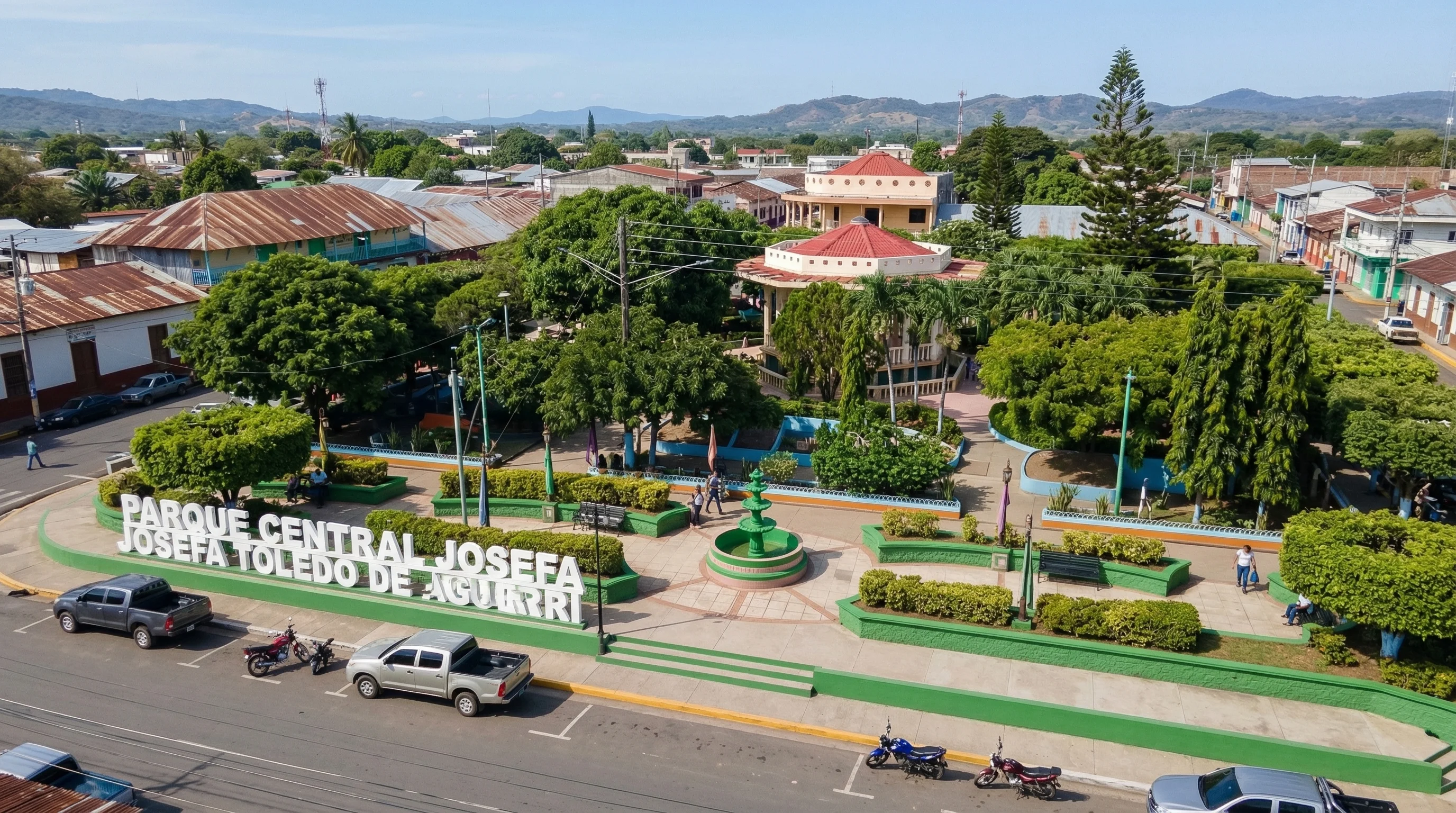
Juigalpa, the capital of Nicaragua's Chontales department, is a strategic inland logistics hub in central Nicaragua, serving as a commercial and agricultural nexus for the region. Its location in the foothills of the central highlands provides a central staging point for distribution to both the Pacific coast (via a relatively direct road to Puerto Sandino) and the Caribbean coast, as well as connections to the capital, Managua, approximately 150 km to the west. This positioning makes it a critical destination for freight moving into Nicaragua's interior agricultural zones.
The local and regional economy is heavily driven by agriculture and livestock. Chontales is known as Nicaragua's 'breadbasket' and 'cattle region,' producing significant quantities of beef, dairy products, grains (like sorghum and corn), and sesame. Additionally, the area supports coffee cultivation in the higher elevations and a variety of fruits and vegetables. There is also light manufacturing and processing activity related to these agricultural products, such as dairy plants and meatpacking facilities. This economic profile creates steady demand for inbound freight—including feed, agricultural machinery, fuel, packaged goods, and consumer products—to support the region's farming and ranching operations.
Transportation infrastructure centers on the national highway network. The primary access route is the paved highway connecting Juigalpa to the Pan-American Highway (Nicaragua's section of CA-1) near the town of San Benito. This connection links Juigalpa to Managua and the main north-south corridor traversing Central America. From the Pan-American, roads lead to key Pacific ports like Corinto and Puerto Sandino for international shipping. While not a major rail hub, Nicaragua's freight rail system has limited operational capacity, making road transport via FTL the dominant and most flexible mode for moving goods into and out of Juigalpa. Control Terrestre's FTL services are tailored to this environment, utilizing appropriate equipment—from dry vans for general cargo to refrigerated units for perishable agricultural goods—to ensure reliable delivery from the international corridor to this key inland destination.










