Olympia to Charlotte
Charlotte → OlympiaFTL freight transportation service between Olympia and Charlotte. Reliable logistics solutions for your business.
Route Description
Everything you need to know about the corridor Olympia - Charlotte
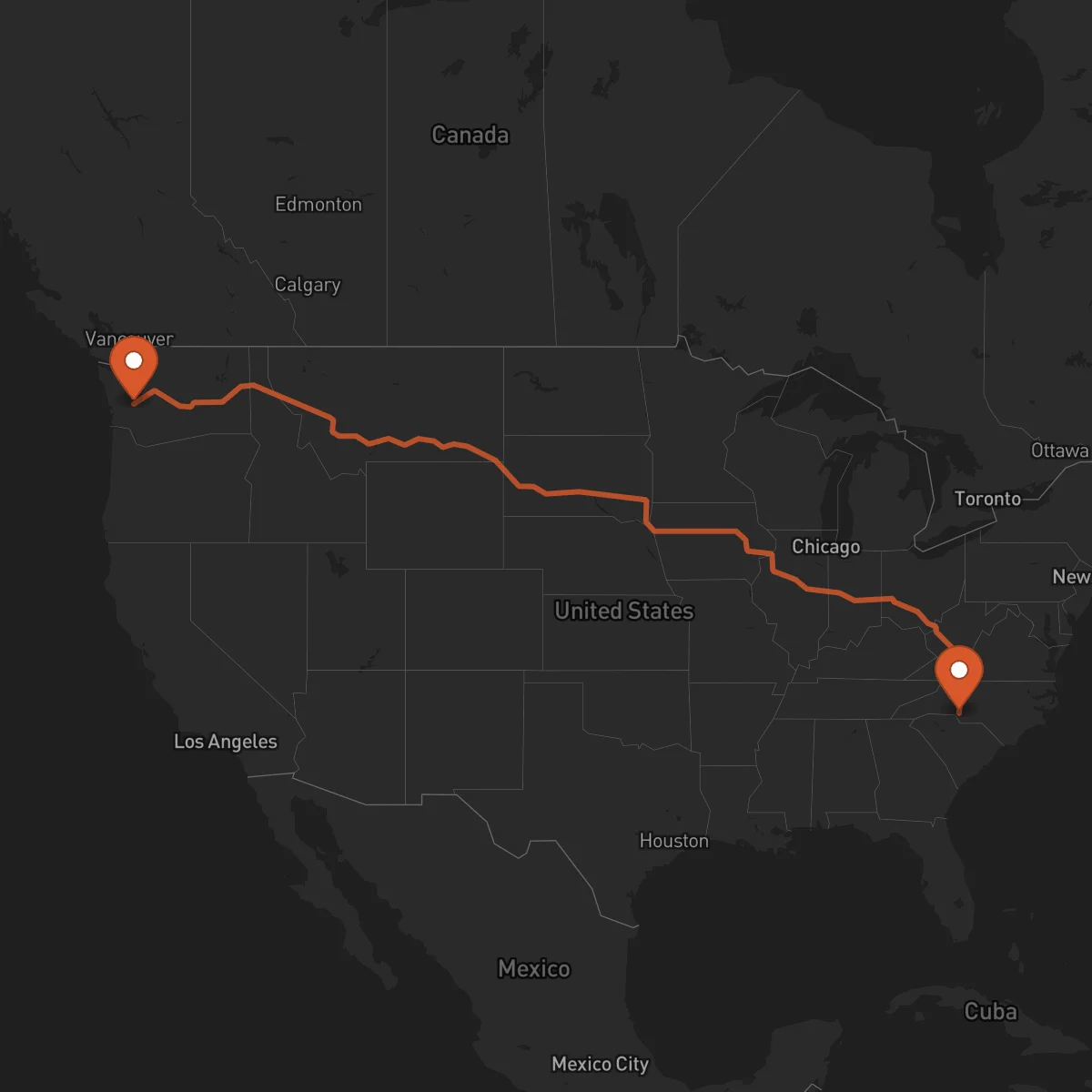
The logistics corridor connecting Olympia, Washington, to Charlotte, North Carolina, spans approximately 3,707 kilometers across the United States, representing a critical freight transportation route that links the Pacific Northwest with the Southeast. This transcontinental corridor traverses diverse geographical regions, connecting major economic hubs and facilitating the movement of goods between two distinct industrial zones. The route strategically connects Washington's technology and aerospace sector with North Carolina's growing financial services, energy, and manufacturing industries.
This corridor serves as a vital artery for numerous industries, particularly technology hardware, aerospace components, automotive parts, and consumer goods. Companies operating along this route benefit from the ability to transport high-value, time-sensitive shipments between the West Coast's major ports and distribution centers to the rapidly expanding markets of the Southeast. The corridor's importance has grown significantly with the increasing demand for cross-country freight movement and the need for reliable supply chain solutions.
Control Terrestre facilitates seamless operations along this corridor through our extensive network of certified transportation providers. Our dedicated full truckload (FTL) services ensure that shipments move efficiently across the country, utilizing major interstate highways including I-90, I-94, I-80, and I-77. We provide end-to-end logistics solutions that optimize transit times, maintain cargo security, and offer real-time tracking capabilities throughout the journey from Olympia to Charlotte.
Services for this Route
Available services for the corridor Olympia - Charlotte
 Origin
Olympia
Olympia, Washington, serves as a strategic gateway for freight transportation in the Pacific Northwest, offering excellent connectivity to major West Coast markets and international trade routes. Located in Thurston County, Olympia benefits from proximity to the Port of Olympia and easy access to the Ports of Seattle and Tacoma, which handle significant cargo volumes from Asia and other international markets. The region's robust transportation infrastructure includes direct access to Interstate 5, facilitating efficient north-south movement along the West Coast.
The area's economy is characterized by a diverse mix of industries including government services, technology, aerospace, and sustainable manufacturing. Major employers in the region include state government agencies, technology firms, and aerospace companies that require reliable freight transportation solutions. Olympia's location near major distribution centers and manufacturing facilities makes it an ideal origin point for full truckload shipments heading to destinations across the United States, particularly benefiting from the region's focus on high-value, specialized cargo.
 Destination
Charlotte
Charlotte, North Carolina, stands as a major logistics and distribution hub in the Southeastern United States, offering strategic advantages for freight transportation and supply chain operations. The city's location provides excellent access to major East Coast markets, with proximity to Interstates 77, 85, and 485 creating a well-connected transportation network. Charlotte Douglas International Airport, one of the busiest in the country, complements the city's ground transportation infrastructure, making it an ideal destination for time-sensitive freight shipments.
The Charlotte metropolitan area has experienced significant economic growth, particularly in the financial services, energy, and manufacturing sectors. The region hosts numerous corporate headquarters, including major banks and energy companies, creating substantial demand for reliable freight transportation services. Charlotte's central location in the Southeast, combined with its robust industrial base and growing e-commerce sector, makes it a crucial destination for full truckload shipments from across the country, supporting the region's expanding logistics and distribution needs.










