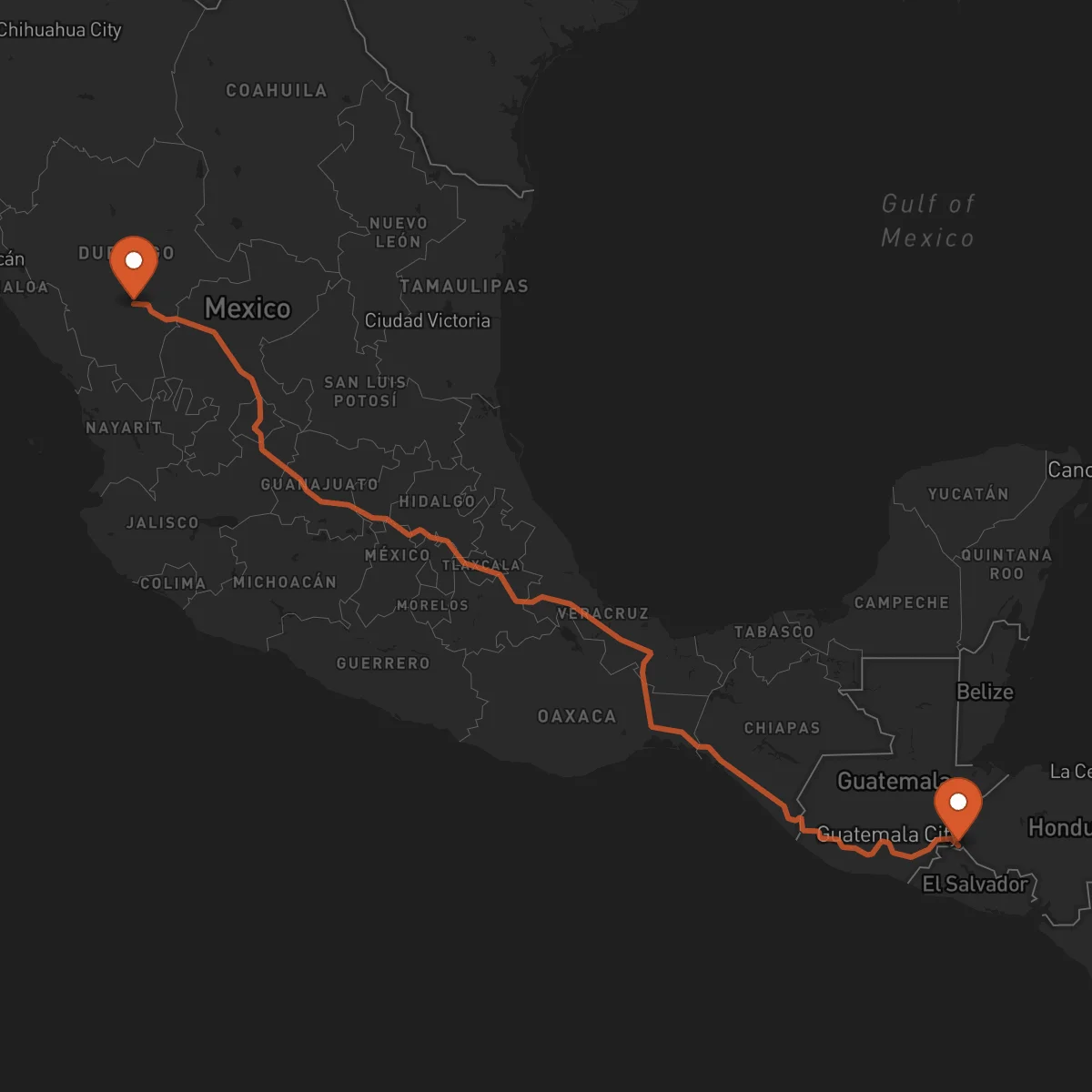
Ocotepeque to Durango
Durango → OcotepequeFTL freight transportation service between Ocotepeque and Durango. Reliable logistics solutions for your business.
Route Description
Everything you need to know about the corridor Ocotepeque - Durango
The Ocotepeque-Durango corridor is a critical north-south artery connecting Central America's western highlands with Mexico's industrial heartland. Spanning approximately 1,941 km, this cross-border route facilitates the vital flow of goods between Honduras and Northern Mexico, serving as a strategic bridge for regional trade. The corridor's importance is amplified by its role in linking Honduran production centers with major Mexican manufacturing and consumption markets, while also providing a gateway for goods destined for the United States and Canada.
Economically, the corridor serves dynamic regions. Ocotepeque and surrounding western Honduras are hubs for coffee, textile, and agricultural production, while Durango is a powerhouse for mining (silver, gold, iron), automotive manufacturing, and agribusiness. Key industries utilizing this route include textile exporters shipping to Mexican maquiladoras, coffee and tropical fruit producers, mining equipment suppliers, and manufacturers moving intermediate goods. The consistent demand from these sectors ensures robust, year-round freight movement.
Infrastructure relies on a network of major highways. In Central America, the CA-4 forms the backbone from Ocotepeque northward through Guatemala to the Mexican border. Upon entry into Mexico, federal highways—primarily Fed. 45 and Fed. 40—carry traffic through cities like Tapachula, Mexico City, and Torreón before reaching Durango. The primary formal border crossing is at El Ceibo (Honduras/Guatemala) into Mexico's Ciudad Hidalgo, though other crossings may be utilized based on specific origin/destination points within the region.
Navigating this corridor requires expertise in cross-border customs and compliance. Control Terrestre facilitates seamless operations through our strategic alliance of certified providers. Our partners hold key certifications including C-TPAT and FAST for expedited US-bound clearance, BASC for security, and Clean Transportation standards. We manage all documentation, customs brokerage coordination, and border transfer logistics, ensuring your full truckload (FTL) moves efficiently across international boundaries. Our dedicated and spot freight services are tailored for this corridor, offering you a single point of contact for the entire door-to-door journey, from Ocotepeque's production facilities to Durango's industrial parks.
Services for this Route
Available services for the corridor Ocotepeque - Durango
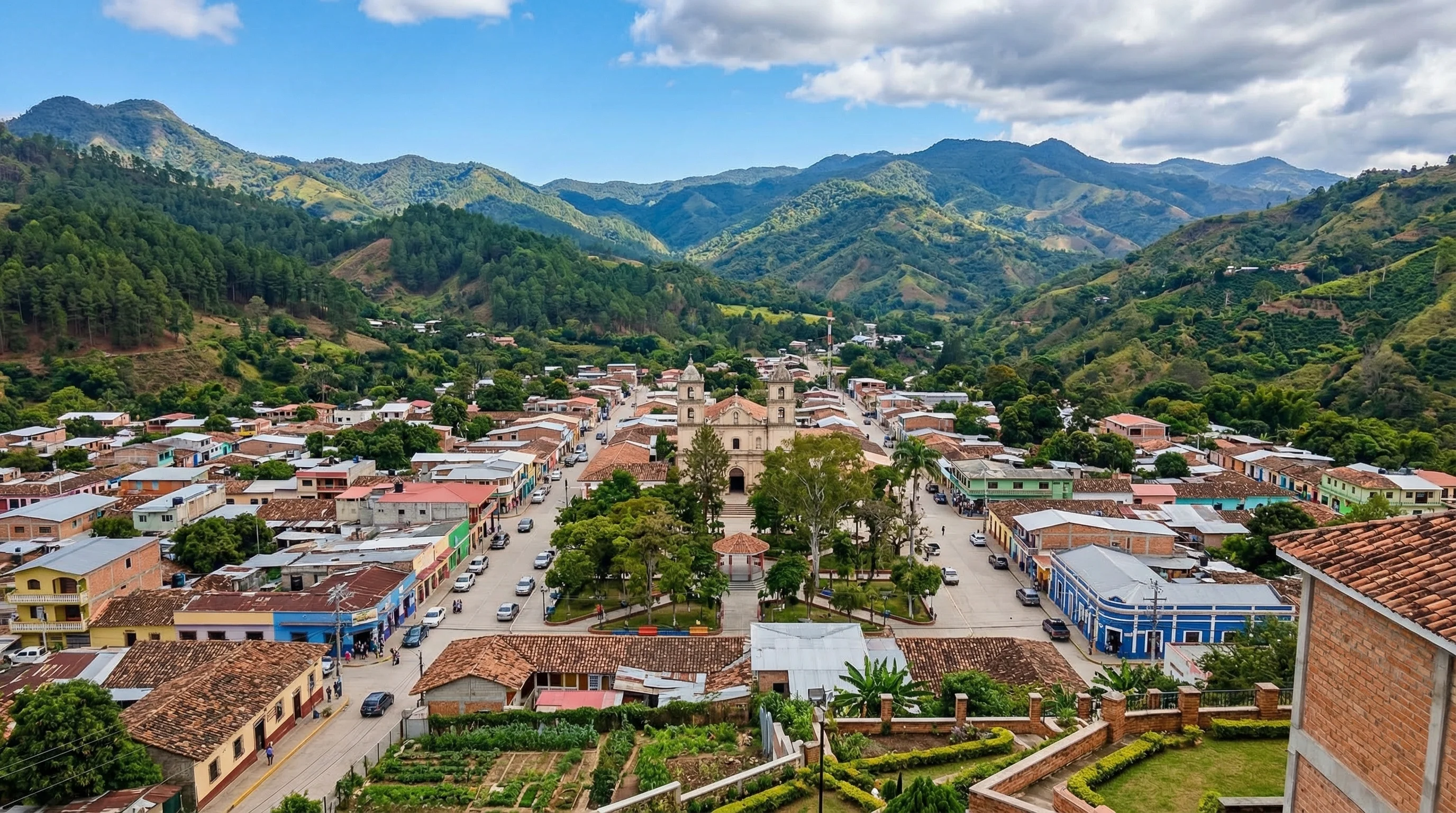 Origin
Ocotepeque
Ocotepeque is strategically positioned in western Honduras, bordering both Guatemala and El Salvador. This tri-border location makes it a natural logistics gateway for Central American trade, providing direct access to the Pan-American highway network (CA-4) and the port of Puerto Cortés on the Caribbean coast. The department's economy is driven by high-value agriculture, particularly coffee cultivation in its mountainous terrain, alongside significant production of vegetables, corn, and beans. Textile manufacturing is also a key sector. The available transportation infrastructure is centered on the CA-4 highway, which connects Ocotepeque to major Honduran cities like San Pedro Sula and the capital, Tegucigalpa, and extends north to the Guatemalan border. This road network supports the movement of agricultural exports and manufactured goods to and from the region, making it a vital origin point for FTL freight heading north.
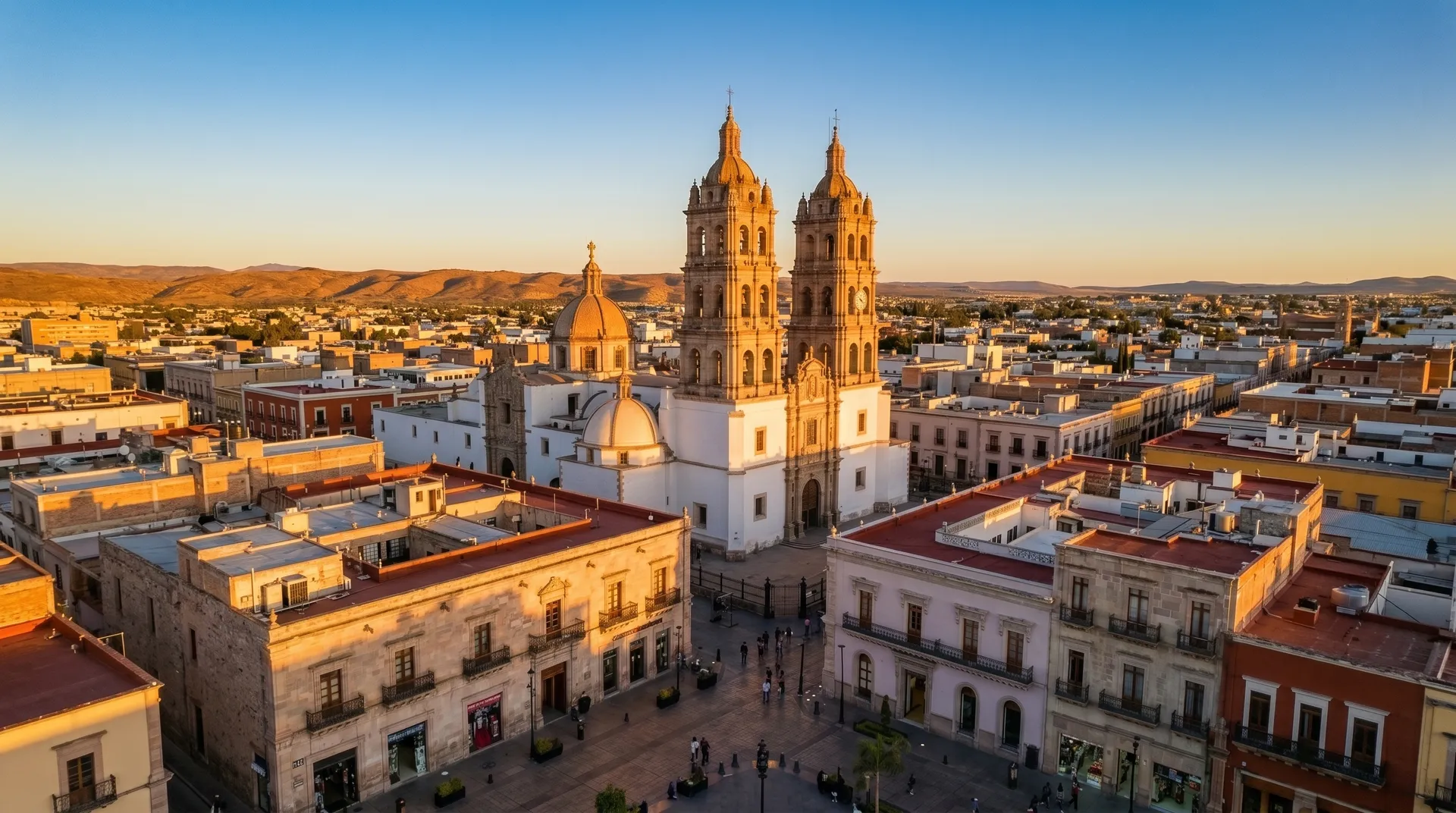 Destination
Durango, the capital of the state of Durango, is a pivotal industrial and logistics hub in northern Mexico. Its strategic location provides direct access to the US-Mexico border via major federal highways and is a central node for rail networks serving the entire region. The state's economy is dominated by mining (notably silver, gold, and iron ore), which generates substantial demand for heavy equipment and material transport. Additionally, Durango has a growing manufacturing sector, including automotive parts and food processing, supported by its strong agribusiness base in apples, grain, and livestock. The city is well-connected by Federal Highway 45 (the main north-south artery) and Highway 40, which links to the Pacific port of Mazatlán and the US border at El Paso. This robust infrastructure makes Durango a key destination for FTL freight, receiving goods for local industry and for onward distribution across Mexico and into the United States.










