Oakland to Lansing
Lansing → OaklandFTL freight transportation service between Oakland and Lansing. Reliable logistics solutions for your business.
Route Description
Everything you need to know about the corridor Oakland - Lansing
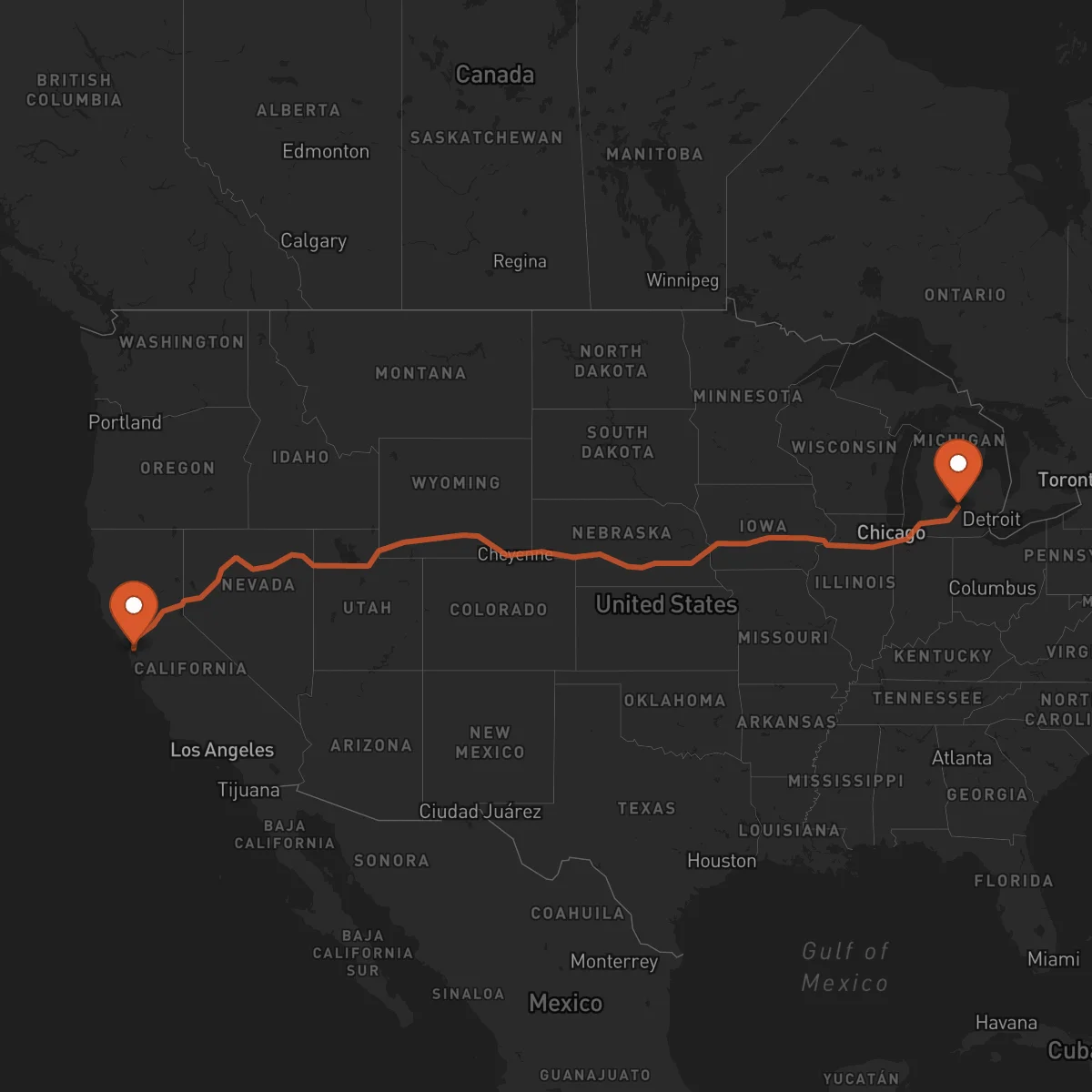
The Oakland to Lansing corridor represents a vital logistics route connecting the West Coast with the Midwest United States. This approximately 3219 km route traverses diverse terrains and crosses multiple states, serving as a critical link for businesses moving goods between California's major port facilities and Michigan's industrial heartland. The corridor's strategic importance has grown significantly with the expansion of e-commerce and just-in-time manufacturing practices, making efficient transportation solutions essential for supply chain success.
The economic relationship between these regions is characterized by complementary industries. Oakland serves as a gateway for imports from Asia, while Lansing's manufacturing sector requires consistent supply of components and materials. This creates a steady flow of freight in both directions, with electronics, automotive parts, and consumer goods being among the most commonly transported commodities. The corridor benefits from the robust economic activity in both metropolitan areas, with Oakland's port complex and Lansing's automotive manufacturing driving significant freight demand.
Transportation infrastructure along this route includes major interstate highways such as I-80, I-70, and I-69, providing multiple routing options to optimize for time, cost, or specific cargo requirements. The route passes through key logistics hubs including Salt Lake City, Denver, and Indianapolis, offering opportunities for strategic stops or distribution points. Control Terrestre leverages this infrastructure by providing dedicated full truckload services that ensure your cargo moves efficiently and securely from origin to destination, with real-time tracking and experienced drivers familiar with the entire corridor.
Control Terrestre's expertise in this corridor includes understanding the seasonal variations in freight demand, navigating regulatory requirements across different states, and providing specialized equipment when needed. Our network of certified carriers ensures compliance with all safety and environmental standards while maintaining the reliability that businesses require for their critical shipments between Oakland and Lansing.
Services for this Route
Available services for the corridor Oakland - Lansing
 Origin
Oakland
Oakland, located on the eastern shore of San Francisco Bay, serves as a crucial logistics hub for Northern California and the broader West Coast. The city's strategic position is anchored by the Port of Oakland, one of the busiest container ports in the United States, which provides direct access to major Asian markets. Oakland's transportation infrastructure includes extensive rail connections through Union Pacific and BNSF, a network of interstate highways including I-80 and I-580, and proximity to major air cargo facilities at Oakland International Airport. The region's economy is diverse, with strong sectors in technology, healthcare, and manufacturing, all of which contribute to consistent freight movement. Oakland's role as a gateway for international trade makes it an ideal origin point for shipments requiring efficient access to both coastal and inland destinations.
 Destination
Lansing
Lansing, the capital city of Michigan, occupies a strategic position in the Great Lakes region and serves as a key logistics center for the Midwest. Located at the confluence of major transportation routes, Lansing provides excellent connectivity through I-96, I-69, and US-127, linking it to Detroit, Chicago, and other major industrial centers. The city's economy is anchored by state government operations, education, and a growing technology sector, but it's perhaps best known for its automotive heritage and manufacturing capabilities. Lansing's proximity to Detroit and its established industrial base create consistent demand for inbound freight, particularly automotive parts and manufacturing components. The region's infrastructure includes multiple freight rail lines, a network of distribution centers, and ready access to the Great Lakes shipping lanes, making it an ideal destination for businesses requiring reliable distribution throughout the Midwest.










