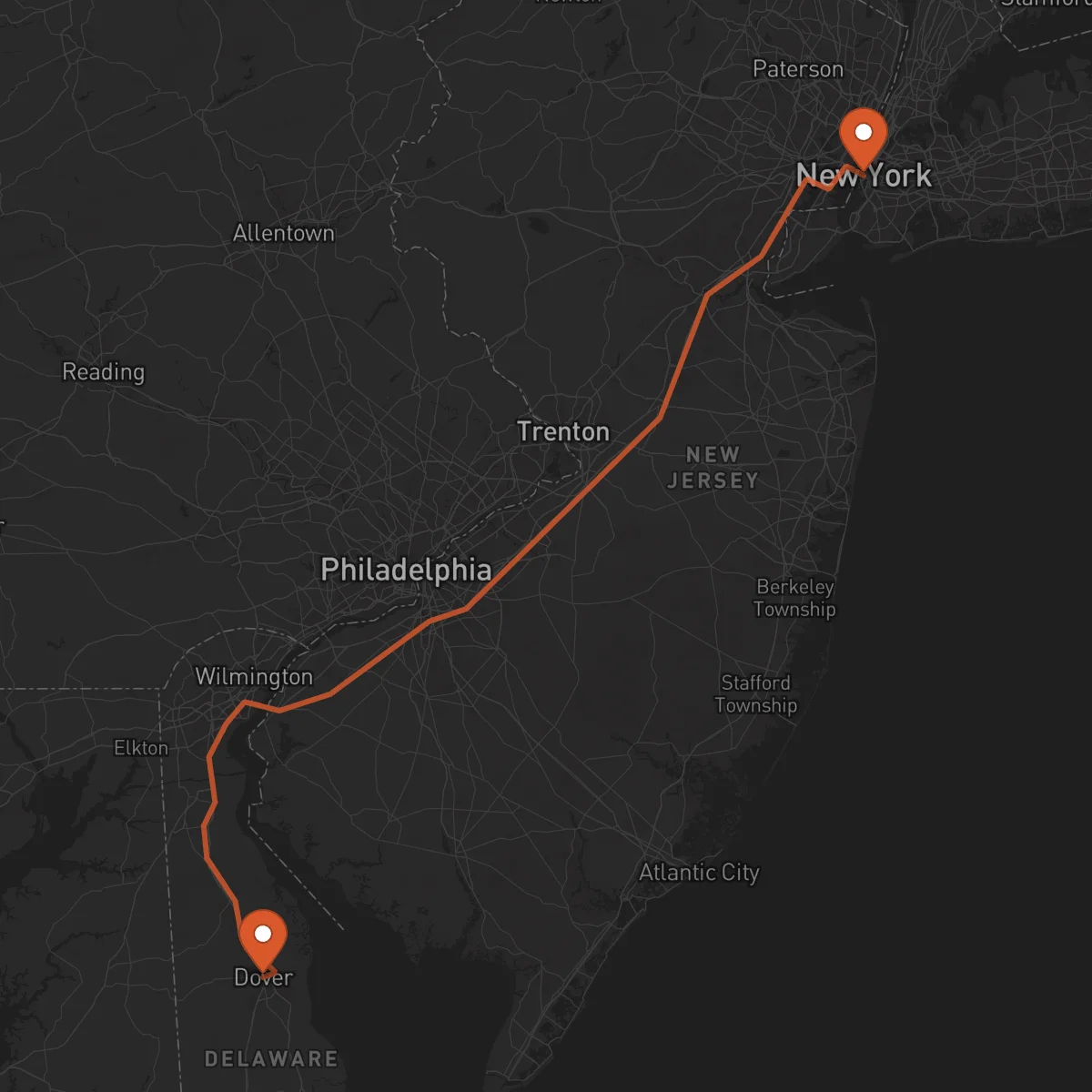
New York City to Dover
Dover → New York CityFTL freight transportation service between New York City and Dover. Reliable logistics solutions for your business.
Route Description
Everything you need to know about the corridor New York City - Dover
The logistics corridor between Nueva York and Dover represents a vital link in the northeastern United States freight network. This 216 km route connects one of the nation's largest economic hubs with Delaware's capital, facilitating the movement of goods between major industrial centers and distribution networks. The corridor serves as a crucial artery for supply chains operating in the Northeast, connecting the Port of New York and New Jersey with inland markets and manufacturing centers.
The region's economic significance stems from its diverse industrial base, including manufacturing, pharmaceuticals, technology, and financial services. Nueva York's metropolitan area alone generates billions in economic activity annually, while Dover's strategic location has made it an important distribution center for the Mid-Atlantic region. The corridor benefits from proximity to major transportation hubs, including international airports, rail terminals, and the Port of New York and New Jersey, one of the busiest ports on the East Coast.
Control Terrestre optimizes freight operations along this corridor through our extensive network of certified transportation providers. Our strategic partnerships ensure reliable, efficient full truckload (FTL) services that meet the demanding requirements of businesses operating in this high-volume trade lane. We leverage our expertise in domestic freight transportation to provide seamless door-to-door service, helping companies streamline their supply chains and maintain competitive advantage in these key markets.
Services for this Route
Available services for the corridor New York City - Dover
 Origin
New York City
Nueva York stands as a global logistics powerhouse, offering unparalleled connectivity and infrastructure for freight operations. The city's five boroughs encompass one of the world's largest natural harbors, providing access to international shipping lanes and supporting the Port of New York and New Jersey. This strategic location serves as a gateway for goods entering and exiting the United States, with extensive air, sea, and land transportation networks converging in the metropolitan area. The city's infrastructure includes major airports like JFK and LaGuardia, extensive rail networks, and a comprehensive highway system that facilitates efficient freight movement throughout the region.
The economic landscape of Nueva York is characterized by diverse industries including finance, technology, media, fashion, and manufacturing. The city hosts numerous corporate headquarters and serves as a distribution center for products ranging from consumer goods to industrial equipment. Manufacturing remains significant in sectors such as pharmaceuticals, electronics, and food processing, creating substantial demand for reliable freight transportation services. The concentration of businesses and consumers in Nueva York generates consistent freight volume, making it an essential origin point for supply chains throughout the Northeast and beyond.
 Destination
Dover
Dover's strategic location in Delaware positions it as an important logistics hub for the Mid-Atlantic region. The city benefits from its proximity to major East Coast markets while offering advantages such as favorable business regulations and efficient transportation infrastructure. Dover's location provides convenient access to Interstate 95 and other major highways, facilitating the movement of goods throughout the Northeast and beyond. The city's infrastructure includes the Delaware Airport and connections to regional rail networks, supporting diverse freight transportation options.
The economic profile of Dover reflects Delaware's business-friendly environment, with significant activity in government services, healthcare, education, and distribution. The city serves as a distribution center for various industries, benefiting from Delaware's central location between major metropolitan areas like Philadelphia, Baltimore, and Washington D.C. Dover's industrial base includes manufacturing facilities, warehousing operations, and logistics centers that rely on efficient freight transportation to maintain their supply chains. The city's role as Delaware's capital also contributes to consistent freight demand from government agencies and supporting industries, making it a strategic destination for full truckload services.


Ready to ship your cargo?
Get a personalized quote for your freight.
Quote Now New York City - Dover








