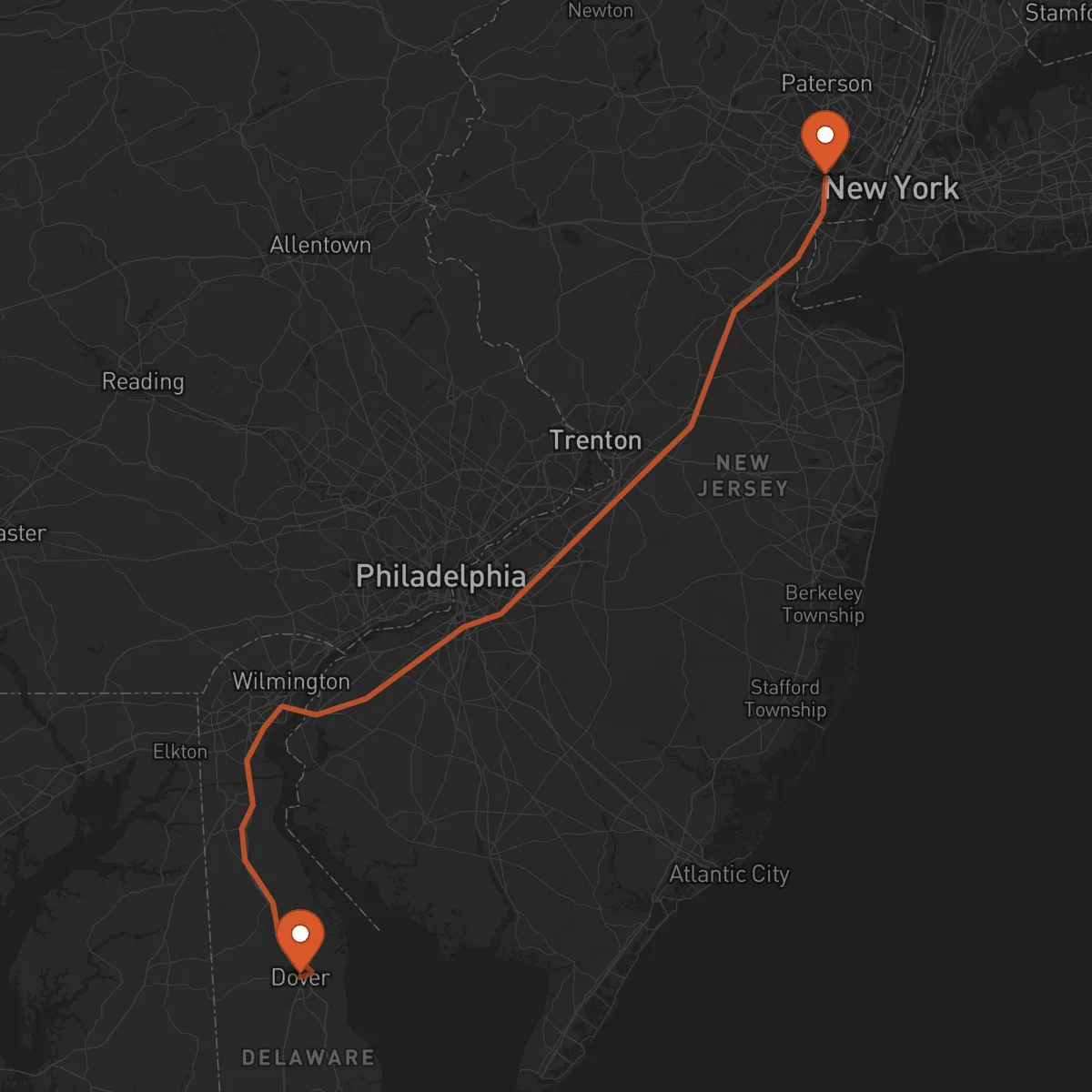
Newark to Dover
Dover → NewarkFTL freight transportation service between Newark and Dover. Reliable logistics solutions for your business.
Route Description
Everything you need to know about the corridor Newark - Dover
The logistics corridor between Newark, New Jersey and Dover, Delaware represents a crucial link in the Northeast transportation network, connecting two important industrial and commercial centers. This approximately 209-kilometer route traverses the heart of the Mid-Atlantic region, facilitating the movement of goods between the Port of New York and New Jersey's extensive distribution network and Delaware's growing manufacturing and agricultural sectors. The corridor serves as a vital artery for regional commerce, enabling efficient freight movement that supports the economic vitality of both states and the broader Northeast corridor.
The region's economic landscape is characterized by a diverse mix of industries, including pharmaceuticals, automotive manufacturing, aerospace, and agricultural products. Newark's proximity to major ports and international airports, combined with Dover's strategic location near the Chesapeake Bay and its strong manufacturing base, creates a dynamic trade environment. The corridor benefits from the presence of major corporations, research institutions, and industrial parks that generate substantial freight traffic, particularly in specialized cargo and time-sensitive shipments.
Key transportation infrastructure along this route includes major highways such as I-95, I-295, and US-13, which provide multiple routing options to optimize transit times and avoid congestion. The presence of intermodal facilities and cross-docking centers along the corridor enhances supply chain efficiency, allowing for seamless transitions between different transportation modes. Control Terrestre leverages this infrastructure to provide reliable, full truckload (FTL) services that meet the demanding requirements of modern supply chains.
Control Terrestre facilitates operations on this corridor by offering dedicated FTL transportation solutions that ensure cargo moves directly from origin to destination without intermediate stops or handling. Our network of certified carriers, equipped with a diverse fleet including dry vans, refrigerated units, and specialized equipment, provides the flexibility needed to handle various cargo types. We optimize route planning, monitor shipments in real-time, and maintain strict quality control standards to deliver consistent, professional service that keeps your supply chain moving efficiently between Newark and Dover.
Services for this Route
Available services for the corridor Newark - Dover
 Origin
Newark
Newark, New Jersey serves as a strategic logistics hub in the Northeast, positioned at the crossroads of major transportation networks. Located just 15 kilometers from New York City, Newark benefits from its proximity to the Port Newark-Elizabeth Marine Terminal, one of the largest container ports on the East Coast, and Newark Liberty International Airport, a major cargo gateway. The city's extensive highway system, including direct access to I-95, I-78, and the New Jersey Turnpike, provides seamless connections to regional and national freight networks. Newark's industrial base includes pharmaceuticals, chemicals, food processing, and advanced manufacturing, creating consistent demand for reliable freight transportation services.
 Destination
Dover
Dover, Delaware occupies a strategic position in the Mid-Atlantic region, serving as the state capital and a growing logistics center. Located near the Delaware Bay and Chesapeake Bay, Dover benefits from its proximity to major East Coast markets while offering more cost-effective warehousing and distribution options compared to nearby metropolitan areas. The city's transportation infrastructure includes direct access to US-13 and US-113, connecting to the broader highway network, and its location near the Delaware Memorial Bridge provides efficient access to the Philadelphia and Baltimore markets. Dover's economy features strong agricultural, manufacturing, and government sectors, with growing aerospace and defense industries that require specialized freight handling capabilities.










