New Orleans to Tucson
Tucson → New OrleansFTL freight transportation service between New Orleans and Tucson. Reliable logistics solutions for your business.
Route Description
Everything you need to know about the corridor New Orleans - Tucson
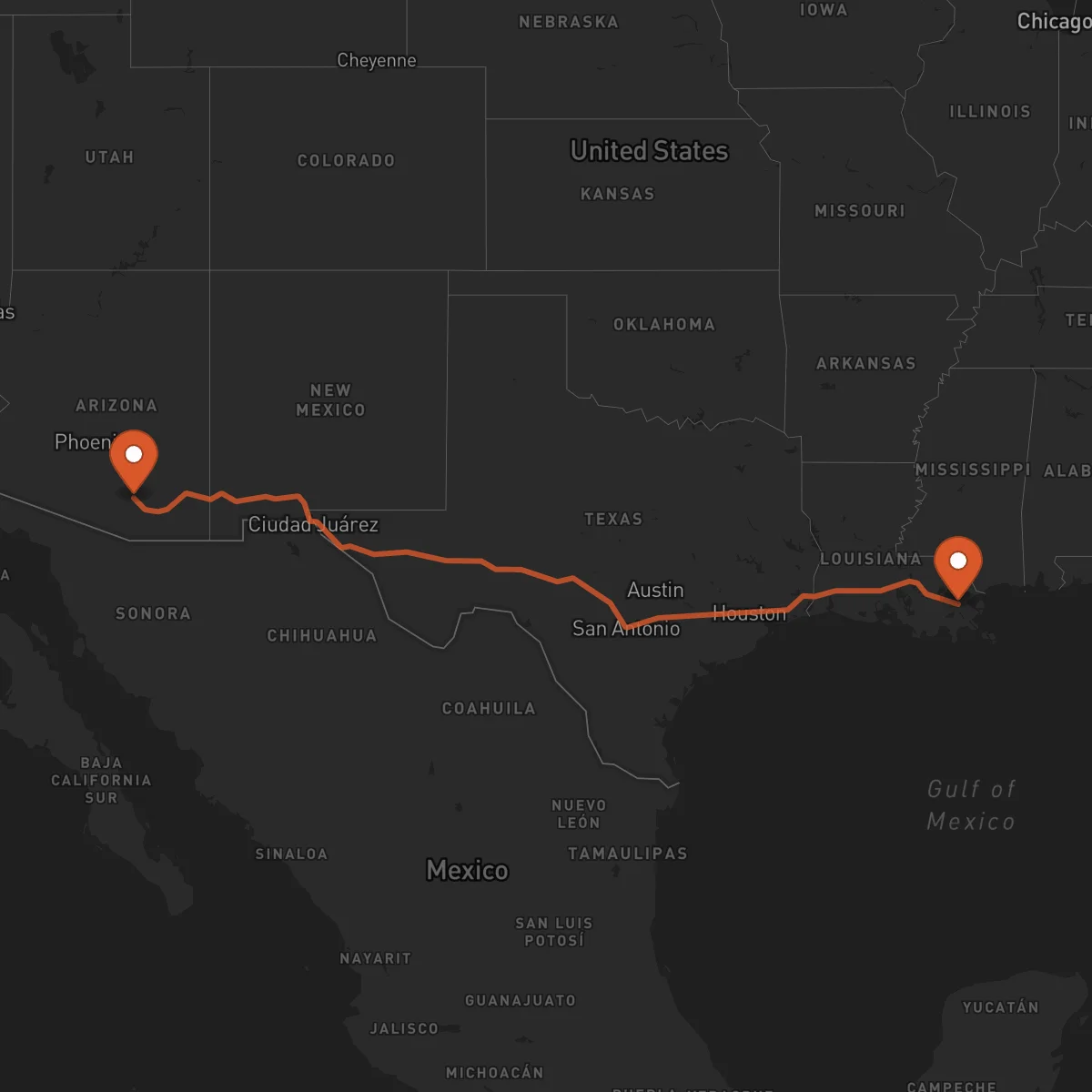
The New Orleans to Tucson corridor represents a vital freight transportation link connecting the Gulf Coast to the Southwest United States. This 2003 km domestic route traverses diverse terrain and crosses multiple states, creating essential supply chain connections between major economic regions. The corridor serves as a strategic pathway for goods moving between the industrial and port facilities of Louisiana and the growing markets and manufacturing centers of Arizona.
The economic significance of this corridor is substantial, supporting industries ranging from energy and petrochemicals to aerospace and electronics. New Orleans, with its extensive port facilities and industrial base, generates significant freight volumes that require efficient transportation to inland destinations like Tucson. Meanwhile, Tucson's position as a technology and defense hub creates demand for inbound raw materials and components, as well as outbound finished products.
Major transportation infrastructure along this route includes Interstate 10, which provides the primary freight corridor from New Orleans through Houston, San Antonio, and El Paso before reaching Tucson. This interstate highway system offers reliable, year-round transportation with multiple lanes and modern facilities. The route also intersects with other major highways, providing flexibility for specialized freight movements and alternative routing when needed.
Control Terrestre optimizes freight operations on this corridor through our network of certified transportation providers and specialized equipment. Our dedicated FTL services ensure that your cargo moves directly from origin to destination without intermediate stops or transfers. With our expertise in handling diverse freight types and our commitment to timely delivery, we provide the reliability and efficiency that businesses require for their critical supply chain operations between these key markets.
Services for this Route
Available services for the corridor New Orleans - Tucson
 Origin
New Orleans
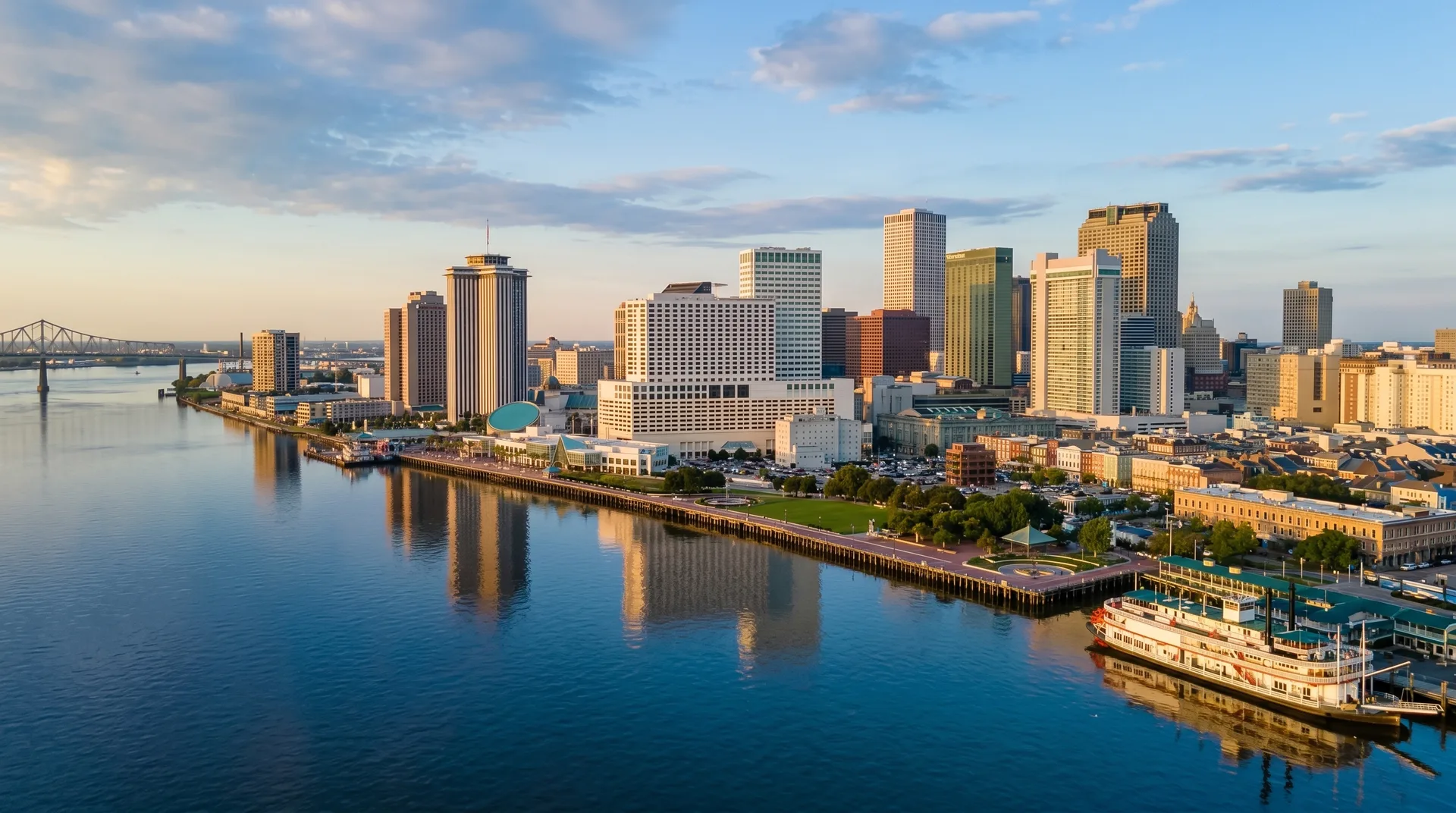
New Orleans serves as a strategic logistics hub on the Gulf Coast, anchored by one of the busiest ports in the United States. The Port of New Orleans handles a diverse range of cargo including agricultural products, petrochemicals, and manufactured goods, making it a critical entry and exit point for international trade. The city's location at the mouth of the Mississippi River provides unique multimodal transportation capabilities, combining water, rail, and road infrastructure for seamless freight movement.
The economic base of New Orleans includes significant energy sector operations, with numerous refineries and petrochemical facilities in the surrounding area. The region also supports a strong manufacturing presence, particularly in food processing, aerospace components, and industrial equipment. Tourism and hospitality industries further contribute to the local economy, creating demand for both inbound supplies and outbound products.
Transportation infrastructure in New Orleans is comprehensive, featuring extensive highway networks including I-10, I-55, and I-59. The city maintains robust rail connections through major Class I railroads, while Louis Armstrong New Orleans International Airport provides air cargo capabilities. This multimodal infrastructure enables efficient distribution of goods throughout the southeastern United States and beyond.
 Destination
Tucson
Tucson occupies a strategic position in the Southwest United States, serving as a gateway to both domestic markets and international trade through its proximity to the Mexican border. The city's location in Arizona provides access to growing markets in the western states while offering connections to cross-border supply chains. Tucson's infrastructure includes major highways such as I-10 and I-19, facilitating efficient freight movement to and from the region.
The economic landscape of Tucson is diverse, with strong presence in aerospace and defense industries, technology manufacturing, and healthcare services. The city hosts major employers in semiconductor manufacturing, optics and photonics, and renewable energy sectors. Tucson's role as a distribution center for the Southwest is enhanced by its proximity to major consumer markets in California and its connections to the broader Arizona economy.
Transportation infrastructure in Tucson includes Sky Harbor Airport for air cargo operations and extensive highway networks connecting to major western markets. The city's rail connections through Union Pacific Railroad provide additional freight options, while the regional highway system supports efficient truck transportation. Tucson's infrastructure continues to develop to support the growing industrial and commercial activities in the region.










