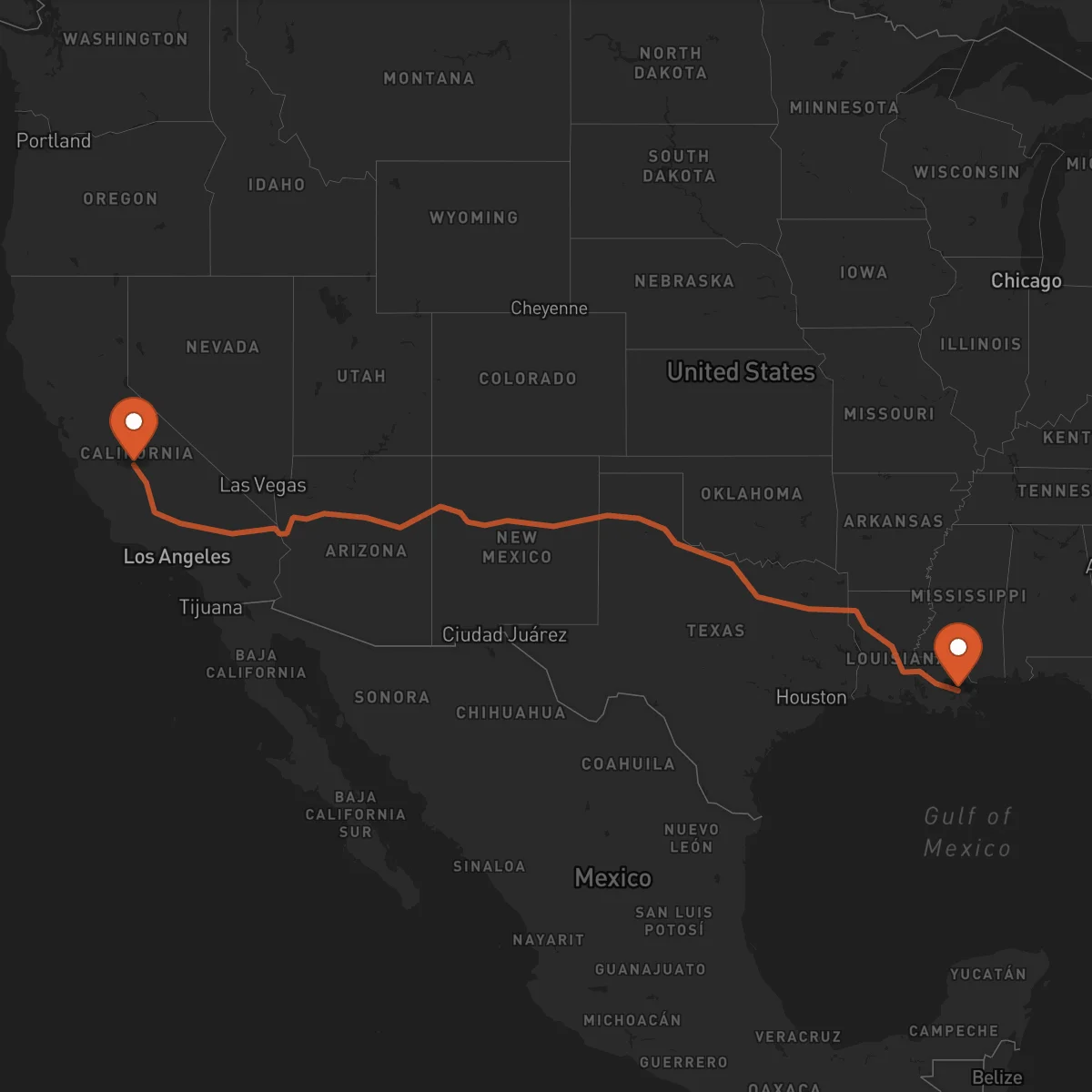
New Orleans to Fresno
Fresno → New OrleansFTL freight transportation service between New Orleans and Fresno. Reliable logistics solutions for your business.
Route Description
Everything you need to know about the corridor New Orleans - Fresno
The New Orleans to Fresno corridor represents a vital freight transportation link connecting the Gulf Coast to California's Central Valley. This extensive route spans approximately 2,848 km across eight states, traversing diverse landscapes from Louisiana's bayous through the American Southwest to California's agricultural heartland. The corridor serves as a critical supply chain artery for industries requiring cross-country freight movement between these two strategic economic centers.
The economic significance of this route cannot be overstated. New Orleans functions as a major port city and industrial hub, while Fresno anchors California's agricultural and food processing industries. This freight corridor facilitates the movement of agricultural products, manufactured goods, and industrial materials between the Southeast and West Coast, supporting both regional economies and national supply chains. The route particularly benefits from the complementary economic activities of these regions, where seasonal variations in production create year-round freight opportunities.
Key industries utilizing this corridor include agricultural products (both inbound and outbound), food and beverage processing, automotive parts, industrial machinery, and consumer goods. The route also supports the movement of petroleum products, chemicals, and building materials. Manufacturing facilities in both regions depend on this corridor for just-in-time inventory management and distribution.
Control Terrestre specializes in full truckload (FTL) freight transportation along this corridor, offering dedicated services that ensure cargo moves efficiently and securely. Our strategic partnerships with certified carriers provide reliable capacity and specialized equipment options to meet diverse shipping requirements. We understand the unique challenges of this long-haul route and offer solutions that optimize transit times while maintaining cargo integrity.
Services for this Route
Available services for the corridor New Orleans - Fresno
 Origin
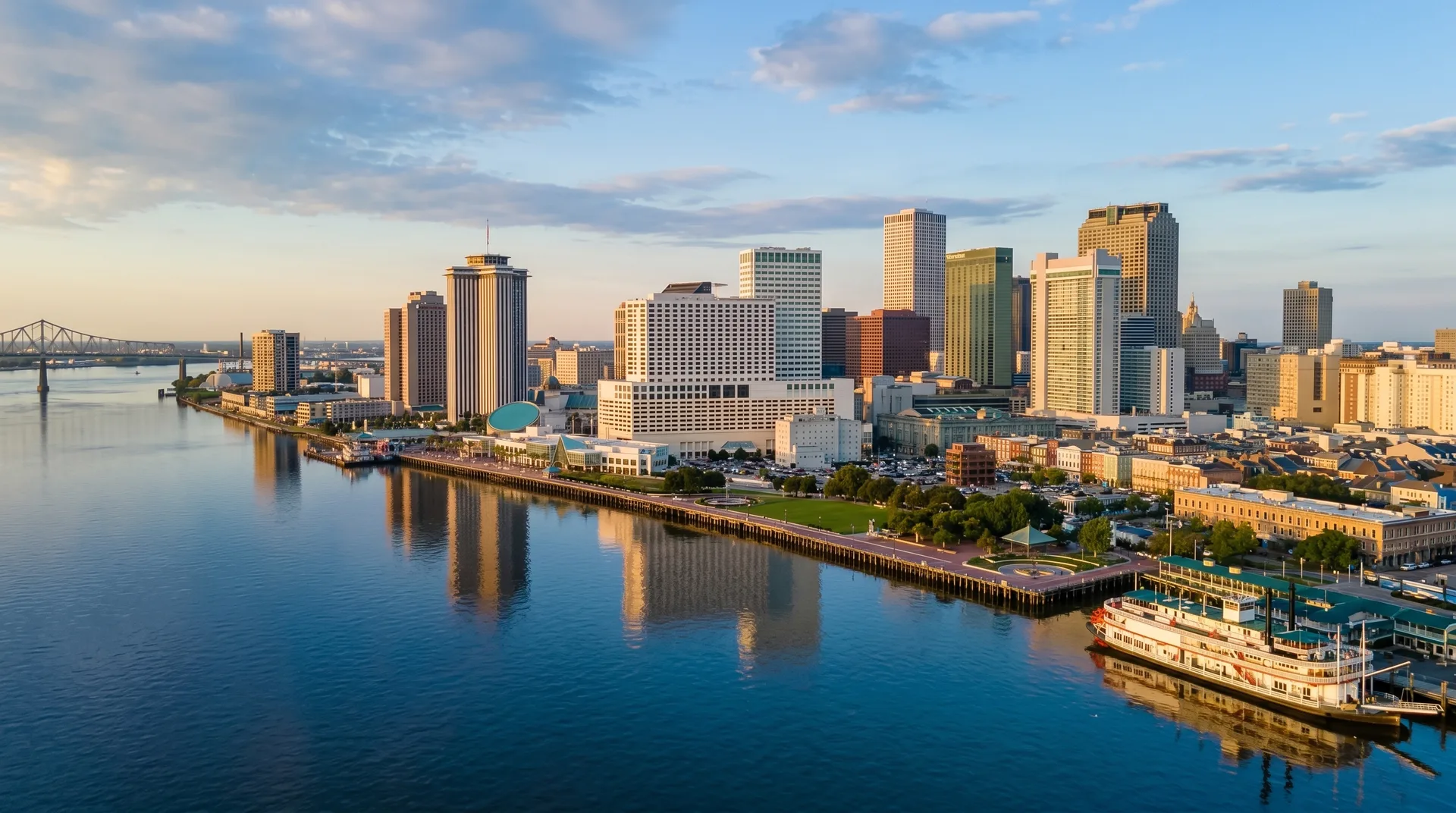
New Orleans
New Orleans stands as a strategic logistics gateway on the Gulf Coast, combining maritime, rail, and road transportation infrastructure. The city's port complex ranks among the busiest in the United States, providing seamless connections between international shipping and domestic freight distribution. New Orleans benefits from its location at the mouth of the Mississippi River, offering multimodal transportation options that enhance supply chain flexibility. The city's extensive network of highways, including I-10, I-55, and I-59, provides direct access to major freight corridors across the southeastern United States.
The local economy thrives on diverse industries including petrochemicals, manufacturing, tourism, and maritime services. Major industrial parks and distribution centers surround the metropolitan area, creating substantial freight generation. The Port of New Orleans and surrounding industrial zones produce significant outbound freight volumes, particularly in agricultural products, chemicals, and manufactured goods. This industrial diversity ensures consistent freight opportunities for carriers operating in the region.
 Destination
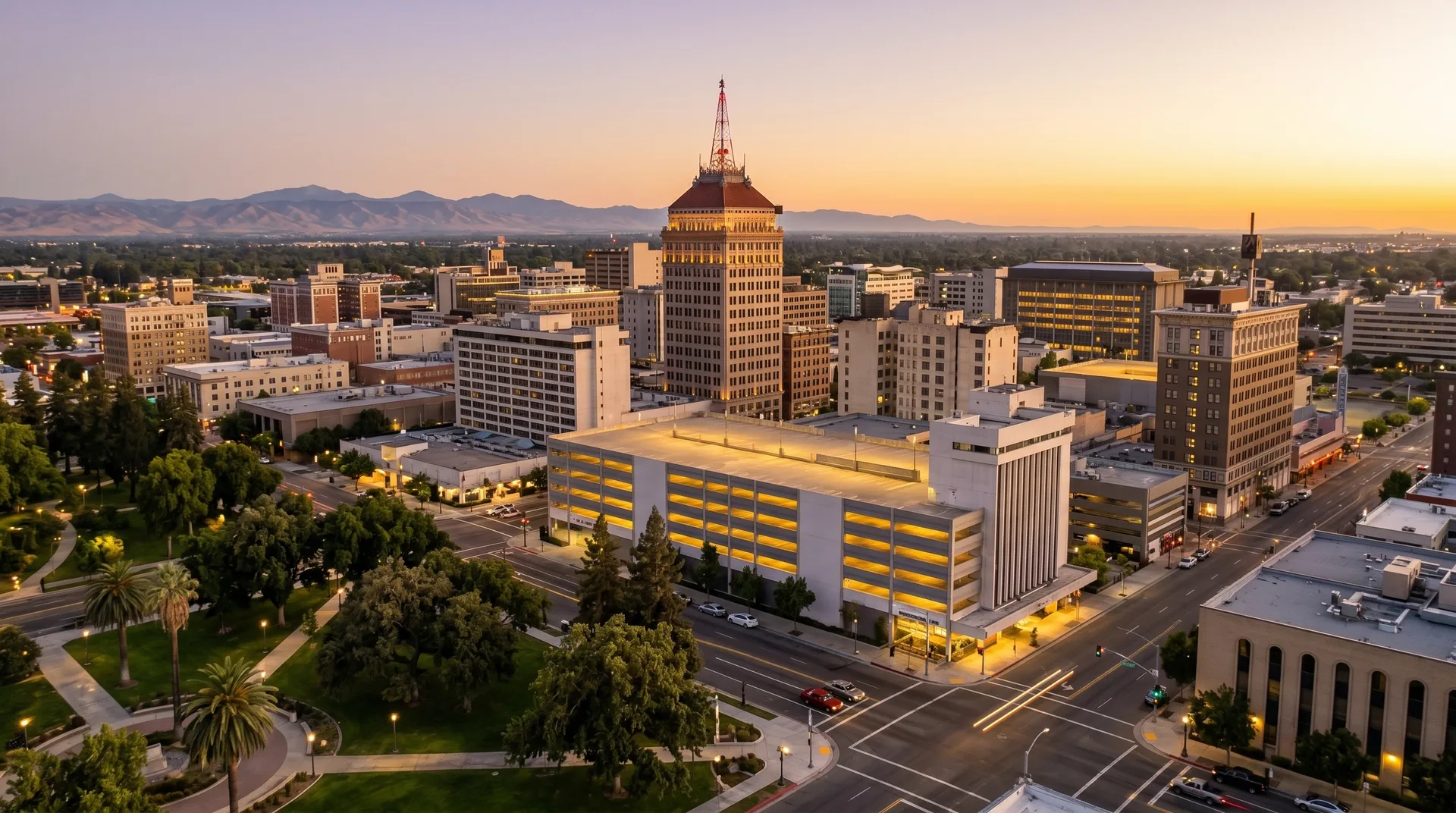
Fresno
Fresno serves as the economic center of California's Central Valley, strategically positioned within one of the nation's most productive agricultural regions. The city's location provides access to major transportation routes including State Route 99 and Interstate 5, connecting the Central Valley to both coastal and inland destinations. Fresno's transportation infrastructure supports efficient distribution throughout California and beyond, with proximity to major ports and rail terminals enhancing its logistics capabilities.
The Fresno metropolitan area anchors a diverse economy centered on agriculture, food processing, and manufacturing. As the hub of the San Joaquin Valley, the region produces a significant portion of the nation's fruits, vegetables, and nuts, creating substantial freight volumes year-round. The area's food processing industry transforms raw agricultural products into value-added goods, while manufacturing facilities produce everything from agricultural equipment to consumer products. This economic diversity generates consistent freight demand across multiple sectors.










